


Who are Reform’s biggest donors?
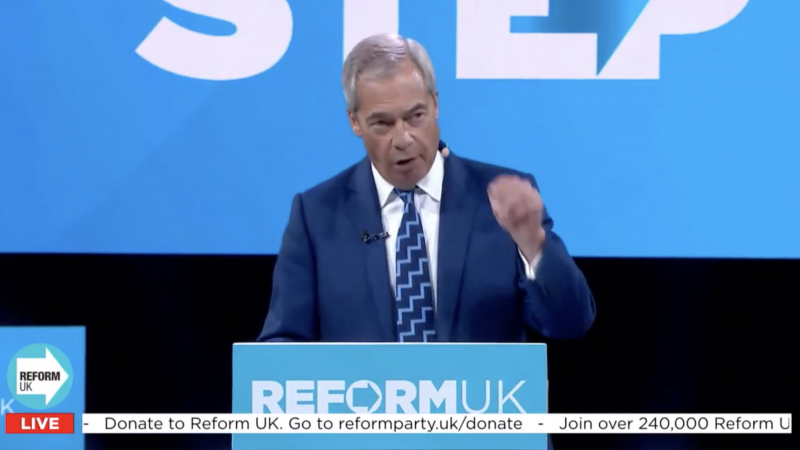
Reform UK’s donors this quarter include crypto investor Christopher Harborne, the owner of the Daily Mail’s wife and Sotheby’s
Reform UK’s donors this quarter include crypto investor Christopher Harborne, the owner of the Daily Mail’s wife and Sotheby’s

As we’ve been picking on the Daily Mail a lot recently, I thought it only fair that I should have a go at someone else today. With that in mind I decided to pick on the Guardian.

One in three people would be unable to pay their rent or mortgage for more than a month if they lost their job, new figures from Shelter reveal.

Collectively, the changes to employment law amount to the biggest assault on workers’ rights ever. They very significantly weaken worker bargaining power, and will increase job insecurity for millions. And like so many of the coalition government’s policies they impact particularly on the most vulnerable.

A House of Lords Committee has declared as “fanciful” any notion, as advocated by the SNP, that an independent Scotland could retain sterling whilst exerting influence over the Bank of England.

A post at Guido Fawkes’ blog boasts that under Thatcher “wages went up across the whole spectrum, including for the poorest”. As evidence, he produces this graph taken from Channel Four Factcheck.

The return of the Conservatives to power in Britain in 2010 has reminded us of just how negative so much of Thatcher’s legacy has been, as they attack public services and the living standards of ordinary people. Thatcher was a disaster for British society, culture and morals. Yet since her intervention of April 1993 into the debate over the former Yugoslavia nobody can justifiably assume simply that ‘left-wing is good; right-wing is bad’. The reality is more complicated.

Yesterday Paris Brown, the country’s first Youth Crime Commissioner, resigned from her post thanks to the Mail’s digging up of ill-advised tweets she posted several years ago. A sad, but perhaps inevitable end to what was the opportunity of a lifetime for the young teenager from Kent.

The graph below, produce by Canadian-based bank Scotiabank, shows the evolving nature of GDP forecasts as applied to the UK economy.
As we can see, this is the third consecutive year where the consensus for growth has started out at around 2 per cent before gradually being pushed down towards zero as time has passed.

When visiting a factory in Wallsend in 1985, Margaret Thatcher famously turned on a reporter who challenged her over her impact on the region (with unemployment standing at 20 per cent at that time). She replied that the correct response was to highlight success stories “not always standing there as moaning Minnies”.

It is highly likely that the government will begin the privatisation of Royal Mail later this year.
Along with a sell off comes the real threat of stamp prices hitting £1. Price regulation on most stamps was scrapped to boost its attractiveness to investors. It is also quite possible that Royal Mail’s VAT exemption will become unlawful. Add VAT to just one price increase similar to the last one and the first class stamp would hit 94p.