Immigration detention is failing women – and the prison watchdog’s report leaves no room for denial
The HM Chief Inspector of Prisons' latest report confirms what women have been saying for years: immigration detention causes profound harm
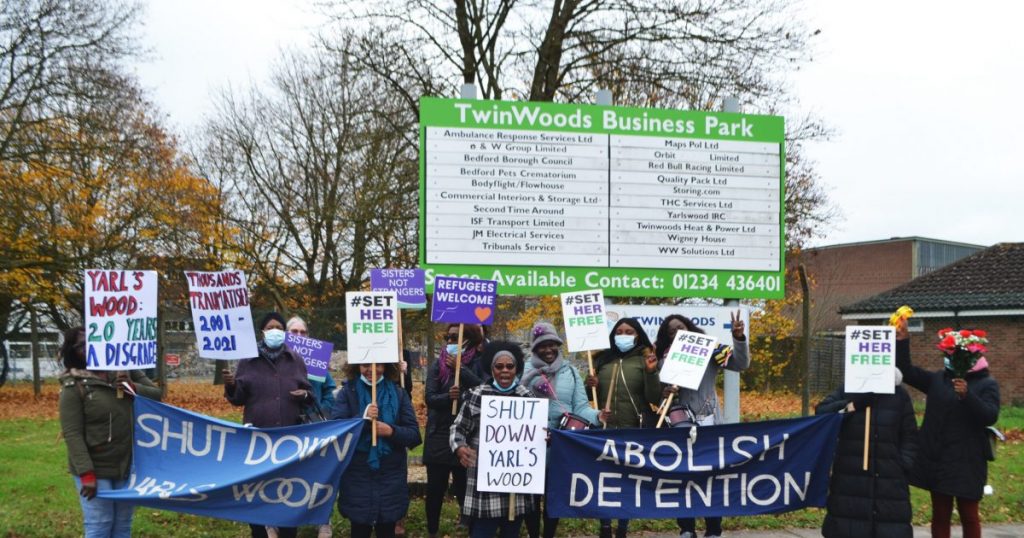
Words by Carenza Muggleton-Arnold, Head of Campaigns, Women for Refugee Women, Gee Manoharan, Co-Director, Association of Visitors To Immigration Detainees (AVID) and Kate Alexander, Director at Scottish Detainee Visitors.
For years, women who have experienced immigration detention have been telling us the same thing: detention deepens trauma, damages mental health, and separates them from the people they love. Too often, those testimonies are dismissed as anecdotal or exceptional rather than recognised as a direct consequence of the system.
The latest report from HM Chief Inspector of Prisons, Women’s Experience of Immigration Detention, makes clear that those experiences are all too common.
The report paints a deeply troubling picture of a system that routinely ignores women’s vulnerabilities and fails to safeguard some of those most at risk of harm. It identifies failures at every stage of detention: from the decision to detain, to conditions inside detention, through to transfers and release.
Many women in immigration detention are survivors of sexual and gender-based violence, including, rape, domestic abuse, trafficking, forced marriage, and torture. The Inspectorate found that four in ten women held in detention were recognised as ‘Adults at Risk’. More than half of the women whose cases were reviewed at Dungavel and Derwentside detention centres had documented histories of domestic or sexual violence.
Yet Home Office officials repeatedly failed to identify or properly consider evidence of mental ill-health, pregnancy, trafficking, sexual abuse, and other vulnerabilities before authorising detention. In some cases, women were detained even after the Home Office’s own Detention Gatekeeper had refused permission.
One example highlighted in the report is particularly shocking. A woman experiencing an acute mental health crisis was incorrectly recorded as having no vulnerabilities and spent almost three months in segregation before being transferred to hospital. It is difficult to read that finding without asking how many opportunities there were to intervene – and how many were missed. These are not isolated incidents. They reveal a system that repeatedly places administrative convenience above women’s safety, dignity, and wellbeing.
Women describe exhausting transfers, including late at night, even when pregnant, elderly, physically unwell, or at risk of suicide. Women were routinely handcuffed during hospital and centre transfers without adequate risk assessments. One survivor of abuse was so distressed by being handcuffed that she later avoided reporting pain because she feared being handcuffed again.
The report also highlights women’s profound isolation. Only 22% of women surveyed at Dungavel and Derwentside had received a visit from family or friends. Many were separated from children and support networks, yet inspectors found little proactive support to help them maintain those vital relationships. Language barriers compounded that isolation, with interpretation frequently unavailable for everyday communication. One woman described detention as ‘living in a cage.’
Perhaps most revealingly, the report exposes the inherent problems with mixed-gender immigration detention.
Women have repeatedly raised concerns about being detained alongside unrelated men, particularly when many have survived male violence. In centres primarily designed for men, inspectors found that women’s needs were often overlooked. Instead of creating environments suitable for women, the system restricts women’s movement and access to services.
At the same time, responsibility for these failures is shifted away from the Home Office and private companies that run these centres onto men in detention. Rather than recognising detained men as individuals, many of whom have themselves experienced persecution, trafficking, torture or trauma, the system treats detained men collectively as a ‘risk’ to be managed.
Let us be clear: this approach protects nobody and dehumanises everyone. It denies women the safety and dignity they deserve, while reinforcing damaging stereotypes about men that are increasingly common in toxic public narratives about migration. It also distracts from the decision made by those with the power to change the system. The problem is not the people in detention. The problem is the detention system itself.
Our respective organisations have long argued that immigration detention is fundamentally incompatible with women’s rights and wellbeing. This report adds to an overwhelming body of evidence. The question is no longer whether detention causes harm. The evidence is clear that it does. The question is what the Government is prepared to do about it.
The answer cannot be another set of recommendations that are allowed to gather dust. Meaningful change requires a shift away from detention and towards community-based approaches that enable people to resolve their immigration and asylum cases while living in the community. Evidence from alternative to detention pilots has repeatedly shown that this is possible, and that people maintain contact with the immigration or asylum system.
This report should be a turning point. It lays bare a reality that women have been describing for years: immigration detention is not simply failing to protect women from harm – it is actively causing further harm.
The Government must listen. And to the next Prime Minister: we invite you to meet with women who have lived through immigration detention and the organisations that have stood alongside them for years. Listen to the evidence. Listen to the lived experience. Then act. End mixed-gender immigration, stop holding women alongside men, and protect the rights of trans women and men and non-binary people, stop detaining survivors of violence and trafficking, and invest in community-based alternatives that uphold safety, dignity, and humanity.
Anything less would be an acceptance of a system that we know is failing women at every stage.
Left Foot Forward doesn't have the backing of big business or billionaires. We rely on the kind and generous support of ordinary people like you.
You can support hard-hitting journalism that holds the right to account, provides a forum for debate among progressives, and covers the stories the rest of the media ignore. Donate today.
Donate today