




The Reform deputy leader’s property firm avoided paying nearly £600,000 in tax
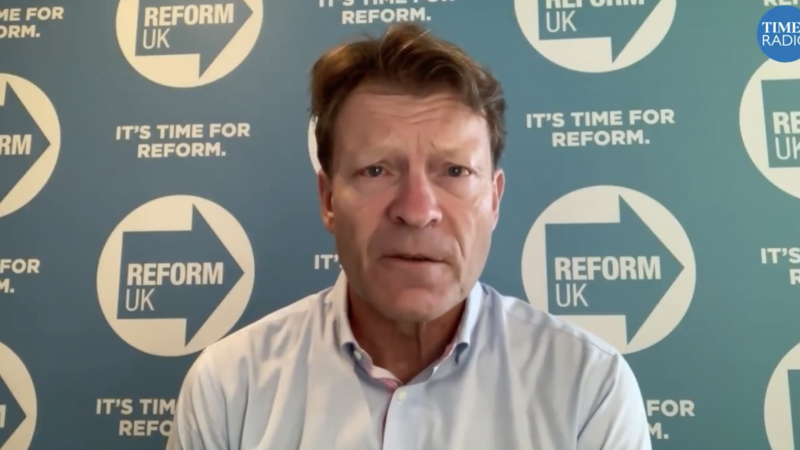
The Labour Party has called for the tax department, HMRC, to investigate Richard Tice’s tax affairs, after an investigation found his company dodged nearly £600,000 in tax.
The Times reported that Tice’s property company Quidnet Reit did not pay any tax on multimillion pound profits between 2018 and 2021 after obtaining “an unusual tax status” for his firm.
Chair of the Labour Party, Anna Turley, said the Times’ investigation presented a “deeply troubling case which needs to be investigated with the utmost urgency”.
Tice listed the company on the Guernsey stock exchange and applied for it to become a real estate investment trust (Reit).
Reits are exempt from paying corporation tax on rental profits, and on capital gains if they sell properties. Instead, they issue dividends to shareholders, who are then taxed individually.
The Times reports that Tice’s company did not qualify for Reit status, as Reit companies must be “non-close”, meaning they cannot be controlled by one party or a group of connected parties.
Quidnet Reit is owned by him personally via a group of on and offshore entities, making it “close”.
However, the status gives firms a three-year grace period to find investors. HMRC assumes companies applying for Reit status have every intention of finding investors, and does not require proof of this.
Tice said he tried to diversify Quidnet’s structure to meet the definition of being a “non-close” company, but failed to do so.
Turley, chair of the Labour Party, told the HuffPost: “Richard Tice urgently needs to explain himself – to the British public and to HMRC. Why has he gone to such extreme lengths to avoid paying his taxes, and has all the tax he owes been paid?
“If these claims are true, it looks like Reform’s Deputy Leader is just in it for himself – not for working people who couldn’t even dream of earning the kind of money he appears to have hidden from the taxman.
“Nigel Farage needs to decide whether that’s what he wants Reform to stand for.”
Dan Neidle, founder of Tax Policy Associates, told The Times it was “hard to understand” why Tice registered Quidnet as a Reit.
“Small and medium businesses don’t normally use Reits. Other structures are cheaper and more appropriate,” he said.
“If there were real attempts to find outside investors then this is odd but not improper. But if there weren’t, and the Reit was always intended to be close, then it looks like highly aggressive tax planning. The general anti-abuse rule was designed to stop precisely this kind of exploitation of loopholes.”
He added: “The use of an offshore trust by UK domiciled individuals is also unusual.”
Olivia Barber is a reporter at Left Foot Forward
Left Foot Forward doesn't have the backing of big business or billionaires. We rely on the kind and generous support of ordinary people like you.
You can support hard-hitting journalism that holds the right to account, provides a forum for debate among progressives, and covers the stories the rest of the media ignore. Donate today.