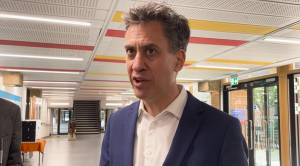
Andy Burnham’s democratic reform proposals are “radically insufficient”, author argues
'It's very tentative, it's very cautious'
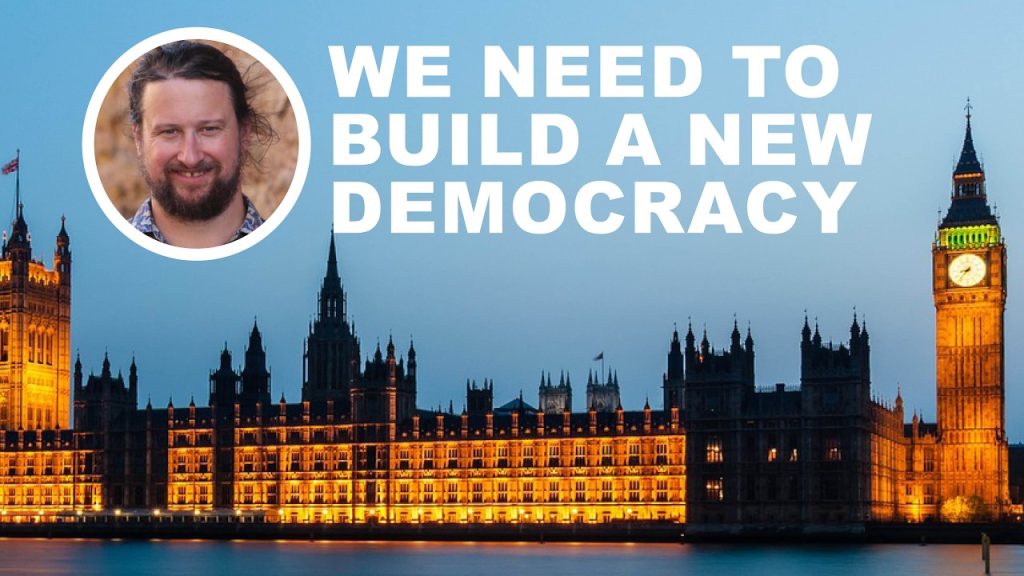
The prime minister Andy Burnham’s plans for democratic reform are “radically insufficient”, the author of a new book on the British state has argued. Adam Ramsay, the author of Abolish Westminster made the comments in an interview with Left Foot Forward.
Asked what he makes of Burnham’s proposals for changing Britain’s democratic system – which includes a national commission on electoral reform and devolving powers to mayors – Ramsay said: “I feel conflicted, is the honest answer. I’ve met Andy Burnham a few times, I think he’s genuine, you know, the people on my Twitter time by him saying, oh no, he’s a, you know, he’s a liar. I don’t, you know, I think it’s not helpful to consider, to treat people like that as though they’re just, you know, personally liars. I think that, basically, I think he means it. But I think that his proposals are radically insufficient.
“And so, just to give one example – the thing about devolution is that it means ultimately retaining power in the hands of the court. Because in the British Constitution, the crown in Parliament is sovereign, which means that the executive and legislative fused together, ultimately get to decide what happens. Power’s given down. And he’s saying, we’ll lend more power down. We’ll let you hold the tiller for a bit longer. But he still has the ultimate ability to grab that tiller and intervene if he wants to.”
Ramsay went on to argue that how the Labour Party has handled local government coalitions with the Greens following the latter party passing a motion declaring Zionism to be racism is indicative of a centralising tendency under Burnham. The Labour Party has instructed its local council groups to end joint administrations with the Greens if their local councillors have not condemned the motion.
Ramsay said: “Even Andy Burnham has found it irresistible not to grab the tiller when it’s politically expedient, and we’ve seen this already. […] Without getting into what we might think about the new Green policy on Zionism and racism, Burnham used his power of Labour leader to tell Labour councillors across the country, they had to leave administrations with Greens because of that policy. Now, without, you know, getting into a conversation about whether you agree with that policy or not. That is the central government radically interfering with the politics in local communities in exactly the opposite way from what he says he’s in favour of.”
He would then suggest that this kind of instinct is intrinsic to how the British state operates. Ramsay said: “And I don’t even criticize him for that, particularly, because I think that’s just inevitable. I think that if you leave the constitutional power at the core of the state, then it’s always going to be tempted to grab that tiller and say, oh no, right now, it’s useful to me, and I need something useful for me to do, to pull the lever this way.”
“So even with Scotland, which has, you know, the most devolution we’ve really seen in the modern history of the British state. Scotland in theory, has lots of powers, but there was, like, a bottle recycling scheme, which Coca-Cola didn’t like, so the central state interfered to say, no, we’re going to block this. As soon as it was politically expedient for Westminster to block a few more rights for trans people, as passed by Holyrood, they did.
“And so, you know, unless you actually hand the power constitutionally down to more regional or local government, central government’s always going to tend to interfere, and, you know, the fact even Andy Burnham does shows how likely it is that his successors, who don’t have that same political instinct to decentralise, will do the same, will just undo whatever work he does in decentralising.”
Ramsay was similarly critical of Burnham’s commitments on electoral reform and any potential move towards proportional representation (PR). He told LFF: “He’s probably personally in favour of PR. But what has he said? He said that he’s going to have a commission on electoral reform of some kind, that could mean full proportional representation, but it could mean [the alternative vote], it could mean other things. And it’ll be introduced after the next election, which, of course, Labour might, well not win.”
He went on to add: “There’s going to be this long-running panic against any idea of PR, and so we’ll get the kind of, I imagine, the most minimal version of it suggested in the Labour manifesto, and then who knows what’s going to happen in the next Labour election. So, you know, he’s going very slowly. And of course, at the same time, there’s other policies which are moving much faster, which are, I’d argue, less positive ones. So, it’s very tentative, it’s very cautious.”
You can get a copy of Abolish Westminster here.
Watch the full interview with Adam Ramsay here:
Chris Jarvis is head of strategy and development at Left Foot Forward
Left Foot Forward doesn't have the backing of big business or billionaires. We rely on the kind and generous support of ordinary people like you.
You can support hard-hitting journalism that holds the right to account, provides a forum for debate among progressives, and covers the stories the rest of the media ignore. Donate today.
Donate today