The budget is a missed opportunity for the government to loosen the shackles of neoliberalism
Prem Sikka is an Emeritus Professor of Accounting at the University of Essex and the University of Sheffield, a Labour […]
Prem Sikka is an Emeritus Professor of Accounting at the University of Essex and the University of Sheffield, a Labour member of the House of Lords, and Contributing Editor at Left Foot Forward.
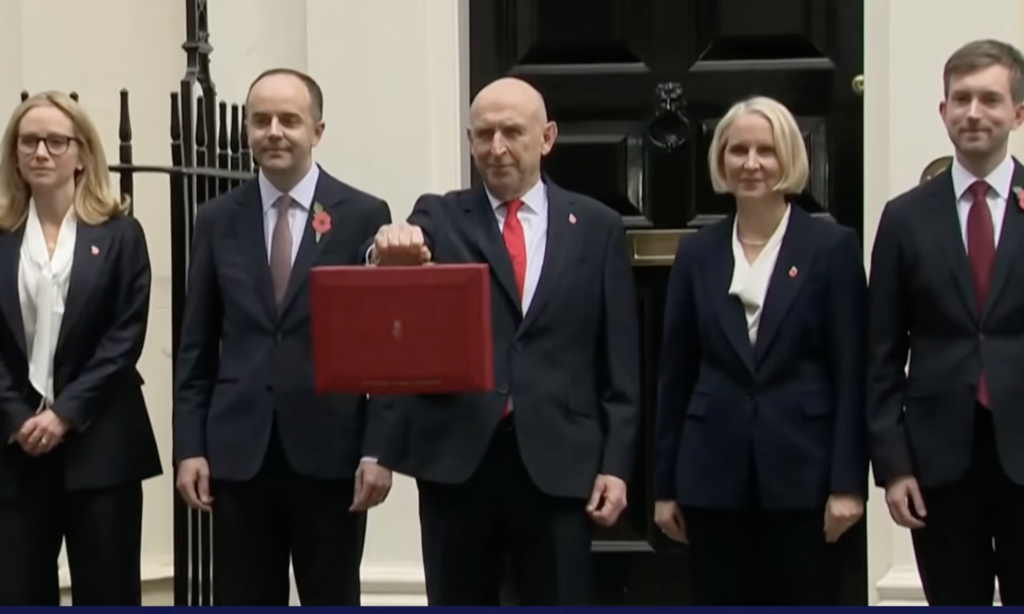
Chancellor John Healey has delivered his first budget statement as he seeks to reset the UK economy. Amidst trade and military wars, there is an urgent need to make the economy and households more resilient.
Successive governments have sought to increase economic growth but the economy remains sluggish. It is expected to grow by about 1.2% in 2026. One of the reasons is that people lack good purchasing power. Some 25.3m people (37.5% of the population) live below the Minimum Income Standard. Their ability to fuel economic growth is also hampered by regressive tax system. The poorest 20% pay a higher proportion of their income in direct and indirect taxes than the richest 20%.
For over 30 years the UK’s investment in productive assets has been low. As a percentage of GDP, it is the lowest among G7 countries . It has ranked at or near the bottom of the OECD investment league. Manufacturing sector has propelled economic growth in China and elsewhere. However, the UK manufacturing sector has shrunk from 30.1% of economic output (gross value added) in 1970 to 8.3% in 2026. Infrastructure woes are all too evident in potholed roads, crumbling schools, NHS queues and universities in crisis.
Neoliberal economics has squeezed households and failed to deliver beneficial economic growth. Redistribution of wealth and investment are key requirements. However, the Chancellor’s ability to carve a new path is severely constrained by self-imposed constraints. These include subservience to fiscal rules which limit government borrowing, and Labour’s 2024 election manifesto pledge to not increase national insurance, the basic, higher, or additional rates of income tax, VAT, and corporate tax rate. In addition, successive governments have been keen to appease corporations and the super-rich.
Against, the above background, the budget is disappointing.
The Budget
Corporations will be pleased. Water companies won’t be nationalised. There is no windfall tax on energy companies and no curbs on profiteering which is pushing millions into poverty.
The increase in surcharge on bank profits from 3% to 6% is less than the 8% expected hike. Over the next 15 months a total of £1.5bn is expected to be raised. There is an increase in machine games duty from 20% to 25% and could raise about £720m. The gambling industry was expecting the increase to 40%. Around £2bn will be raised from additional taxes on landlords and rental income. There are no rent controls or other measures to prevent the rise to be passed to tenants.
Redistribution is mostly absent and the super-rich remain largely unscathed. Wages will continue to be taxed at marginal rates of 20%-45%. Earners will also pay national insurance. Capital gains accruing to less than 1% of the population will continue to be taxed at 18% to 24%. Dividends, mostly accruing to the richest, will continue to be taxed at marginal rates of 10.75% to 39.35%. The Chancellor chose not to align the dividend and capital gains tax rates with wages, preferring to tax labour at higher rates than return on wealth. A new Founders’ Relief offers a 10% rate on life time capital gains of up to £10m. The tax avoidance industry must be salivating at how it can exploit this.
The biggest tax rise on households is through continuation of the freeze on income tax thresholds. The personal allowance was frozen at £12,570 in 2021. If it had risen in line with inflation, then for the current tax year it would have been £16,070. Due to the freeze, a minimum wage earner is paying additional £980 in income tax and national insurance in 2026-27. Assuming an inflation rate of 3.5%, the personal allowance for 2027-28 should be £16,632. However, because of the freeze someone on minimum wage will pay additional £1,137 in income tax and national insurance in 2027-28. This is the cost of appeasing the rich.
Due to the freeze, millions more would become liable to pay income tax. One such group is pensioners. The state pension is due to rise by 3.9% from April 2027. The full post-2016 state pension, received by a small number of pensioners, will be £13,036.40, which is above the personal allowance of £12,570. The government has announced that pensioners with income of £13,036 (state pension plus other income) there would be a new Pension Tax Allowance i.e. pensioners will not pay income tax, a concession worth up to £94. To prevent a cliff-edge, for pensioners with income between £13,037 and £13,319 there would be a taper. For every £3 of income above £13,036, Pension Tax Allowance will be reduced by £1. The net result is that pensioners with incomes between £13,036 and £13,319 will effectively be paying tax at a marginal rate of 53%.
This is complicated and divisive. A worker with income of £13,036 would pay income tax and national insurance. It would have been far better to increase the personal allowance for everyone.
Risk-averse individuals tend to put their savings in banks and building societies, the resulting interest income is taxable. £1,000 of interest is tax free for basic rate taxpayers. The limit is £500 for higher and additional rate taxpayers. After that and the £12,570 personal allowance, the amounts are taxable at the appropriate marginal rates. That is set to change. From next April, a 2% extra tax will be levied to interest income. Form April 2028, this will rise by another 2% i.e. there will be 4% additional income tax on savings income. So, a basic rate taxpayer will pay 24% income tax on taxable interest income, higher rate taxpayers will be taxed at 44% and additional rate taxpayers at 49%. This is expected to raise around £2.4bn by 2031-32. Perhaps, the change is intended to encourage people to put savings into ISA accounts. Nevertheless, many don’t want their cash tied for longer periods. Meanwhile dividends will be taxed at rates between 10.75% and 39.35%, capital gains at 18% to 24%. Is this part of a government plan to push people into gambling on stocks and shares? Why are cash savers penalised?
There is some relief for savers. The chancellor has reinstated the limit of £20,000 on cash ISAs. This will do little for 39% of adults with savings of £1,000 or less.
Form April 2027, the headline rate of the national minimum wage for workers age 21 or over will increase by 3.9% to £13.21 per hour. The acceleration of wage rate for younger workers towards £13.21 per hour has been halted even though they pay full rent, food, travel and other costs, and the output of their labour is not sold at a discount.
There is some relief for households in the form of £100 energy bill discount for people living in homes in council tax band A to D. Gas standing charge would be absorbed into the main unit price, which would help light users of energy. The average household bill is expected to rise by 16%-27% in January, adding £276 to £469 to the cost. The Chancellor is looking at the energy contracts, pricing and possibilities of moving levies out of bills on to general taxation.
The Chancellor has provided extra £1.5bn for the Social and Affordable Housing Programme to build 10,000 new home skin England, taking the council housing commitment to £40bn. Some 1.3m households are waiting for a social home. Successive government have failed to hit housebuilding targets as the UK lacks the infrastructure to provide materials and skilled labour.
£190m extra is provided to NHS England to manage the winter pressures. Another £100m is provided to accelerate the adoption of robotically assisted surgery. It will do little to reduce the backlog of 7.37m hospital appointments. There is a £17.3bn maintenance backlog, including £3.7bn of work classified as “high risk”. The NHS budget is also being squeezed by the deal with the US on drug pricing that will strip £44.7bn out of the NHS budget between now and 2036.
Reform of business rates would be welcomed by small businesses, but they will continue to be buffeted by high energy and water costs, poor infrastructure and low consumer purchasing power.
The government continues to guarantee corporate profits. The Chancellor said “we will expand our defence industrial base by getting the maximum amount of private investment into defence, including through public private partnerships”. This confirms a deeper role of private finance initiative (PFI) now rebranded as public private partnerships. For PFI every £1 of private investment resulted in £6 payment from the public purse. Such indulgence is the inevitable result of fiscal rules which constrain direct state investment.
The budget is a missed opportunity for the government to loosen the shackles of neoliberalism. Corporations and the super-rich have been appeased. The spending power of most households will be further eroded. Regressive tax policies continue to penalise workers. This does not provide a good basis for fuelling economic growth. Within the neoliberal logic, the forthcoming spending, Milburn and Timms Reviews are expected to herald cuts. Maybe the new Chancellor is saving good news for households until 2028/29, just before the next general election.
Left Foot Forward doesn't have the backing of big business or billionaires. We rely on the kind and generous support of ordinary people like you.
You can support hard-hitting journalism that holds the right to account, provides a forum for debate among progressives, and covers the stories the rest of the media ignore. Donate today.
Donate today