The A-Z of Stealing the U.S. Midterm Elections
Why does President Trump seem so unconcerned about the fast-approaching midterm elections? He is deeply unpopular, yet he dismisses widespread anxiety […]
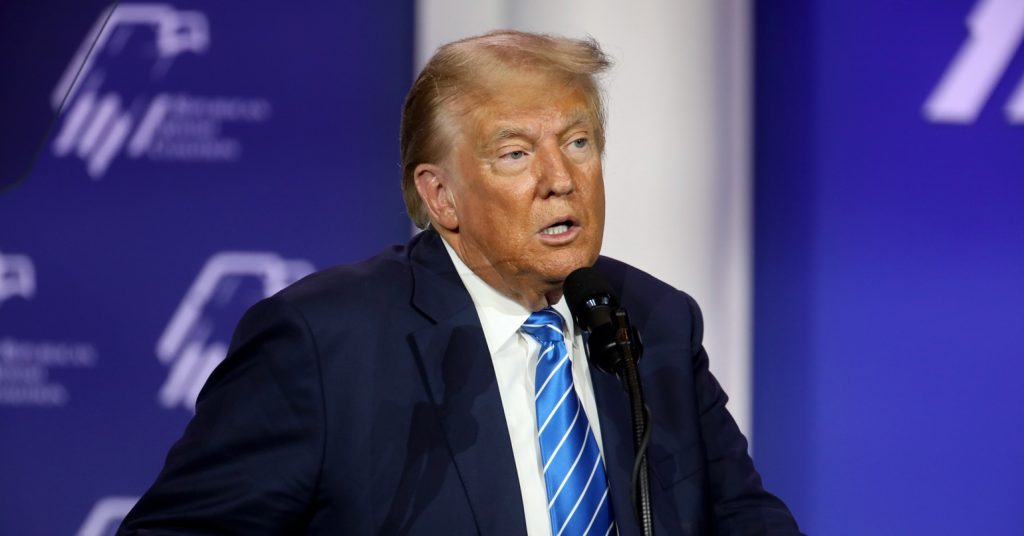
Why does President Trump seem so unconcerned about the fast-approaching midterm elections? He is deeply unpopular, yet he dismisses widespread anxiety about the war with Iran, “affordability,” higher prices, tariffs, diminished access to healthcare and the trade war with Canada, which will contribute to inflation. It is as if he is living in a bubble, which he may be.
It is by no means irrational or hyperbolic to fear that Trump is not interested in how voters feel because he sees other paths to ensure he does not face a Democratic majority in the House of Representatives or the Senate, or both, on January 3, 2027.
It is not hard to imagine a tiered Republican strategy for the midterms:
- win at the polls, with the help of redrawn maps and turbo-charged gerrymandering, voter suppression tactics and disinformation campaigns – all familiar though amplified;
- prepare to use federal emergency powers and other instruments of power to reduce access to voting in places that will underpin Democratic victories; and
- prepare to contest the election results in the House via the certification process at the state level and in Congress to avoid seating a majority of Democrats on January 3, 2027.
There is little doubt that the elections will be subject to significant external pressures. We just do not know which tactic or swarm of tactics candidates, state election officials, election workers, the courts, law enforcement, civil society and, ultimately, voters will need to confront and counter over the coming months. House and Senate Democrats, election officials and administrators, civil society groups, among others, all have conducted tabletop exercises to identify and evaluate the threats and vulnerabilities by voting district, understand how countermeasures will need to be deployed; and once voting starts, monitor where threat actors are operating and deploy appropriate countermeasures.
There is no American playbook to follow. While voter suppression has been a feature of our system for some time, what is new and worrying is that we have a federal government that, having seized unprecedented executive power, is the single greatest threat to free and fair elections. We know the threat is not hypothetical as we already have seen myriad election-related efforts undertaken in plain sight to subvert the midterms.
Surveying the landscape, Trump and/or his administration:
- Pivoted from one tactic to the next. When the Supreme Court pushed back on Trump’s deployments of National Guard (suggesting, though not ensuring that they would not be deployed during the midterms), and as his mid-decade redistricting effort largely failed to ensure the Republicans would hold the House, he directed his Attorney General to seize ballot boxes, with varying justifications. Is this just about showing there is little that can stop him, while seeding doubt in the minds of American citizens about election security and privacy of voting decisions? Or let’s drill deeper and consider the following: the seizure of specific voting machines in Georgia and Puerto Rico, ostensibly to prove the machines were vulnerable to foreign interference, are deemed vulnerable and decertified, forcing election officials to count ballots manually.
- Called for voter ID for the midterms, “whether approved by Congress or not!” Trump went on to say, “the People of our Country are insisting on Citizenship, and No Mail-In Ballots, with exceptions for Military, Disability, Illness, or Travel.” He then issued a second post threatening to act by Executive Order.
- Called on Republicans to “nationalize” elections and “take over voting” in 15 unspecified locations.
- Continued to repeat the baseless claim that the 2020 election was tainted by massive and widespread fraud, and in June called for the appointment of a special prosecutor – “The evidence is MASSIVE and OVERWHELMING. A Special Prosecutor must be appointed. This cannot be allowed to happen again in the United States of America! Let the work begin!” Trump continues to double down on the debunked allegations that the 2020 was “rigged and stolen.”
- Moved to curtail mail-in voting. Last summer, Trump resurrected his quixotic campaign against mail-in ballots (after toning it down last year at the request of Republican candidates, who ended up benefitting from mail-in ballots and early voting), reportedly after speaking with Putin. Let’s pause on that for a moment – recall Trump at the Helsinki summit took Putin at his word that Russia did not seek to influence the 2016 election, going against at the time the unanimous views of the U.S. intelligence community. And now he is taking election security advice from Putin!
First on social media and then during an Oval Office question-and-answer session with reporters, Trump pledged to “lead a movement” to eliminate “corrupt” mail-in ballots and voting machines ahead of the 2026 midterm elections. He exclaimed, “Mail-in ballots are corrupt; you can never have a real democracy with mail-in ballots. It’s the only way [Democrats] can get elected.”
Trump issued an Executive Order to rein in mail-in voting. As the Brennan Center for Justice noted, the Constitution explicitly empowers only Congress and the states to set the rules for elections. The Executive Order seeks to sidestep that limitation and displace states’ mail-in voting laws by transforming the U.S. Postal Service “from a neutral mail carrier to an arbiter of who may cast a ballot by mail.” The order also requires DHS to build and give to each state a list of citizens eligible to vote, and given that federal databases are out-of-date and unreliable, this risks mass disenfranchisement of eligible voters.
Administration efforts responsive to the Executive Order have been challenged in the courts, and injunctions to block implementation of the order have been issued by two lower courts. The Supreme Court just lifted one of those two injunctions. But the Court did not declare the Executive Order legal, so watch this space.
- Moved aggressively to seize voter rolls in states. The administration is pressing state election officials across the country to provide sensitive information about voters. The requests include copies of statewide voter registration lists and ballots from prior elections, as well as access to voting equipment. DoJ has sued more than 20 states and D.C., for not complying. As the Brennan Center has noted, the requests cover sensitive, private information such as driver’s license numbers and partial Social Security numbers. These demands raise privacy and security concerns and may violate state and federal laws. They are unprecedented and a clear encroachment on the power of states to run elections as set out in the Constitution. As Judge Colleen Kollar-Kotelly set out in her ruling, the Constitution gives “no role at all to the President” in setting election rules. To date, DoJ is 0-23 in its efforts to get states to turn over voter rolls, though it is appealing rulings at pace.
- Pushed aggressively to get the Senate to pass the SAVE America Act¸ which would have mandated proof of citizenship (a passport or birth certificate) to register or register to vote.
- Weaponized the DoJ to serve his own ends, including by gutting the Civil Rights Division. Political appointees have removed all the senior managers in the voting section and ordered the dismissal of every major active voting rights case, including lawsuits challenging restrictive voting laws and gerrymandered maps in Arizona, Georgia, and Texas. The head of the Division, Harmeet Dhillon, has shifted the Division from countering racial discrimination in voting to prioritizing Trump goals of voter suppression in the guise of “preventing illegal voting, fraud, and other forms of malfeasance and error.”
- Set up new task forces – DoJ’s Weaponization Working Group, the New Jersey U.S. Attorney’s Office Election Integrity Task Force and the D.C. U.S. Attorney General’s Special Unit: Election Accountability that can target voters, election officials, perceived political adversaries and journalists in search of alleged widespread voter fraud, which does not exist, and thereby enable election interference through investigations of perceived opponents, targeting of election officials for just doing their jobs and casting doubt on election systems.
- Repeatedly threatened to prosecute election officials and to target nonprofit organizations involved in voter engagement, election monitoring and litigation to protect access to voting.
- Rewarded election deniers with key appointments in the administration, including positions with oversight of election security. An election denier involved in efforts to challenge the 2020 election, Heather Honey, was appointed to the newly created role of Deputy Assistant Secretary for Election Integrity, and the CISA Director of Public Affairs is Marci McCarthy, a former Georgia GOP Party official who questioned the integrity of the 2020 election and claimed that January 6th was “set up and orchestrated by the FBI.” Trump installed election denier Harmeet Dhillon as chief of the Civil Rights Division, for decades DoJ’s primary instrument for protecting voting rights. Dhillion has refocused the motion toward investigating election officials rather than protecting the rights of voters. Over the summer, Dhillon sent letters to election officials across the country, threatening them with criminal prosecution if they facilitate noncitizen voting. New Homeland Security Secretary Markwayne Mullin relied on flawed data to assert widespread noncitizen voter registrations.
ProPublica estimates that at least 75 people across several federal agencies who were involved in safeguarding the 2020 election have been reassigned, been fired or been forced to resign. In their place, around two dozen have been installed, ten of whom, including those identified above, worked actively to reverse the 2020 election outcome and the others were associates of the first group.
- Sidelined key law firms, diminishing the resources available to voters whose voting rights have been abridged or denied and the voting rights groups championing their causes.
- Ordered criminal investigations of those who have tried to hold him accountable.
- Questioned free speech of those who criticize him or his policies.
- Pressured social media platforms to do away with content moderation and thereby allow disinformation to flow far more freely, all in the guise of protecting free speech and countering the “censorship industrial complex” purportedly deployed against conservatives.
- Bullied news outlets through a combination of lawsuits and Federal Communications Commission pressure.
- Ordered DoJ to investigate ActBlue, targeted former head of the Cybersecurity and Infrastructure Security Agency (CISA) Chris Krebs in an Executive Order, and set the stage for the targeting of pro-democracy, voter registration and GoTV groups;
- Severely hampered the Election Assistance Commission, which was established by Congress after the 2000 election to assist states in administering elections.
- Dismantled the federal government’s capabilities to counter foreign and domestic interference, by gutting election security/disinformation units at CISA, Department of Homeland Security and Federal Bureau of Investigation. Election security teams at CISA and assistance to local election officials have been cut back, increasing the risk of chaos and doubt about the security of voting systems and the ability to counter election-targeted disinformation. The CISA work force is down an estimated 1,000 staffers (approximately one-third).
- While there have been no arrests of officeholders or candidates for office, the administration is investigating Sen. Adam Schiff and charged Rep. LaMonica McIver with assault. Just before the Democratic mayoral primary, ICE agents arrested Democratic candidate Brad Lander as he was escorting a migrant out of a New York City court. DoJ has pursued two criminal cases against each of former FBI Director James Comey and New York Attorney General Letitia James.
- Created a force potentially answerable only to him – ICE. And while ICE ostensibly is tasked with immigration enforcement, who knows how they might otherwise be deployed.
For those watching from afar, there are a few things to keep in mind. First, Trump will not cancel the midterms – he has no basis for doing so and history tells us that authoritarian leaders tend to embrace elections, no matter how subverted to provide legitimacy.
Second, there is absolutely no evidence of widespread voter fraud in the United States (whether noncitizens, dead or fake voters, rigged vote count and so on).
Third, the administration of elections is a matter for the states not the federal government.
Fourth, what happens after Election Day up to January 3, 2027 (when the next Congress is seated) will be as critical as what happens up to and on Election Day.
And, finally, it is hard to imagine that efforts will not continue to be made at scale through the spread of disinformation to sow doubt among Americans as to the security of election systems.
Will Trump declare a national emergency as a basis for deploying active-duty military, National Guard units or federal law enforcement agents (such as ICE or Border Patrol) to polling places and as a pretext for seizing ballots and voting machines? DoJ has already said it will deploy 1,000 election monitors to polling places. Will we see an uptick in efforts to intimidate election administrators and election workers via federal agencies or local malign actors?
Just as there is a playbook for the threats, so too is there a playbook for countermeasures. At the state level, governors, secretaries of state, attorneys general, and election officials have been gearing up for the midterms. Networks of lawyers, media organizations, lawmakers, tech platforms, civil society networks, campaigns – all know they will have critical roles to play.
Ultimately, it will be up to the voters, and if there is a lesson from the recent Hungarian election, it is that there is no more effective an antidote to election interference than overwhelming voter turnout and overwhelming majorities.
Mark S. Bergman
Principal, 7Pillars Global Insights, LLC
Left Foot Forward doesn't have the backing of big business or billionaires. We rely on the kind and generous support of ordinary people like you.
You can support hard-hitting journalism that holds the right to account, provides a forum for debate among progressives, and covers the stories the rest of the media ignore. Donate today.
Donate today