Calls grow for closer ties to the EU to help rebalance Britain’s economy beyond London
Britain’s economic problems are not evenly distributed. And neither are the potential benefits of closer ties with Europe.
This week, the chief executive of the Confederation of British Industry (CBI) called on Andy Burnham and John Swinney to work with business to reset the UK’s relationship with the EU, boost the economy and bring down the cost of living.
Speaking at the CBI’s annual dinner in Glasgow, Rain Newton-Smith urged both governments to make the reset “ambitious” and work with business to unlock investment, create jobs and raise living standards in communities across Scotland and the rest of the UK.
The comments follow research that shows Britain’s economic problems are not evenly distributed. And neither are the potential benefits of closer ties with Europe.
The North of England, for example, remains one of the most socially deprived parts of the country.
More than one in five neighbourhoods in the North East and North West are among the most deprived in England, compared with around one in 25 in London, the South West and the East of England, and one in 33 in the South East, according to the 2025 Index of Multiple Deprivation figures.
Middlesbrough has the highest proportion of very deprived neighbourhoods for income, education and crime, while nearby Hartlepool has the highest proportion for employment.
One potential route towards a more balanced economy and less regional inequality, is closer integration with the EU, ultimately including rejoining the bloc.
A study by Frontier Economics, commissioned by Best for Britain, used economic modelling to assess the impact of different scenarios for closer UK-EU integration. It found that deeper integration could increase UK growth by between 2.5 percent and 3.6 percent over five to 10 years, with even greater gains from the UK ultimately acceding to EU membership.
The benefits would not simply accrue to London and the already prosperous parts of the country.
The research suggests that the largest gains from EU membership would be felt outside London, particularly in the East and West Midlands, Yorkshire and the North East. These are areas with deep industrial and manufacturing traditions, where increased trade in goods could deliver a particularly significant economic boost.
That makes the argument for closer European ties especially relevant to the parts of Britain that have spent decades being told that economic growth will eventually reach them.
In the long run, the UK government estimates that all of Britain’s post-Brexit trade deals combined could increase GDP by around £15 billion.
By contrast, the Frontier Economics modelling suggests that EU membership could increase GDP by around £92 billion over a similar timeframe.
The modelling also suggests that the benefits could be disproportionately felt beyond the capital.
That challenges one of the enduring myths surrounding the Brexit debate, that closer European integration is primarily a metropolitan, London-centric project. In reality, some of the strongest economic arguments for rebuilding ties with Europe come from Britain’s former industrial heartlands in the north.
Campaigners are now urging the government to commit to signalling the UK’s intent to accede to EU membership to boost economic growth across the UK and fund vital public services.
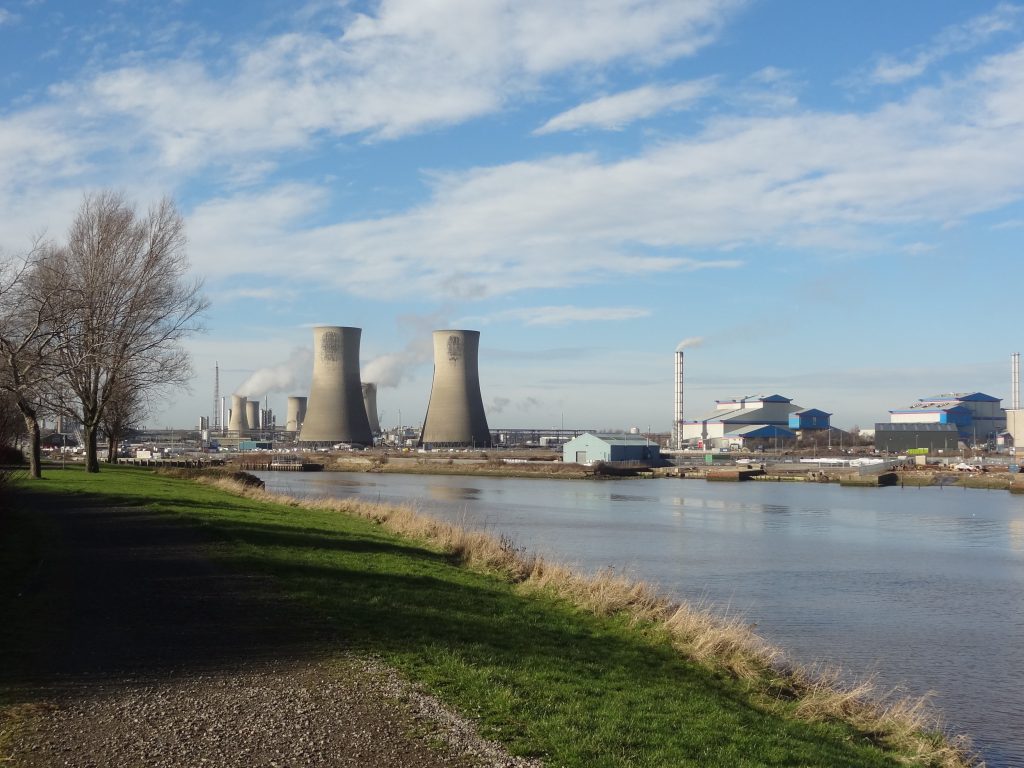
Image: Cooling towers, Middlesborough
Left Foot Forward doesn't have the backing of big business or billionaires. We rely on the kind and generous support of ordinary people like you.
You can support hard-hitting journalism that holds the right to account, provides a forum for debate among progressives, and covers the stories the rest of the media ignore. Donate today.
Donate today