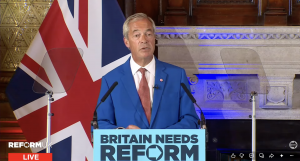
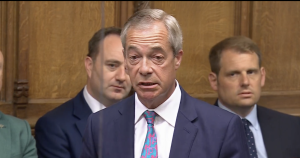
Farage mentioned Clacton twice in a year in the Commons, a world apart from Jeremy Corbyn, who made constituents central to PMQs
For a politician who has built his career claiming to speak for people ignored by the political establishment, it’s a pathetically shoddy record.
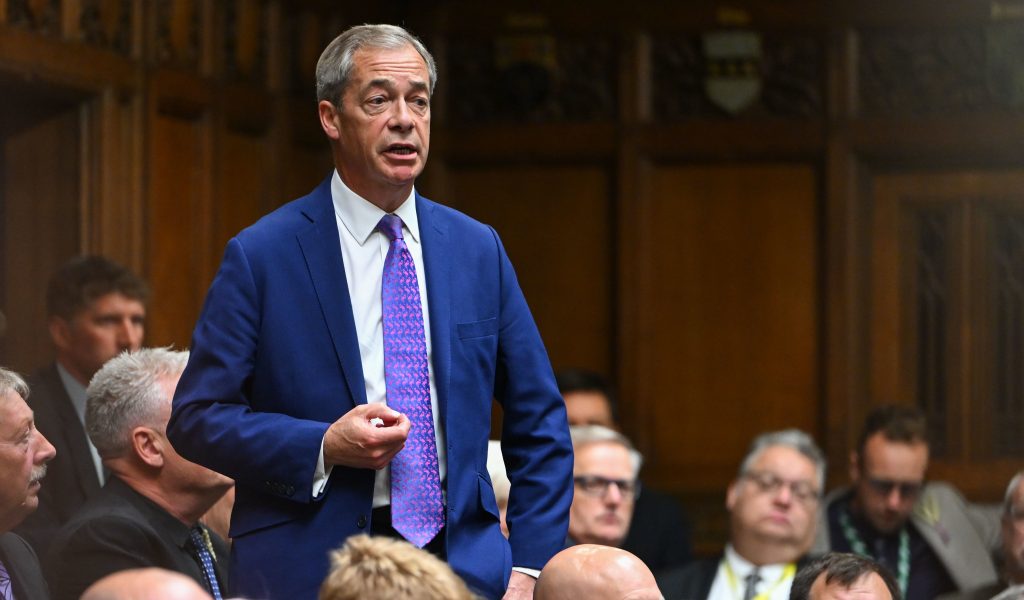
With headlines focused on Count Binface, the comedy candidate challenging Nigel Farage in Clacton, far less attention has been paid to what Farage has actually done, or hasn’t’ done, for his constituency.
This week, DeSmog revealed that the Reform UK leader has mentioned Clacton only twice in the House of Commons over the past year. For most MPs, Commons interventions are one of the principal ways of raising local concerns, questioning ministers, and advocating on behalf of constituents.
But since being elected on 4 July 2024, Farage has referred to Clacton just six times in total, roughly once every four months.
The contrast is remarkable even within his own party. Reform deputy leader Richard Tice has mentioned his constituency, Boston and Skegness, at least 34 times since entering Parliament, while Lee Anderson has referred to Ashfield at least 28 times. Parliamentary records also show that Farage has made just 69 spoken contributions in the Commons over the past two years, compared with 391 from Tice and 204 from Anderson.
Farage’s limited engagement with his constituency in Parliament stands in direct contrast to the approach taken by Jeremy Corbyn during his years as leader of the opposition.
While their politics could hardly be more different, Corbyn made a conscious effort to bring the voices of ordinary people, and particularly his constituents, into the centre of parliamentary debate.
Before his first PMQs as Labour leader in 2015, Corbyn invited members of the public to submit questions they wanted him to put to the prime minister. More than 40,000 responses were received. Rather than using all six questions to pursue a single partisan line of attack, Corbyn read out messages from members of the public, identifying them by their first names, and used them to raise concerns about housing, mental health services, welfare and other everyday issues affecting people’s lives.
The strategy was deliberate. Corbyn sought to move PMQs away from Westminster’s familiar political theatre and towards the experiences of people outside Parliament. Critics dismissed the approach as lacking drama, but supporters argued that it made one of Parliament’s highest-profile exchanges more representative, giving a platform to people who rarely felt heard in national politics.
Measured against that standard, Farage’s parliamentary record raises obvious questions. An MP elected to represent Clacton has mentioned the constituency only six times since arriving in Westminster and only twice over the past year. For a politician who has built his career claiming to speak for people ignored by the political establishment, it’s a pathetically shoddy record.
Left Foot Forward doesn't have the backing of big business or billionaires. We rely on the kind and generous support of ordinary people like you.
You can support hard-hitting journalism that holds the right to account, provides a forum for debate among progressives, and covers the stories the rest of the media ignore. Donate today.
Donate today