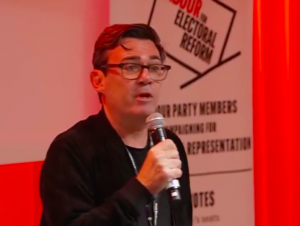
Andy Burnham should put Thames Water into special administration says Co-operative Party assistant general secretary
The Co-op Party wants the UK’s first ever Labour and Co-op PM to bring Thames Water and other utilities into a form of public ownership
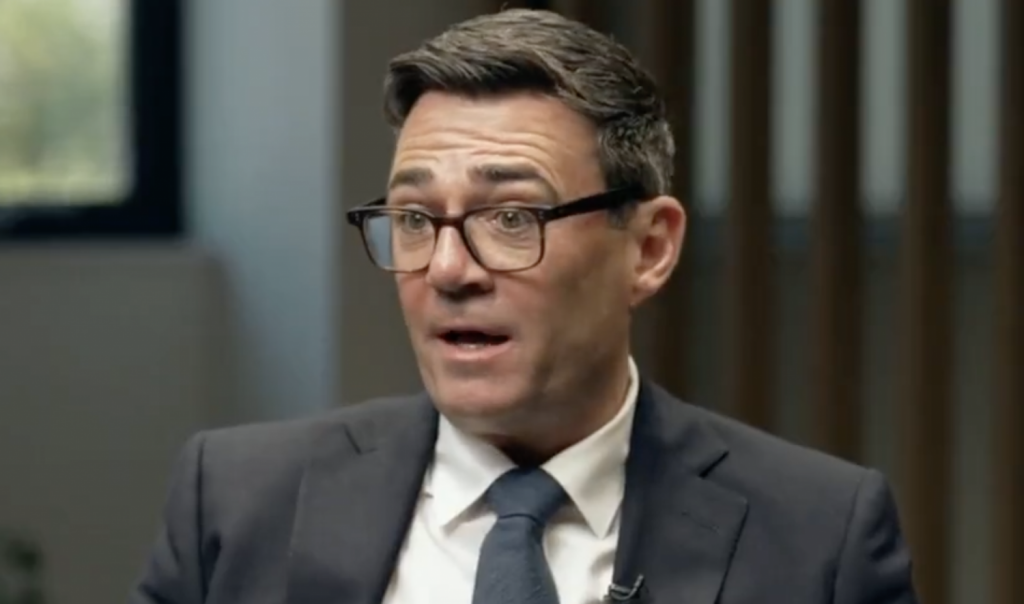
As Andy Burnham entered 10 Downing Street last week, the future of the UK’s largest water company, Thames Water, hung in the balance (and still does). Burnham was widely reported to be considering immediately putting debt-ridden Thames Water into special administration (SAR).
If you had been playing a game of public ownership-themed bingo, all the buzzwords would have been ticked off. In the run up to the Makerfield by-election, Burnham said “the essentials of life” should be run “primarily for the public interest, not for the private interests”.
He even directly said the water company should be nationalised. “Public ownership is absolutely an option,” he said, adding “for Thames Water, that is what should be done.”
More broadly, he has said that No 10 North would enable local authorities to “take greater public control of water, housing, energy and transport”.
Thames Water’s lenders seemed to think special administration was imminent too. So much so that they threatened legal action and offered the government a “golden share” to give ministers greater control over how it’s run.
But the SAR announcement didn’t come. Last Friday, the iPaper reported that Burnham had “no immediate plans” to take Thames Water into special administration, with a No 10 source categorically denying there ever was a plan to make such an announcement.
‘Thames Water needs to go into Special Administration’
Caitlin Prowle, assistant general secretary of the Co-op Party, tells Left Foot Forward Burnham should put Thames Water, which is almost £20 billion in debt, into special administration. “I think it does need to happen,” she said. The Co-op Party is in favour of mutual or co-operative ownership of water, a public ownership model that would make customers the shareholders and overall owners of water.
“I think the government is very aware that this is a big problem they need to solve,” Prowle added.
Asked why she thought the government had not yet put Thames Water into special administration as expected, Prowle said: “I’m not sure what’s behind the delay. I think the government has been in place for 10 days and it’s incredibly early days.”
She said that Burnham had focused on making “a really strong flurry of announcements that are going to tangibly improve people’s lives” in his first two weeks as prime minister.
Prowle said that the upcoming Budget, likely in October, will potentially look at the issue of Thames Water.
“I think there is a growing political consensus that something needs to be done and I happen to think that the people in government agree with that, and it will be a matter of how and when this is dealt with,” she said.
‘They have to look at profit in social care’
An area that Burnham has not shied away from tackling in his first fortnight as PM is social care. For decades, successive governments have tried, and failed, to tackle the social care crisis.
The 2010 coalition government, for example, proposed capping lifetime care costs, but ultimately abandoned the proposal. In 2023, the Conservative government’s planned £86,000 lifetime cap on personal care costs in England was delayed and then not implemented.
For Burnham to place social care at the centre of his government’s agenda is bold but necessary.
In his speech about social care on Wednesday, Burnham said that Baroness Louise Casey would bring forward her review of how to reform adult social care by a year to 2027. He also initiated cross-party talks on social care, meeting with Lib Dem leader Ed Davey and shadow health secretary Stuart Andrew on Wednesday.
However, Burnham’s speech did not address one of the sector’s most contentious issues: the role of private companies. For-profit providers now run around 96% of care homes.
It wasn’t always this way. Before Thatcher became prime minister in 1979, local authorities provided around 63% of residential care home places, while the private sector ran just 17% of care home places.
“I think if they are going to solve the social care crisis, they are going to have to look at profit,” said Prowle.
She gives the example of how in Wales, as of the 1 April this year, all new children’s homes, fostering services, and secure accommodation must be run by not-for-profit providers. New for-profit providers are also no longer able to register with the Welsh Care Inspectorate.
At the start of this month, the Co-operative Party published a report calling for a ban on private profit in adult social care and an end to private equity’s domination in the sector.
“Private equity ownership is almost the exact opposite of community ownership,” Prowle said. “In the private equity model, profit is extracted from pay, staffing and care, it doesn’t care where it comes from.”
She said that under the co-operative model profits are put back into the business. Prowle recently visited Be Caring, the UK’s largest employee-owned co-operative social care provider, which she said had some of the best outcomes for care, staff retention and pay in the region.
“The reason is because every penny is reinvested in the service. For example, they told me they regularly improve staff uniforms and they’re able to do that because they’re reinvesting profit,” she said.
Recognising co-operative housing in law
Another of Burnham’s cornerstone pledges is to deliver the biggest council housebuilding programme since the second world war.
The Co-op Party is “hugely supportive of the ambition to drive up social homes”, Prowle said.
As part of this, the party is interested in community-led and co-op housing models, which provide affordable housing that is resident-led.
Prowle said that one area that the Co-operative Party will be pushing the government on is to recognise co-operative housing in law.
“The idea that housing ownership is shared amongst multiple people doesn’t exist in law, so it doesn’t exist as a housing tenure,” she said.
Prowle described the UK’s tenure law as “still quite feudal” in that “it recognises landlords and tenants but doesn’t really recognise anything else”.
The Co-operative Party Assistant General Secretary said the organisation has been campaigning on this for some time, and that “it’s really straightforward” to do, “and all it does it makes it easier for housing lawyers, banks, financial advisors, whoever else to have a legal underpinning for this.”
Prowle says the party will also be pushing the Labour government to introduce business support for organisations that either want to transition to being a co-operative or people who want to set up co-operatives.
Risk or opportunity?
With the first Labour and Co-operative Prime Minister in history now in 10 Downing Street, there is a question hanging over the movement: if Burnham fails to deliver on public ownership and his promise to redistribute power to local communities, could it reflect badly on the co-operative cause itself?
Prowle thinks “there’s always risk” but that it’s “a huge opportunity”. She highlights that the UK now not only has a Labour and Co-op prime minister, but co-operative voices across key government roles, including Miatta Fahnbulleh and Alex Norris as Energy and Justice Secretary. In total, there are now 19 Labour and Co-op MPs on the frontbench.
Prowle says the Co-operative Party was set up in 1917 to represent and be a political advocate for co-operative businesses at a time when the political system was dominated by private business interests.
“It’s going to be up to us and our political representatives in all parts of the country and across all levels of government to seize the opportunity,” she said.
Prowle thinks “there are lots of reasons to be optimistic”. She argues that Burnham has shown he is committed to co-operative politics not just since he became prime minister, but over his almost 30 years in political life.
“There have been a lot of signs from Andy Burnham that this is something he believes in and values and sees as part of his political identity,” she says.
“It’s up to us now to turn that into something real.”
Olivia Barber is a reporter at Left Foot Forward
Left Foot Forward doesn't have the backing of big business or billionaires. We rely on the kind and generous support of ordinary people like you.
You can support hard-hitting journalism that holds the right to account, provides a forum for debate among progressives, and covers the stories the rest of the media ignore. Donate today.
Donate today