Andy Burnham has ‘not been vocal enough’ about climate crisis
Campaigners have told LFF Burnham must not approve 'climate-wrecking' projects Rosebank and Jackdaw
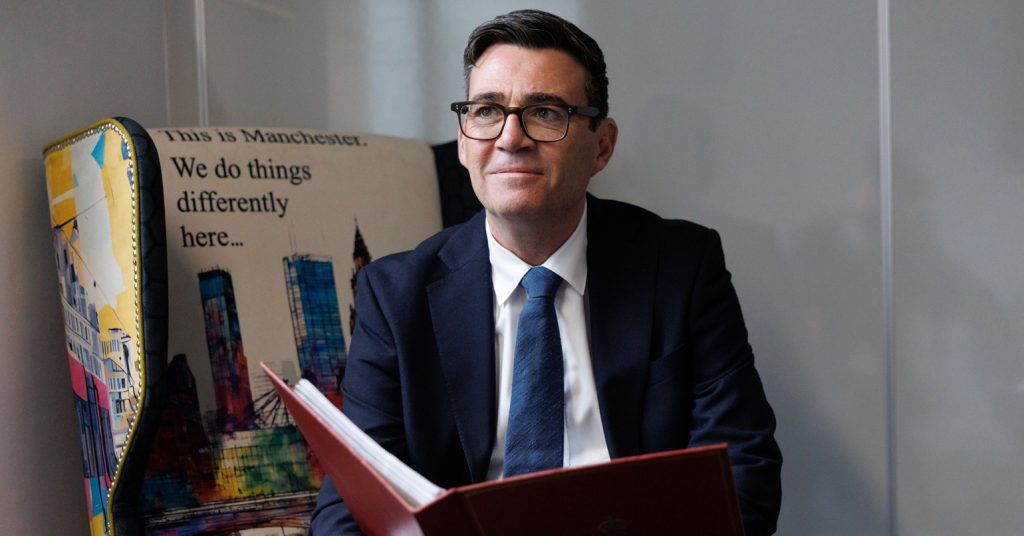
Concerned by what they saw as Andy Burnham’s radio silence on the climate crisis, last month, 50 climate groups – including Friends of the Earth, Greenpeace, WWF and Green New Deal Rising – felt compelled to write a letter to the prime minister calling on him to “break his silence”. They wanted Burnham to make clear that the cause of the five recent heatwaves, and the droughts and wildfires that followed was the climate crisis.
They pointed out that as mayor of Greater Manchester, Burnham had made “powerful statements” about the climate crisis, including backing the fossil fuel treaty – a proposed international pact on phasing out coal, oil and gas.
Yet, since becoming prime minister, Burnham’s relative silence on climate change, alongside hints that he is considering approving new oil and gas fields at Rosebank and Jackdaw, have caused major concern among environmentalists.
Danny Gross, a campaigner at Friends of the Earth, tells Left Foot Forward: “Andy Burnham has not been vocal enough on the climate crisis.”
He said it was good that Burnham had “finally” convened a Cobra (Cabinet Office Briefing Room) meeting on the extreme heat on 13 August, and that he banned disposable barbeques. However, he added “that’s absolutely not enough”.
“What was disappointing for us and lots of other people was that it took Burnham so long to even talk about the climate crisis or even link the extreme weather we’re having to the climate crisis,” he said.
Rosebank and Jackdaw oil and gas fields
Gross describes speculation that Burnham is considering approving new oil extraction at Rosebank and gas extraction at Jackdaw as “really worrying”.
To tackle the climate crisis, Gross says the government needs to create measures to adapt to the changing weather, alongside “strong action to cut our emissions as much as possible, which means saying no to climate-wrecking projects like Rosebank and Jackdaw”.
He said the decision is “a big test for the government” and if they are approved “it would seem like a white flag in a way”.
“It will send a very negative signal about their commitment to tackling the climate crisis and transitioning away from fossil fuels, which is a root cause of our cost of living crisis,” Gross says.
However, if the government decides to approve Rosebank and Jackdaw, Gross makes clear that “lots of campaign groups will be looking at the legality of the decision” and will continue to campaign against new fossil fuel projects.
‘Adapting’ to the climate crisis
After a destructive summer of heatwaves, wildfires and droughts, the Met Office has warned that an “unprecedented” El Niño event, which is when eastern Pacific temperatures rise 0.5°C above the long-term average, is likely to bring storms to the UK and North West Europe this autumn.
In response, Friends of the Earth is urging Burnham to enact “much more comprehensive measures” to adapt to the climate crisis, including retrofitting buildings and creating robust plans to combat flooding.
In fact, the climate charity is taking the government to court over its “dangerously inadequate” national adaptation plan, which it says fails to protect the public from extreme weather such as heatwaves and floods.
Gross says: “A big part of climate adaptation is about managing flood risk. There has been underinvestment in this area and it’s a big responsibility for the government to really invest in flood defences, including natural climate solutions.”
Media representation of the heatwaves
The media also has a role to play in tackling climate change. When talking about the extreme weather, Gross says that campaign groups, media outlets and politicians all have a responsibility to talk about “the root cause of it – which is climate change”.
At a time where the Right has fractured the political consensus on net zero, with Tory leader Kemi Badenoch abandoning her party’s net zero by 2050 target and Reform bashing “net stupid zero”, sections of the media are adding to the political backlash.
When it comes to media outlets, analysis by investigative newspaper Carbon Brief published in January found that for the first time since 2011, there were more editorials in UK newspapers in 2025 against taking action on climate than supporting it.
In total, almost 100 newspaper editorials opposed climate action in 2025, while 112 editorials – more than two a week – included attacks on then environment secretary Ed Miliband.
Another research paper by the Energy and Climate Intelligence Unit found that almost three quarters (72%) of newspaper articles about the heatwaves that took place in June this year did not mention climate change.
James Painter, a research associate at the Reuters Institute for the Study of Journalism, says that to tackle this, “Politicians should be pressing for a more robust Independent Press Standards Organisation, and be calling out the misinformation with more regularity”.
Lobbying
At the heart of anti net-zero narratives is lobbying by fossil fuel interests. The Conservatives have accepted at least seven million in donations from funders and directors of climate denialist organisations – the Global Warming Policy Foundation and its linked pressure group Net Zero Watch.
Reform UK is advising The Heartland Institute, a US-based organisation that rejects scientific consensus on climate change. The party’s biggest donor, Christopher Harborne, owns AML Global, a company that supplies jet fuel derived from crude oil.
Angharad Hopkinson, political campaigner for Greenpeace UK, told Left Foot Forward: “The main thing stopping climate action is fossil fuel money and lobbying. Oil and gas companies use their considerable resources to ensure that climate disinformation is distributed to the public, online and in broadcast and print media.”
She says: “To combat climate disinformation from the right, we need transparent political funding, robust counter-messaging based on real science, and strong public demand for long-term climate policies.”
Positive stories about climate action
Gross says he thinks “the biggest obstacle to addressing the crisis is no longer denial but defeatism” – the idea that climate change is such a huge problem that there is ‘no point’ in trying to solve it.
A prime example of this was the Reform deputy leader, Richard Tice, recently saying to the public: “When it’s a bit warm, let’s enjoy it”.
But in positive news, the public hasn’t bought into climate denial or defeatism. Hopkinson points out that polling has shown that people want more action on climate change, not less.
YouGov polling from November last year revealed that 60% of Brits back net zero targets. In addition, 39% of Britons said the government is currently not spending or doing enough to combat climate change.
Hopkinson says: “As the climate delayers and deniers get louder, we have to resist and share climate science strongly in return. Not to persuade the deniers, who frequently don’t believe their own lines, but to let everyone else know that they are in the majority, and should be listened to.”
Gross says that campaign groups, media outlets and politicians also have a responsibility “to tell more hopeful and positive stories about how climate action can improve people’s everyday lives”.
For example, telling stories about how retrofitting homes keeps them warmer in the winter and cooler in the summer, while reducing people’s bills and emissions, or how giving people the ability to install plug-in solar panels, as the government did last week, will help them generate their own electricity and reduce their gas consumption.
To borrow Tice’s words, the response to climate change should not be all “doom and gloom”. Action is being taken to tackle the climate crisis, and most of the public backs it.
Olivia Barber is a reporter at Left Foot Forward
Left Foot Forward doesn't have the backing of big business or billionaires. We rely on the kind and generous support of ordinary people like you.
You can support hard-hitting journalism that holds the right to account, provides a forum for debate among progressives, and covers the stories the rest of the media ignore. Donate today.
Donate today