Reform’s first year running councils: ‘The atmosphere in the chamber has changed’
Reform's first year running councils seems to have been defined by a focus on 'culture war' issues
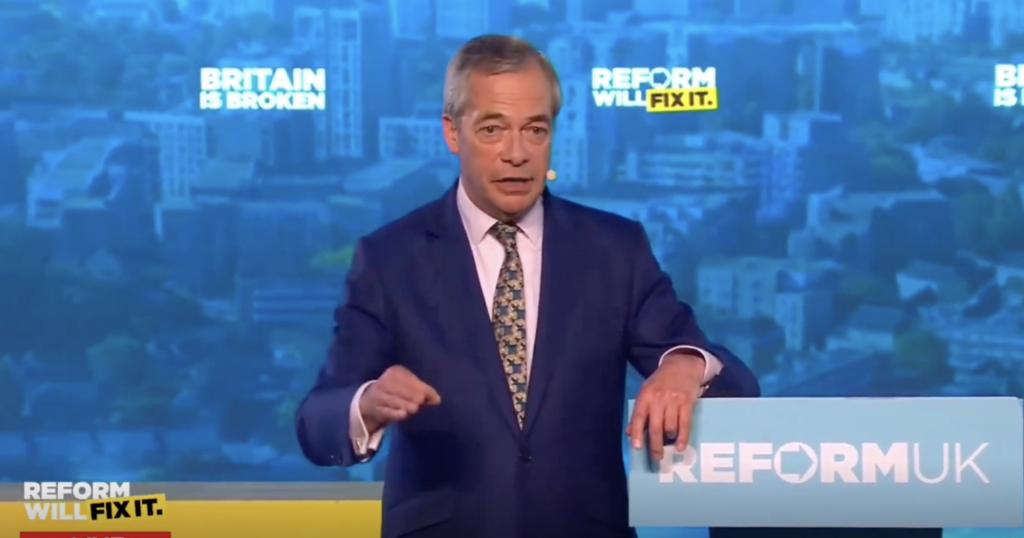
When Reform took control of 10 county councils and became the minority administration on three others last May, there was concern among many councillors about what was to come. Green Party councillor for South Belper and Holbrook, Gez Kinsella, says “initially we were bracing ourselves for the worst” when Reform won control of Derbyshire County Council. But in the months that followed, the leader of the Green Party group said it quickly became clear the new administration was “kind of a continuation of the Tory administration”. Over the past eleven months, Kinsella says: “I don’t think there’s been a lot of change”.
Yet assessing Reform’s record is not straightforward. In the run-up to the local elections last year, Reform did not put out detailed local manifestos, which means there are few promises to measure the party against.
Where changes have been introduced, it has often been on issues linked to culture war divides. In Derbyshire, Reform removed references to net zero and emissions from council language. In Durham, Reform changed the councillor disciplinary process and added a clause to the councillor Code of Conduct to strengthen “freedom of expression”.
Councillor behaviour and complaints processes
“The atmosphere in the chamber has definitely changed,” says Anne Clarke, a Labour and Co-operative councillor for New Mills and Hayfield ward in Derbyshire.
Clarke said that in one full council meeting “lots of us were very upset because it appeared that a Reform cabinet member was shouting at a member of the public who had come to ask a question”.
In a meeting on 10 December last year, a member of the public said she was concerned about misuse of the St George’s flag by the far-right and racist groups.
She asked whether the council would consider flying the Union flag instead of the St George’s flag on council buildings as it represents the whole of Britain.
Responding to her question, Stephen Reed, a Reform councillor and cabinet member for business services, raised his voice, saying that the St George’s flag stands for ‘unity and inclusion’ and that people cause division by focusing too much on diversity and the use of the flag.
Referring to Reed appearing to shout at the member of the public, Clarke said: “You just wouldn’t have had that before.”
In Durham, Reform has changed the code of conduct to allow for “a degree of immoderate, offensive, shocking or provocative expression”. The Conduct and Standards Committee, which oversees councillor adherence to the code of conduct, has also been changed.
The Reform administration has changed it so that the committee is now run by councillors rather than council officers.
Green councillor Jonathan Elmer said this could affect how complaints are handled, arguing that complaints against Reform councillors are unlikely to be upheld “regardless of how obnoxious and repulsive they’ve been” because there is “no balance on the committee”. The committee consists of six Reform councillors and three opposition members: one Liberal Democrat, one Independent and one Labour.
On the change to the councillor Code of Conduct, Elmer said: “What they want to do is enable a mechanism to greenlight, misleading, repulsive, divisive language.”
The Reform leader of Durham County Council, Andrew Husband, said that the committee is “politically balanced”. He claimed that there has been “a high percentage of breaches” involving opposition councillors that have resulted in no further action, but didn’t provide figures to support this.
Husband added that “the only difference” under the new system is that hearings are no longer officer-led “in a closed room”, but take place in front of a panel that includes opposition councillors. “So far we have received no complaints of unfair process,” he said.
LFF has submitted a Freedom of Information request to Durham County Council for complaints data.
Net zero
A week after winning control of Derbyshire County Council last May, Reform axed the climate change committee, which made a small saving of £12,988 – the cost of the committee chair and vice chair’s allowances.
The climate change committee was established in 2021, to measure progress against the council’s net zero targets.
The Reform council leader, Alan Graves, said that the administration did not take the decision in order to make “minor savings” but to “reverse the chase of the climate change agenda”.
Graves also claimed that “the net zero agenda has driven poor council decisions for years”.
In February, Reform renewed the climate change strategy introduced by the Conservative administration, but renamed it the ‘Environmental sustainability policy’ and removed all references to climate change, net zero and carbon emissions.
Kinsella said: “Language is really important to them, they talk a lot about ‘common sense’ and say ‘we’ll partake in issues to do with climate change when it’s common sense’.”
He added that “there are a lot of inconsistencies” in Reform’s approach to climate change. Reform approved a motion to ban solar farms across Derbyshire, which is not something they have authority to do, but has approved plans to develop a solar farm on ‘farmland’ on a former colliery site in North Derbyshire, which has received £700,000 in government funding.
In Durham, Reform scrapped the council’s pledge to achieve net-zero by 2045 and has presented motions at full council calling for coal mining to be brought back to the North-east.
One opposition councillor in Durham said: “Reform talks about the negative impacts of wind farms and solar fields, but we remember a time in County Durham when the whole area was polluted and covered with coal spoil heaps and open cast coal mines and landscapes were utterly degraded.”
Alison Gray, a Labour councillor for Lanchester and Burnhope called the Reform council’s vow to bring back coal mining as part of its plans to reindustrialise Durham “Trumpian slogans”. “Many former miners would hate the thought of their children going down the mine again,” she added.
Reform also scrapped plans for solar panels to be installed on eight council buildings, which Gray said “would have saved a lot of money”. Liberal Democrat councillor Mark Wilkes, who has led the opposition’s campaign to keep the solar project, said the scheme would have saved £77,000 per year.
Doge and DEI
Reform announced that it would set up an Elon Musk-inspired cost-cutting team after the May elections last year. Kinsella said that in Derbyshire, councillors had the impression that a Doge squad would come “unannounced and sack people left, right and centre, but actually none of that happened”. “It was all very much a damp squib,” Kinsella said.
He said that Reform couldn’t find big savings “because there isn’t loads of inefficiency or waste”.
Alan Graves, the Reform leader at Derbyshire County Council, said their cost-saving initiatives had “hardly [been] a damp squib” and that Reform had found millions of pounds in savings. He said Reform has delivered on the budgeted savings plan of £35 million for 2025/26, as well as a further £42 million in savings.
He stated that some of these additional savings are included in the 26/27 budget savings programme of £43 million, but did not give examples of where the efficiencies would be made.
One area where Reform said they would make cuts in Derbyshire was on diversity, equality and inclusion.
Clarke said: “They probably had this idea that we had a huge diversity and inclusion team and that they could make cuts there, but that had already been done by the previous administration.”
Graves said that cutting DEI initiatives was “not about savings, but the direction the council wants to take”. He added: “Our focus is on ability rather than protected characteristics”.
Reform in Derbyshire has a ‘Doge’ cabinet member, John Lawson, who said last June that he would bring the council’s finances “back from the brink”, despite admitting there was “limited scope” for savings to be made in the short-term. The Reform council has now said it will spend up to £5 million on employing consultants to identify savings.
Clarke said that she asked a question at cabinet about the broad range of projected savings Reform expects the consultants to identify. Savings are expected to be between £19.2 million and £38.7 million.
“I said, ‘well what confidence have you got when you’ve got that wide of a range?’,” Clarke said.
In West Northamptonshire, leader of the Labour group Sally Keeble, told LFF that Reform had had to keep the council’s diversity training, but “rebranded it as ‘the legal framework for taking decisions training'”.
‘Opposition must feel very irrelevant’
In Durham, Husband said that “it seems the opposition feel very irrelevant”. He maintains that Reform has “achieved something they [the Conservatives] never could in only 9 months”. Likewise, in Derbyshire, Graves claims that Reform has identified £43 million in savings for 2026/27, but he did not give examples of where these savings would be made.
From these conversations with opposition and Reform councillors, it seems Reform has delivered few sweeping policy changes so far. County councils run by other parties have typically focused on trying to deliver day-to-day services – adult social care, buses, libraries, bin collections and potholes.
While Reform has also done some of that, the party’s approach has focused more on reshaping the council’s priorities, with a particular focus on making wins on broader ‘culture war’ issues, such as net zero, diversity, equality and inclusion and campaigning for hotels for asylum seekers to be shut down. Whether this is what the public will want to vote for in the upcoming local elections remains to be seen.
Olivia Barber is a reporter at Left Foot Forward
Left Foot Forward doesn't have the backing of big business or billionaires. We rely on the kind and generous support of ordinary people like you.
You can support hard-hitting journalism that holds the right to account, provides a forum for debate among progressives, and covers the stories the rest of the media ignore. Donate today.
Donate today