



The government's reforms are welcome but they won't end political corruption
Prem Sikka is an Emeritus Professor of Accounting at the University of Essex and the University of Sheffield, a Labour member of the House of Lords, and Contributing Editor at Left Foot Forward.
Political corruption is normalised and political donations enable the super-rich to buy access to policymakers and shape public policies. Their interests are prioritised. The consequences for the rest are dire.
Some 14.2m people live in poverty. The poorest are courted by politicians, at the time of elections, but despite working hard their incomes continue to stagnate. The average real wage has hardly moved since 2008. 37% of all universal credit claimants are in work. Millions rely on foodbanks and charity. Low incomes deprive people of nourishing food, good housing, education, healthcare, pension, and life. On average men from deprived areas have 9.7 years lower life expectancy than those living in the least deprived areas. The gap for women is 8 years.
Energy giants have made over £125bn profits on their UK operations since 2020 even though over 120,000 people a year die from fuel poverty. Some 300,000 people a year die prematurely whilst awaiting a hospital appointment. The tax system is designed to hit the poor the hardest. The poorest 20% pay a higher proportion of their incomes in taxes than the richest 20%. Meanwhile, the richest 1% of Britons has more wealth than 70% of all other Britons. Capital gains and dividends, mainly accruing to the well-off, are taxed at lower marginal rates than wages.
The above state of affairs is the outcome of a political system that is disconnected from the people. Everyday people see political parties being bought and sold in the influence bazaars. Too many legislators are hired on contrived consultancy contractors and directorships to serve the interests of corporations and super-rich. Political corruption is deepening. The recent Corruption Perceptions Index published by Transparency International shows that the UK has dropped to its lowest ever score. It is now more corrupt than Estonia, Hong Kong, Uruguay, Japan, Ireland and Australia, and is well on the way to emulating the US where no one can run for high office without money from corporations and the super-rich.
The corrosive effects of political donations are well documented. The Committee for Standards in Public Life said: “it is undesirable that a political party should be dependent for its financial survival on funds provided by a few well-endowed individuals, corporations or organisations. The familiar maxim that he who pays the piper calls the tune is widely believed to operate in the sphere of politics. Whether or not the suspicion is justified, the ordinary voter is apt to suspect that a very large gift to a political party be made with some specific object in view.” Yet no political party wants to end bribes disguised as donations.
The UK political donations are governed by the Political Parties, Elections and Referendums Act 2000. In general, individuals on the electoral register, UK-registered companies, UK-registered trade unions and unincorporated associations can make political donations to parties and individual legislators. Parties have to disclose donations above a certain amount to the Electoral Commission. However, disclosures do not curb the trade in influence. Of course, the super-rich don’t “donate” money to political parties. They invest and buy influence and power. The grateful politicians oblige by organising threatening issues off the political agenda, providing feather-duster regulatory systems, providing tax perks to the rich, crony contracts, VIP lanes, honours and peerages.
The UK political parties spent record £94.5m on the 2024 general election. Anyone on the electoral register can pass money from Elon Musk or Mafia to political parties. Foreign-resident UK citizens are on the electoral register and can donate money even though they have not lived here for decades and pay no taxes. There is no way of checking the origins of their political donations. Companies make donations without generating sufficient revenues or profits in the UK. Money from abroad can be passed through shell companies to disguise the origins. Small companies publish only rudimentary accounts and are a convenient vehicle for concealing identity of the real donors. Evidence shows that millions of pounds donated to political parties come from unknown or questionable sources, including those who have been accused or found to have bought political access, involved in corruption, fraud and/or money laundering.
Parties are not fussy about whose money they accept. The Conservatives happily accepted £15 million from the Phoenix Partnership, wholly owned by Frank Hester even though he said that “MP Diane Abbott made him “want to hate all black women” and that she “should be shot”. Since 2016, Hester’s company received £591 million from public contracts. Labour accepted £4m from Quadrature Capital, controlled by a Cayman Islands-registered hedge fund with interests in fossil fuels, private health firms, arms manufacturers and speculation. Billionaires and tax exiles are handing large sums to Reform UK. Elon Musk promised $100m to Reform UK to advance his ideological objectives. Last year, Reform UK had to return over £200,000 in donations from 18 ineligible overseas donors. One time Reform UK leader in Wales, Nathan Gill MEP, was sentenced to 10-and-a-half years in prison for accepting disguised bribes to promote pro-Russian narratives by tabling parliamentary motions, delivering speeches, and media interviews.
Confidence in the institutions of government is a major casualty of political donations. People are shunning the political system. In the 2024 general election, the voter turnout was 59.9%. The feeling is that it doesn’t matter who you vote for, corporations and super-rich always win because they fund parties and leaders renege on election pledges. Policymakers eagerly meeting donors rarely show the same enthusiasm for meeting homeless, hungry and less fortunate.
We need to criminalise the “direct” receipt and payment of donations to political parties. The Bribery Act 2010 can be modified to achieve that objective.
Any call to ban “direct” political donations leads to howls of protests from those used to buying/selling the political system. The super-rich claim that they are doing social service, promoting democracy and must not be prevented from doing so. We need to call their bluff. Firstly, let us impose no limits on the amount of donations. Secondly, not a penny must go “directly” to any political party. The parties would only be allowed to receive membership fees, nothing else. Thirdly, all donations, regardless of the source, must be accumulated in what I would like tom call a Foundation for Democracy. At regular intervals, the funds can be distributed to parties in accordance with a formula based on party membership and share of votes in elections. This would force parties to connect with the people. Of course, the so-called defenders of democracy would soon baulk at making payments to the Foundation of Democracy, as they won’t be able to buy politicians. This would open the way for state-funding for political parties. Around 70% of countries have some form of direct funding of political parties. A few pennies a year can help to reduce the hold of the super-rich on the political system.
However, the Representation of the People Bill, published last week, only tweaks the system. Instead of ending, it regularises bribes disguised as political donations. The new law will mean a majority of those with “significant control” of a company will have to be based in the UK and registered on the electoral roll. Shell companies or those whose parents companies are based overseas will only be able to donate £500 to parties or £50 for candidates.
Of course, corporate controllers can be on the electoral roll but not be resident in the UK. Shell companies don’t publish meaningful accounts, making it difficult to track their political trade. Companies can manufacture revenues and profits through intragroup and related party transactions.
The Bill aims to stop foreign companies offering high-value gifts to MPs, who will not be able to accept them unless they are below £2,230.
There will be no cap on donations by eligible individuals and corporations. Political parties would be required to consider the risk that a donor may be obscuring or facilitating donations from an impermissible source.
Some of the reforms are welcome but they won’t end political corruption. The super-rich would continue to buy political influence. For example, Reform UK received £9m from a cryptocurrency investor, who lives in Thailand but is on the UK electoral register. Such donations will continue. There will be no change in the capacity of the UK-resident super-rich to buy political parties. Normal people are in no position to grease political palms. 39% of adults have £1,000 or less in savings. Almost half of Britons have under £25 left at end of week after meeting costs of essentials. 24m people live below the minimum living standard. The bottom 50% of the population owns less than 5% of wealth and the bottom 20% has only 0.5%.
Abraham Lincoln associated democracy with “government of the people, by the people, for the people”. Such ideals can’t be achieved as long as big money can buy political parties, legislators and subvert public choices.
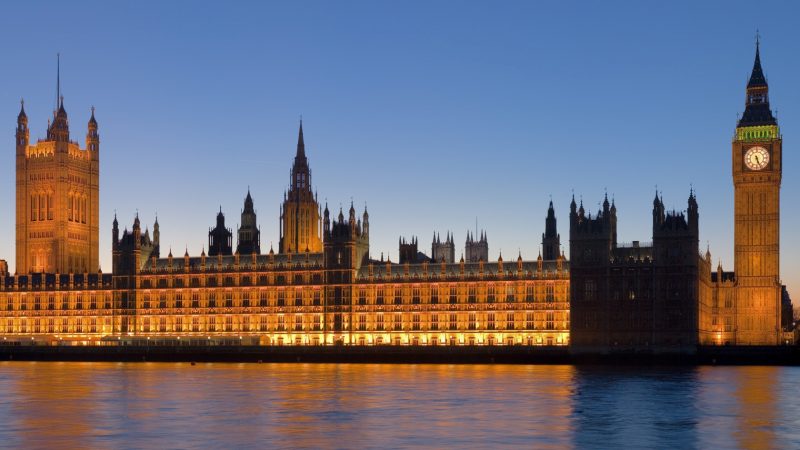
Image credit: Diliff – Creative Commons
Left Foot Forward doesn't have the backing of big business or billionaires. We rely on the kind and generous support of ordinary people like you.
You can support hard-hitting journalism that holds the right to account, provides a forum for debate among progressives, and covers the stories the rest of the media ignore. Donate today.