



The Animal Welfare Strategy is a good start, but if it is to be a document we can be proud of, it must close gaps where cruelty is most extreme
Jenny Canham, Public Affairs Lead, The Vegetarian Society
At the end of December 2025, the Government finally released its long-awaited Animal Welfare Strategy, promising the biggest reforms in a generation. The strategy includes significant leaps for animal welfare, committing to areas campaigners have long advocated for, but could it have gone further?
In their Ministerial Foreword, The Rt Hon Emma Reynolds MP and Baroness Hayman of Ullock highlight the UK’s proud history in animal protection, from passing the world’s first animal welfare law in 1822 to pioneering new standards today. They also emphasise the importance of animals in our culture and daily lives, from companion animals to wildlife in our gardens, and promise a strategic and collaborative approach to improve the welfare of animals throughout their lives.
Several areas of the strategy set a strong starting point. Ministers commit to banning trail hunting, addressing long-standing concerns that it enables illegal hunting and causes unnecessary suffering to wild animals. They pledge to end the use of snares and review other trapping practices that risk serious harm. The strategy also seeks to close loopholes in pet travel and import rules and strengthen enforcement to tackle puppy smuggling and low-welfare breeding. On farmed animals, the government promises to consult on ending the use of cages, including enriched colony cages for hens and farrowing crates for sows. While these commitments are welcome, action must follow swiftly to turn words into legislation. It is promising that early consultations on cages for hens, and on the implications of tail-docking and castration for lambs, have already begun.
Farmed animals rightly feature prominently, as they are the largest group of animals under human care and often experience extreme cruelty. At any one time, England has around 150 million farmed animals, including 22 million cows, sheep, and pigs, and 133 million chickens. Each year, approximately 1.1 billion meat chickens are reared and slaughtered (Defra, 2025).
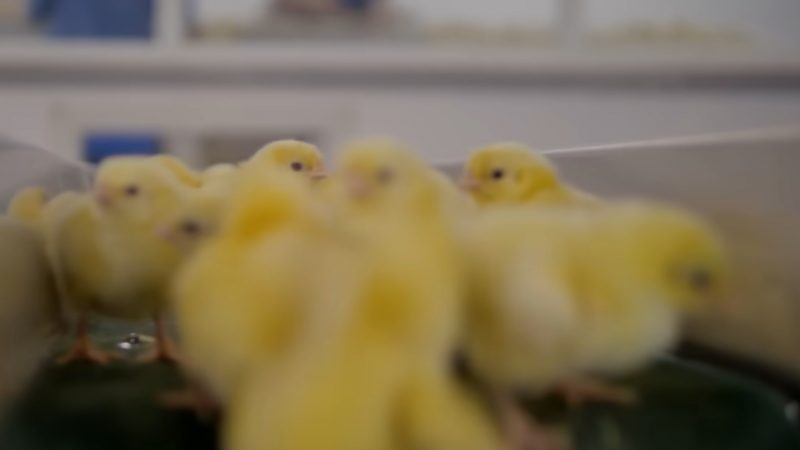
Yet one glaring omission remains: the strategy falls short on ending cruel and unnecessary male chick culling. Every year, roughly 45 million male chicks are killed within hours of hatching because they cannot lay eggs. In 2026, it is astonishing that a practice this unethical continues, and most eggs sold in the UK are linked to it.
Over the past year, ending male chick culling has featured repeatedly in parliamentary discussion, from debates and cross-party letters, to MPs raising the issue in parliamentary questions, with public figures such as Dame Joanna Lumley supporting the call. Ministers acknowledge the scale of the problem, referencing findings from the Government’s own advisory body, the Animal Welfare Committee: ‘Each year approximately 40 to 45 million male chicks of conventional laying hen breeds are culled within 12 to 36 hours of hatching (AWC, 2023).’ They also note alternative technologies that allow hatcheries to avoid killing chicks and state they ‘would like to see an end to the practice’ and will ‘encourage industry to end the practice of culling male laying hen chicks.’
While these words are welcome, they remain too cautious given the scale. The UK is falling behind: other European countries including France, Germany, and Austria have banned the practice, and in-ovo technologies are being adopted globally, including in the United States. Without stronger, enforceable action, the strategy risks being a missed opportunity to end one of the most extreme forms of animal cruelty in UK farming. Cross-party MPs are not forgetting this issue anytime soon: in a Westminster debate on the Animal Welfare Strategy on 21st January 2026, six MPs voiced support for ending male chick culling, proving that calls to strengthen ministerial action on this topic will only grow in 2026.
That said, overall, there is cause for optimism. The strategy sets a clear vision for a future where animals are treated better. But to achieve this, the government must move quickly to turn promises into enforceable policies, particularly on practices like male chick culling where alternatives exist.
The Animal Welfare Strategy is a good start, but if it is to be a document we can be proud of, it must close gaps where cruelty is most extreme, enforce existing and emerging standards, and show the world that the UK continues to lead on animal welfare. The time for words is over; now is the time for action.
Left Foot Forward doesn't have the backing of big business or billionaires. We rely on the kind and generous support of ordinary people like you.
You can support hard-hitting journalism that holds the right to account, provides a forum for debate among progressives, and covers the stories the rest of the media ignore. Donate today.