



Why are Wonga speaking at a Labour policy meeting on household debt?
It appears that a representative from Wonga is speaking at a Labour Policy Review meeting on household debt. Whatever next? Advice from McDonald’s on healthy eating?
It appears that a representative from Wonga is speaking at a Labour Policy Review meeting on household debt. Whatever next? Advice from McDonald’s on healthy eating?

With evidence overwhelmingly pointing to the need for demand boosting measures to kick-start the economy, we need to ask City economists the same question that John Maynard Keynes asked when challenged about his change in economic policy to tackle the Great Depression in the 1930s:
“When my information changes, I alter my conclusions. What do you do, sir?”

We are proud that last week Torfaen became the first council in the UK to pass a motion calling on the government to implement a Financial Transaction Tax (FTT). It heralds the start of a nationwide initiative by the Robin Hood Tax campaign to get as many local councils signed up as possible.

A modest redistribution of wealth from the top to the bottom would give a pay rise of £40 a month to the lowest paid 25 per cent of the income scale, according to a new report from the High Pay Centre.

Some have expressed bemusement at my claim in an earlier post that the only genuine deficit reduction policies are those which stimulate private sector investment and/or reduce their savings. I should expand.

UK construction sector had its worst month in February since October 2009, according to new data from Markit/CIPS. New work has fallen for the ninth consecutive month, the report says, and February data pointed toward a sharper slide, with thetest

A recent article on Conservative Home bemoaning the fact that the reinvigorated Right-to-Buy policy has not taken off and suggesting a further raising of the discount deserves challenging by the reality-based policy community.

Just three out of 27 EU countries saw bigger fall in living standards than the UK in past two years since George Osborne’s autumn 2010 spending review.

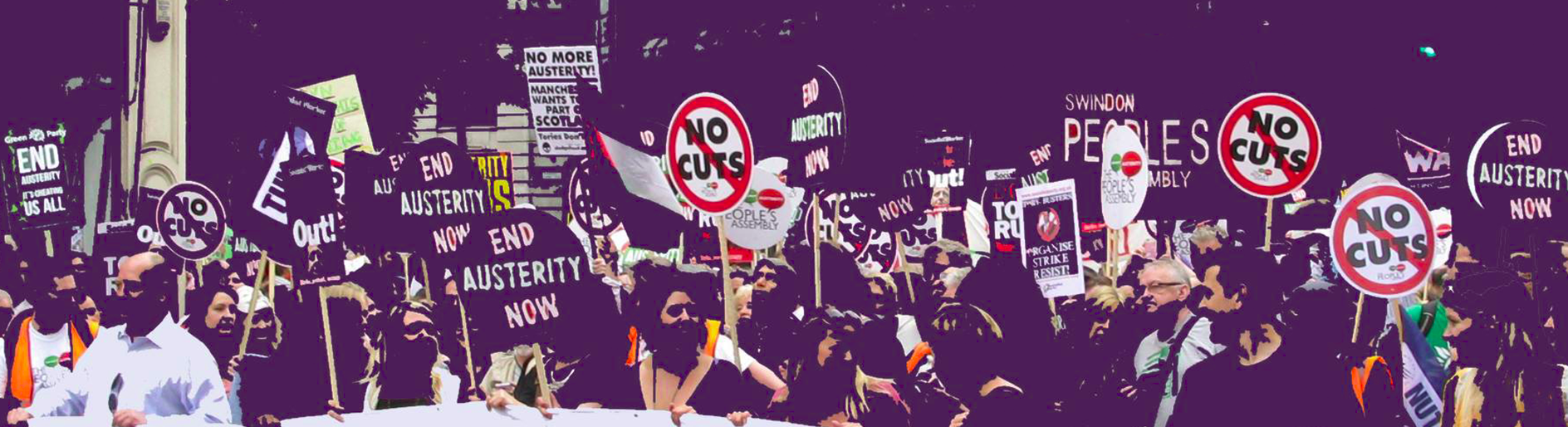
Figures published last week showed a shock contraction in manufacturing which rounded off another dire week for the UK economy and signalled yet more misery for ordinary working families at the hands of government austerity.

That George Osborne should hail the loss of the UK’s AAA credit rating as evidence that yet more of the same cuts and austerity are needed is an alarming example of Orwellian “doublethink.” What is needed is Keynesian government pump priming, to fill the potholes, build houses, improve local rail networks (not HS2), invest in renewable energy sources etc, and so create employment, restore growth, increase tax revenues, eliminate the current deficit and bequeath to future generations a spanking economic infrastructure and a healthy society.