Neal Lawson interview: ‘If you want to reverse 40 years of neo-liberalism it’s going to take more than speeches and policy’
Neal Lawson is director of pressure group Compass and co-founder of new Labour group Mainstream Neal Lawson has been a […]
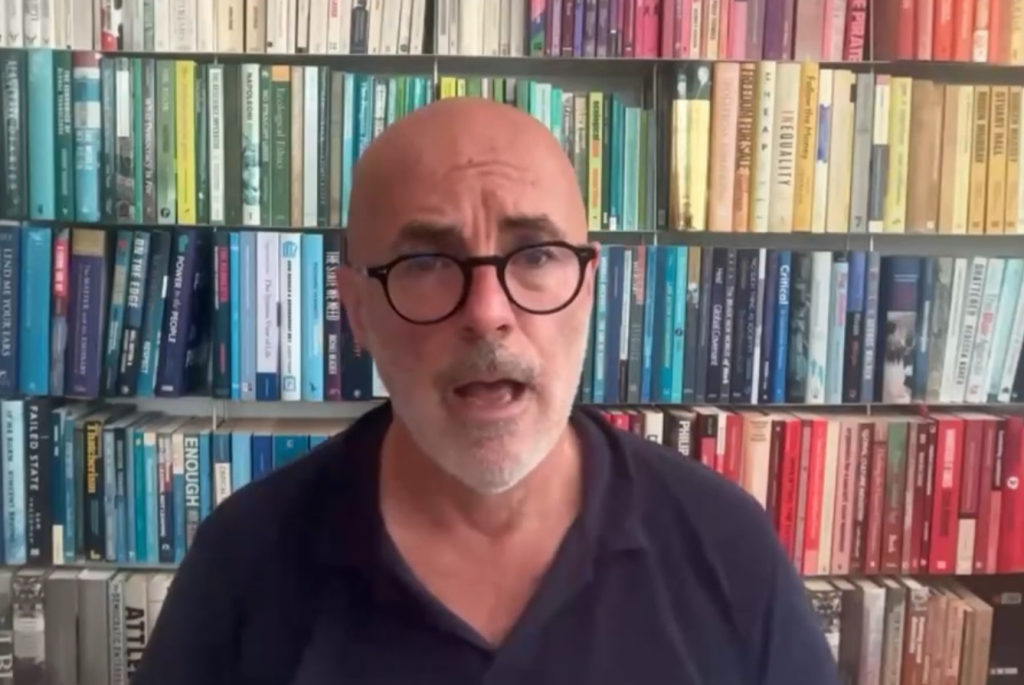
Neal Lawson is director of pressure group Compass and co-founder of new Labour group Mainstream
Neal Lawson has been a long-standing member of the Labour Party, having joined at the age of 16 in 1979. He has held various roles, including as an advisor to Gordon Brown and as co-founder of the Labour affiliated centre-left pressure group Compass. Recently he has also heped co-found Mainstream, which is supportive of Andy Burnham.
We interviewed Lawson for LFF, asking him about how he thinks Burnham has peformed thus far, whether he still believes Reform poses a credible threat despite its falling polling ratings, and why he thinks Labour critics of electoral reform are wrong.
‘It was a better speech than I thought it was going to be’, says Lawson when asked what he made of Burnham’s first conference speech as Labour leader.
The Prime Minister focused on the theme of ‘hope again’ as he set out his programme for government, with a series of bold and radical announcements designed to restore people’s faith in government to make their lives better and to tackle the cost of living crisis. He vowed to bring water and energy under public control, to set up a national care service, free at the point of use, a commission on electoral reform and to establish a new era of council house building.
“I was pleased to see lots of it”, said Lawson, for example on social care, it’s about human need not profit”.
Lawson is also thrilled to hear the Prime Minister talking about reform of the electoral system, a cause that he has championd for years, arguing that it could lead to a more collaborative style of politics.
“We don’t do radical things without changing the democratic and political nature of our politics, that was what attracted me to him in the first place”, he says.
However, Lawson also cautions against complacency and just sound bites.
He says: “I worry about gap between rhetoric and reality, Andy’s a brilliant politician in terms of narrative, talking to the country and spotting the big issues, my concern is, is there an intellectual architecture for this?
“If you want to reverse 40 years of neo-liberalism it’s going to take more than speeches and policy, it’s going to take a big movement and big ideas”.
Burnham clearly believes much of Britain’s problems today began with the neo-liberal agenda pursued by Thatcher, which involved mass privatisation of life’s essential utilities and a hollowing out of communities up and down the country through a programme of deindustrialisation. But what the likes of Lawson want to see is not just a correct dignosis of what got us here but also more radical solutions.
Nonetheless, he calls Burnham’s speech the ‘upgrade that the party and country needed’.
On electoral reform, divisons are emerging within the Labour movement. Some have argued against abolishing the First-Past-The-Post electoral system, warning that it could hearld the end of majority Labour governments, while giving far-right and extremist parties undue influence.
Proponents of the status quo believe that FPTP leads to ‘strong and stable government’.
What does Lawson make of such criticisms? “Even if you win a majority under FPTP as Labour did in 2024, 170 seat majority, you can’t get a bigger majority, has that led to strong, stable and purposeful Labour government?
“No, it hasn’t because underneath that there is a fragmented electorate that are voting for different things in different places and they may consolidate around a least bad option at election time to keep the right out, but that doesn’t give you a mandate to govern the country effectively.”
What about proportional representation giving undue influence to extremist parties, does Lawson not worry that the likes of Restore could all of a sudden have a seat at the table?
“You can either have an anti-democratic system that says no you’re not going to get your representation and they effectively go underground and people turn on the establishment or you have a system with PR which does reflect vote share.”
Lawson thinks the process of having to negotiate a position with other parties tends to have a ‘tempering effect’ on extreme parties and many of their policies get watered down.
The budget, set to be delivered later this month, could prove to be a tricky period for the government. Voters want immediate change to tackle the cost of living crisis, yet Burnham’s hands are somewhat tied by the party’s self-imposed fiscal rules, as well as economic headwinds such as rising inflation, fuelled by conflict in the Middle East. The Prime Minister has made no secret of the fact that tough choices lie ahead, with the government also finding itelf with a budget black hole of £35bn according to the IFS.
It’s a point not lost on Lawson who says that it is great to see Labour doing better in polls but that he thinks ‘it’ll hit much more difficult waters around the budget, soon after inflation kicking in and with difficult decisions to be made around welfare.’
Lawson says he is not expecting major changes this budget, but nonetheless the foundations should be laid for future budgets to be bolder and more radical.
On the point of polling, Reform has recently seen its position in the polls gradually fall, with the party lurching from one scandal to the next. Nigel Farage is still awaiting to hear from the standards committee about the outcome of the investigation into his donations, while senior party officials face investigations over trying to break laws on foreign donations.
Despite their decline in the polls, Lawson doesn’t believe you can write Farage off.
“Far-right and national populism always succeeds and does well if progressives fail in government and we don’t give people hope, Burnham has bought a bounce and optimism to the left and to progressives which is much needed and we need to deliver on that.”
He warns that those who write off Farage do so at ‘their peril’, adding that the £72 million in donations the party recently recieved is a ‘drop in the ocean that could go to the right’, warning that Labour should not duck the issue of a cap on donations.
He also feels that there will be added pressure from the right-wing press for the right to unite, warning that these are ‘ruthless, ambitious people’.
Progressives like Lawson recognise that there is still much to do to see off the threat from the right, clearly he has a role to play in the ‘intellectual architecture’ that he belives Burnham needs around him to ensure his policies can deliver for the country.
Left Foot Forward doesn't have the backing of big business or billionaires. We rely on the kind and generous support of ordinary people like you.
You can support hard-hitting journalism that holds the right to account, provides a forum for debate among progressives, and covers the stories the rest of the media ignore. Donate today.
Donate today