Brexit’s impact to face scrutiny as campaigners urge MPs to attend Westminster debate
“What, Lee Anderson?”
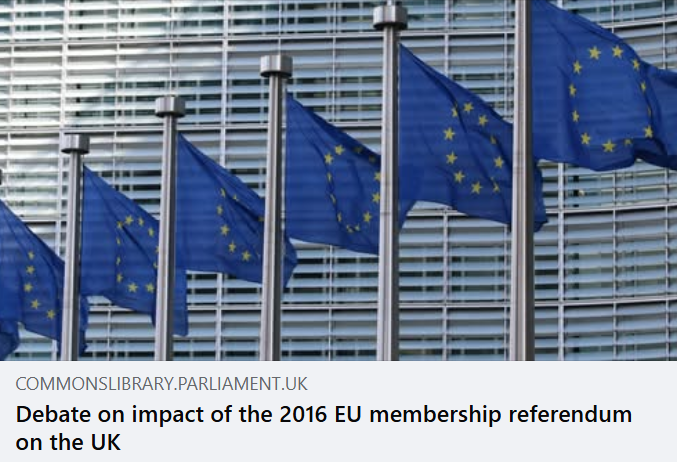
On September 2, MPs will debate the impact of the 2016 EU membership referendum on the UK in Westminster. The debate will be led by Scottish National Party MP Pete Wishart, who represents Perth and Kinross-shire. A long-standing pro-EU campaigner, Wishart supports Scottish independence and Scotland’s return to the EU and has also consistently spoken out on refugee rights.
The House of Commons Library research briefing prepared for the debate sets out the timeline of the UK’s withdrawal from the EU, including the triggering of Article 50, the finalisation of the Withdrawal Agreement under Boris Johnson’s government and the UK’s formal departure from the EU on January 31, 2020.
The briefing also examines the consequences of the end of free movement. Since the end of the Brexit transition period, UK citizens have been treated by the EU as “third-country nationals” for the purposes of travel and mobility within the EU and Schengen area.
Migration is another significant part of the debate. One of the central objectives of the campaign to leave the EU was to enable the UK to exercise greater control over migration from EU countries and reduce the number of EU citizens moving to the UK. Yet while net migration from EU countries fell after Brexit, this has been more than offset by a substantial increase in migration from non-EU countries.
Between 2012 and 2019, net migration of non-EU nationals rose relatively modestly, before dipping in 2020 at the beginning of the Covid-19 pandemic. It then increased sharply in 2021 and 2022, reaching a peak of 1.05 million in the year ending March 2023, before falling again in subsequent years. The figures therefore raise questions about the extent to which Brexit achieved one of its principal political objectives on migration.
The economic consequences of Brexit are also addressed. While the precise impact is difficult to isolate from other economic factors, the broad conclusion among many economists is that Brexit has reduced UK GDP relative to the level it would otherwise have reached and had a negative effect on UK trade.
The briefing also highlights the UK-EU relationship since the Labour government came to power in July 2024 and began seeking a closer relationship with the EU in several areas. In December 2025, the UK and EU announced an agreement on the terms of UK participation in the Erasmus+ youth and student mobility programme. A UK-EU summit is now expected to take place in autumn 2026, providing a further opportunity to discuss the future relationship.
Against this backdrop, pro-EU campaigners have urged people to make sure their MPs are aware of the debate and to encourage them to attend.
“On 2 September there will be a debate on the impact of the Brexit referendum on the UK. Might be an idea to encourage your MP to attend,” the campaign group Bremain in Spain posted on social media.
The suggestion prompted a joking response from one commenter: “What, Lee Anderson?”
Left Foot Forward doesn't have the backing of big business or billionaires. We rely on the kind and generous support of ordinary people like you.
You can support hard-hitting journalism that holds the right to account, provides a forum for debate among progressives, and covers the stories the rest of the media ignore. Donate today.
Donate today