Five key blunders that led to Keir Starmer’s departure
These are the reasons why Starmer was forced to resign
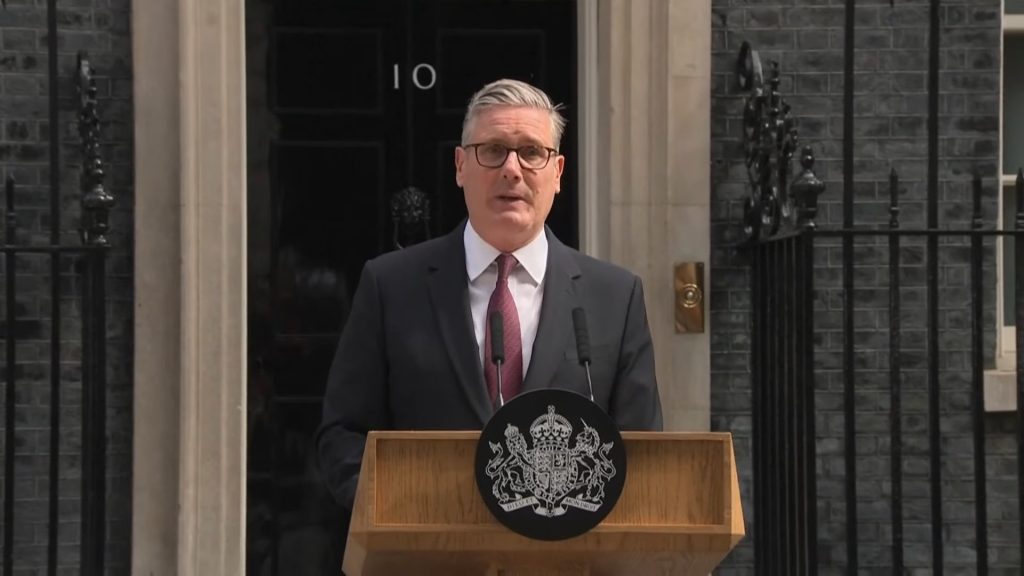
Keir Starmer has announced he’s resigning as prime minister, triggering an election for the leadership of the Labour Party. His resignation comes less than two years since he first became prime minister in a landslide general election victory. It also comes as Labour is facing disastrous poll ratings and crumbling popularity.
What went wrong? These are five of the biggest mistakes Starmer made that ultimately led to his departure.
1. That infamous LBC interview
You can trace the seeds of Starmer’s problems before he even became prime minister. In October 2023, Starmer said in an interview LBC that Israel had the ‘right’ to cut off water and power to Gaza following the October 7 massacre.
Those comments, his failure for several days to clarify them, and his subsequent policy on Israel’s assault on Gaza led to many typical Labour voters abandoning the party in droves. In the 2024 general election, Labour lost seats to independent candidates campaigning primarily on the response to the situation in Palestine.
Polling has indicated that Labour has lost huge amounts of support to parties such as the Greens, Lib Dems and independents as a result of its stance on Gaza. If you’re looking to understand why Starmer went from landslide winner to local election loser, Gaza is clearly a key element.
2. Winter fuel allowance cuts
Not long into Starmer’s time in office, another major policy position saw Labour losing significant support. His chancellor, Rachel Reeves, announced that the government would be making major changes to the winter fuel allowance – a scheme which gives support for energy bills for pensioners.
The changes would have seen only those on pension credit (ie. the poorest pensioners) receive the payments, rather than all pensioners. This sparked a massive backlash, not least because it didn’t feature at all in the manifesto the Labour Party was elected on just weeks prior.
Ultimately, the government caved to pressure and changed its approach, making some savings to the scheme but ensuring the vast majority of pensioners remained eligible.
The damage, however, was already done. Speak to anyone who has canvassed for a political party in the last two years and they will tell you how much cut-through the initial policy proposal got. That, added to the fact that this became the first of what is perceived to be many, many u-turns from the government, has played a big role on Starmer’s tanking poll ratings.
3. Appointing Peter Mandelson as US ambassador
Starmer appointed Peter Mandelson as ambassador to the US in February 2025. Mandelson was, by all accounts, a risky choice. He twice resigned from Tony Blair’s government after becoming embroiled in scandals.
Suffice to say, his role as ambassador to the US didn’t go smoothly either. He was ultimately sacked by Starmer seven months after his appointment once more details of his links to the paedophile Jeffrey Epstein were exposed.
The Mandelson scandal led to major questions being asked about the prime minister’s judgement – not least among Labour MPs and members. The former turning on the prime minister has been central to the timeline of Starmer’s departure.
4. Immigration, immigration, immigration
Since becoming prime minister, Starmer has made great pains to talk tough on immigration. There’s two clear reasons for this. First, opinion polls consistently show that immigration remains one of the biggest issues the British public are concerned about. Second, Reform emerging as the most popular party in the country has led to Starmer seeking to neutralise their number one talking point.
The problem here is that Starmer has struggled to hold together a coalition of voters around Labour’s position.
On the left, Starmer has been losing voters to the Greens, Lib Dems and others as a result of the more aggressive positioning on immigration. Starmer’s infamous ‘island of strangers’ speech, changes to indefinite leave to remain and proposals to take jewellery from asylum seekers when they arrive in the UK have been perceived by many on the left as cruel and hostile.
On the right, the radicalisation of elements of public opinion on migration has meant that Labour’s policies haven’t appeared tough enough to stop people backing Nigel Farage’s outfit or more extreme parties like Restore Britain.
As such, Starmer’s Labour has been losing votes in both direction, something which came to a head in a big way in May.
5. The disastrous 2026 local elections
To describe the 2026 local elections as disastrous for Labour is something of an understatement. Starmer’s party lost 1,498 council seats – well over half of those that were up for election. Reform won huge numbers of these, particularly in the north and midlands. The Greens, meanwhile were the big winners in London and other big cities.
Labour also lost two mayoral elections – in Hackney and Lewisham – to the Greens, lost power in Wales for the first time since devolution was introduced in 1999, and lost five seats in the Scottish Parliament.
The 2026 local elections were a culmination of everything that had gone wrong for Labour up until that point. But ultimately Labour’s performance in these elections was the final trigger for the leadership crisis that led to Starmer’s departure.
In the immediate aftermath of the elections, the Labour MP Catherine West launched a short-lived leadership challenge. Then Wes Streeting resigned as health secretary, and Josh Simons resigned his seat in Makerfield to pave the way for Andy Burnham to return to parliament.
Had Starmer managed to stave off losses on the scale that ultimately hit the Labour Party, it is very possible his resignation wouldn’t have happened today.
Chris Jarvis is head of strategy and development at Left Foot Forward
Left Foot Forward doesn't have the backing of big business or billionaires. We rely on the kind and generous support of ordinary people like you.
You can support hard-hitting journalism that holds the right to account, provides a forum for debate among progressives, and covers the stories the rest of the media ignore. Donate today.
Donate today