Ending the stranglehold of right wing media is key to fixing our politics
We need to replace it with independent media
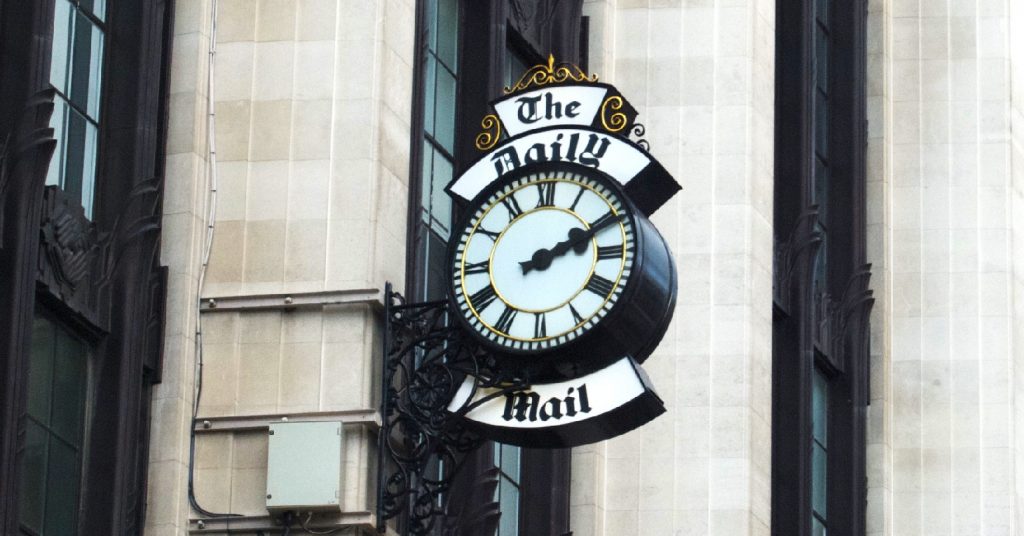
The UK’s mainstream legacy press is predominantly right to extreme right wing. Despite reductions in physical newspaper sales and the shift online, right-wing media (RWM) still dominates the news arena with a significantly larger reach than left and centre news publications.
This right-wing ascendancy has been further boosted by the GB News “soapbox” which, together with the usual suspects (the Express, Sun and Mail), provide Reform mouthpieces. There’s also been a shift further right in previously more neutral publications, notably the Telegraph and Times.
Adherence to standards of impartiality and scrutiny is now often token and in “power struggles over our ears and eyeballs” shared by influencers like Mr Beast.
Unsurprisingly, the UK now ranks a rather shameful 18th in the 2026 World Press Freedom Index with uncomfortable similarities to Orban’s Hungary. Around 70-80% of UK press media is owned by right-leaning wealthy oligarchs, as was Orban’s. Journalists have been censured using SLAPPS, regulatory appointments, digital surveillance and smear campaigns. And just as Hungary’s media became promotors of Orban’s party, Fidesz, so IPSO’s infamous toothlessness has hastened the corrosion of editorial neutrality, paving the way for the RWM to become ‘left-bashing’ Reform cheer leaders.
The heavily concentrated ownership of our news media by right-wing oligarchs is well documented. But we should look closely at how the RWM manipulates social attitudes and how we should respond.
Playtime and construction industries
The leading social media platforms (X, Facebook and Tiktok) enjoy a symbiotic relationship with the RWM in which news is mutually amplified and mediated. But despite algorithmic tailoring, much online content still flows from what the RWM decides to headline. It’s a primary, more authoritative lens through which we experience our political world on a day-to-day basis. We understand politicians not so much through what they do in the raw, or through social media noise, but through how the RWM frames them.
Framing is central to the RWM’s gladiatorial “sport” of making or breaking politicians their audacious profession renders them ‘fair game’.
This nihilistic modus operandi is common amongst the political commentariat. It’s perhaps inevitable though in a culture whose contributors, often from the same privileged education stables, are relegated to the side-lines. If their professional purpose is to comment rather than act, what’s left except to gameplay, exercising their tribal power over the actions of others?
This sport isn’t confined to the RWM, but the effects are proportional to its considerably greater reach; furthermore, its pernicious influence spans the RWM spectrum from the more subtle Times to the explicitly rage-baiting Daily Mail.
A good kicking in the name of scrutiny
RWM framing is powerful where we lack independent experience for comparison. We are generally dependent on the media for shaping our understanding of figures like Andy Burnham, Nigel Farage and Zack Polanski. With a clean slate, the RWM is largely free to construct political reality around these figures.
Polanksi’s popularity, like Burnham’s, is a RWM ‘red flag’. Their popularity is an excuse to set them up as able to ‘take the hit’. It affords a licence to discredit them under the guise of ‘extra hard-hitting scrutiny’, i.e. Trevor Phillips style ‘rottweiler attacks minus balance’.
Such grillings, delivered to a public who know little about either man, create impressions, piece by suspect piece, strongly predisposing them to negative evaluations.
Display stand labels
RWM framing relies heavily on labelling. ‘Hypnotist’, used as an early identifier for Polanski, formed a basis for further understanding, solidifying into beliefs about ‘untrustworthiness and inauthenticity’ through repetition and familiarity, and attracting other consonant labels which together formed a consistent mental ‘Polanski’ map.
Related high frequency descriptors used were: ‘actor, tax dodger, antisemite, drug legaliser, ‘narcissist’. This spicy wordplay assembled a mesh of attributes, lodging itself within social discourse and further shaping ‘Polanski’ as a faulty political type. Even as a debate, seeds were successfully planted. Such labels, splashed daily across supermarket and garage forecourt display stands, are the only prompts for some people on how to vote.
With ‘Polanski’ thus sculpted, counter-information can’t then land. Humanitarian concerns about Gaza or wealth inequality can legitimately be discussed by bodies like the UN. But out of Polanski’s mouth they are dangerous rantings.
Similarly, the Times’ strenuous efforts to portray Burnham as an unprincipled shapeshifter, minimally sows doubt amongst voters whose beliefs about him are less than rock solid.
Both politicians are ‘press clay pigeons’ – brittle flyers projected high into the political arena ready to be shot down.
Artistry
Other key tactics are reinterpretation, information suppression, selective exposure and normalisation.
The Times and others present the self-confessed ‘sexism’ of Robert Kenyan, not as the outright disqualification for becoming an MP it should be, but as showing he’s the ‘kind of normal bloke we need in politics’.
Similarly, the RWM’s interpretive dance around Farage’s alleged antisemitic behaviour and dodgy donations as ‘boyhood japes’ and ‘innocent gifts’ presents him as a blameless victim hounded by the left.
Meanwhile, behind the staggering level of voter ignorance about Reform’s ‘‘Great Repeal Bill’ is the RWM’s wilful determination not to spell out its implications for worker’s and women’s rights.
In covering the recent stabbings in Southampton and Ireland, the RWM ignored the data on ethnic crime rates and differential policing. Instead, the stabbings were presented as damning proof of the dangers posed by non-white ethnic groups, woke 2-tier policing and immigration controls, with the Mail, amongst others, treating Farage’s call for “cold rage” as a fair. These incendiary RWM narratives act like instruction manuals, shaping social comprehension about what the stabbings signify.
All the portrayals outlined above are just a tiny sample of the relentless brush strokes via which impressions of key politicians and events are drip fed and fleshed out.
Some consequences
The riots triggered by the stabbings were incited by Tommy Robinson and Musk-led online rhetoric. But the RWM fomented the violence by using its own more authoritative voice to ratify, rather than challenge it; also by attacking critics who ‘condemn the valid tinderbox of public rage’ as themselves the ‘real danger to society’.
Similarly, whilst the RWM’s response to Farage’s £5mn donation from Christopher Harborne was sluggish, they feasted on Raynor’s minor tax issue for months. The “tax scandal” caused a “tangible fall” in her popularity. Despite being found not guilty, the damage was done – the media assault worked.
It also worked against Polanski. Even if repeatedly kicking someone in the head is police protocol, Polanski’s reaction, if politically hasty, was probably natural, humane concern about brain-damage. But the RWM instead briskly spun it as ‘anti-police’ and, by initially omitting the other Muslim victim, absurdly, also as ‘antisemitic’. The ‘antisemite’ and ‘anti-police’ tags then caused Polanski’s approval to plummet 14 points, shifting from positive into the red overnight.
The RWM spots attack fissures in the left and leap in with the zest of piranhas.
The doorstep fallacy
The RWM can’t claim to mirror political reality since it constructs chunks of the content in the first place that it then allegedly ‘reflects’. Much of the doorstep Corbyn hostility it ‘found’, for example, was its own regurgitated narrative. Starmer has, in reality, made serious mistakes that aren’t simply conjured from press manoeuvres. But the RWM sets the agenda.
Starmer’s sticky ‘lame duck’ persona was consolidated by prioritising negative labels (weak, indecisive) and by pointed silence on positive achievements: knife crime down 10% in the last year, the stock market outperforming the US, NHS waiting lists lowest in 3.5 yrs, GDP up every quarter since 2024, the new Renters Rights Act, 30 hours weekly of funded childcare.
This suppression is why voters, when asked to list good Labour policies, famously stare blankly, struggling to answer.
Doorstep antipathy is also because Starmer has made monumental mistakes (and, arguably, should go). But ruthless RWM manipulation of success and failure narratives have massively intensified voter contempt. Labour’s 2026 local election performance would have been poor anyway. But media puppeteering turbo-charged the preposterous fall of Starmer’s popularity below Trump’s, and the catastrophic election results.
Weaving social understanding
Starmer is just another in the latest round of left-winged clay pigeons. This isn’t a Starmer endorsement, just an observation that our media could have played it very differently.
Starmer’s opponents, Johnson and Farage, are notorious censure escapologists. But it was the RWM that carefully curated the unscrutinized, charming, Teflon personalities we’re familiar with, and who orchestrated their success by cultivating fear narratives that shoved immigration to the top of the social issue league table.
The key point is that Like Orban’s media, our RWM shapes political understanding by labelling, redefining, insinuating, and quietly eviscerating whatever it wants to obliterate.
RWM narratives like those outlined here penetrate our social consciousness daily. By entrenching certain views whilst undermining others, they widen the right-wing demographic and hence work supremely well in furthering Reform’s trajectory as the new preferred political tribe.
This isn’t information delivery, or even ‘mildly politically biased’ news. It’s social engineering – on a massive scale, with deeply dysfunctional consequences.
Stop the sane washing
Yet we continue excusing our media because we assume it must somehow be working in our interest. Consequently, we despair when it keeps failing, as it does, every day.
It took Hungary 16 years to remove Orban, a process greatly assisted by their independent media. For UK politics to start functioning, we must turn away from our dominating RWM towards independent political journalism.
This largely Impress-regulated ecosystem, though economically fragile, speaks truth to power with integrity, producing responsible, exacting investigation and analysis. We must start fostering this vital independent voice because it belongs to us, not oligarchs, and has our human rights and our democracy as its lode stars.
Claire Jones writes and edits for West England Bylines and is co-ordinator for the Oxfordshire branch of the progressive campaign group, Compass.
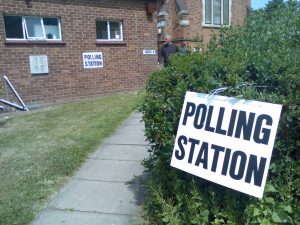
Image credit: Alex Muller – Creative Commons
Left Foot Forward doesn't have the backing of big business or billionaires. We rely on the kind and generous support of ordinary people like you.
You can support hard-hitting journalism that holds the right to account, provides a forum for debate among progressives, and covers the stories the rest of the media ignore. Donate today.
Donate today