Anti-Zionist and pro-nuclear: Inside Green Party conference
This is everything you need to know about Green Party conference
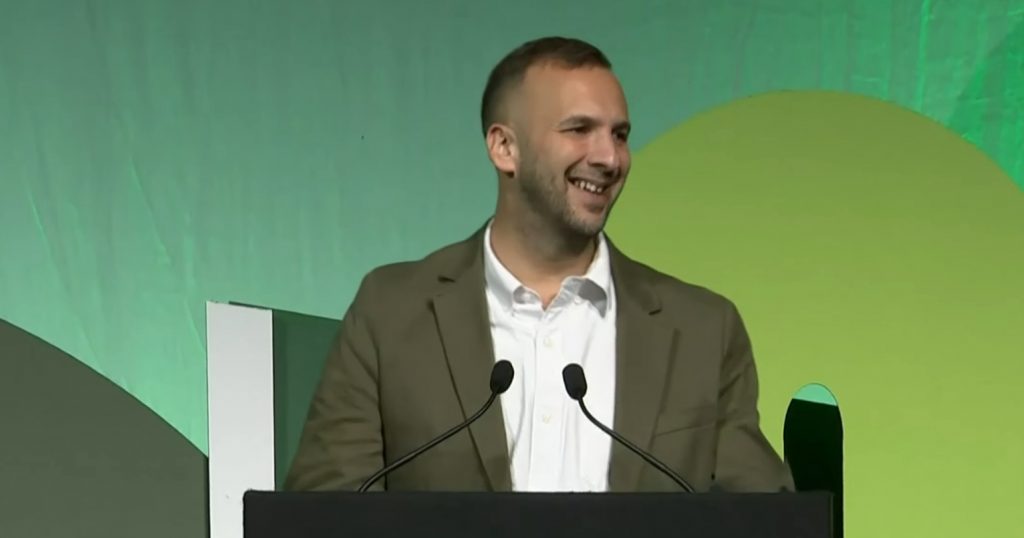
Just a few short years ago, Green Party conference attracted very little interest from the media. This year was very, very different.
What’s changed? First, the Greens now have five MPs, more than 200,000 members and a poll rating that is rarely out of double digits.
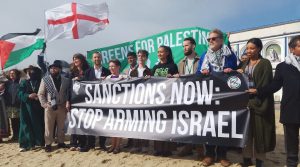
Second, because of a motion proposed to the conference titled ‘Zionist is racism’. The motion – which was unsurprisingly highly contentious – called for the party to formally condemn Zionism as a racist ideology and to explicitly endorse a ‘one-state solution’; ie. the creation of a single Palestinian state.
As you might expect, that motion – which went to the vote on Sunday – dominated much of the conversation throughout the event. Supporters argued that it was the natural conclusion of the party’s position on Palestine. Opponents made the case that adopting this position would alienate parts of the electorate and undermine the party’s ability to be taken seriously as a fierce advocate for Palestinian liberation (see our breakdown of all the arguments here).
Ultimately, the motion passed, with 55% of members in favour and 45% against. Arguably more important than the raw numbers, though, is the rifts within the party that the debate exposed.
Much of the party’s establishment was opposed to the motion – at least in its unamended form.
On the eve of the vote, three of the party’s five MPs released statements seeking to stop the motion passing. On the day, Ellie Chowns MP and the former Green MP Caroline Lucas spoke against the motion. Hannah Spencer was the only current or former Green MP to stay silent on the whole affair.
Zack Polanski – the party leader – said he wanted to see two amendments to the motion pass – one to safeguard Jews from disciplinary action for membership of synagogues affiliated to denominations that describe themselves as Zionist, and another to remove the explicit commitment to a one-state solution (neither of which passed).
Rachel Millward, one of the party’s two deputy leaders said in advance of the vote that she couldn’t back it without those amendments passing. On the other hand, her fellow deputy Mothin Ali spoke in favour of the motion during the debate.
Despite these disagreements, the whole leadership team released a joint statement alongside all the Green MPs following the motion passing. That statement included the lines: “We will continue to stand in opposition to genocide, ethnic cleansing, apartheid and the illegal occupation. We will continue to call out the heinous crimes of the Netanyahu government. And we will continue to work to ensure that the Green Party is an anti-racist party in every way.”
The ramifications of the motion for the Greens are as of yet unclear. Without doubt, it has generated far more media interest than the party has ever had outside of a general election campaign. In a fast-moving news cycle and with Tory party conference also kicking off today, it’s possible it could fall out of the public memory fairly quickly. It’s also possible that it could be high on voters’ minds in the upcoming Holborn and St Pancras by-election, where Polanski is the Greens’ candidate – and could influence how they intend to vote. (Incidentally, the polling expert John Curtice told the conference that the by-election was a substantial challenge for the party).
Despite much of the focus being on the Greens’ stance on Zionism, there was one other hugely consequential motion the party backed at its conference. That was the decision by members to abandon the party’s longstanding opposition to nuclear energy. The motion passing now sees the party describe nuclear energy as ‘low carbon’ and has led the party ditching its commitment to phase it out.
The gravity of this shift in the Greens’ policy shouldn’t be understated. Previous attempts to change the party’s stance on nuclear have repeatedly been defeated, often by huge margins. If the party’s position on this can change so drastically, what’s next?
On the basis of these two motions alone, this conference may well go down as one of the most significant in the party’s history.
And outside of the big policy debates, there was a whole lot of other things that went down. Here’s the full rundown:
The interviews
- Natalie Bennett interview: Andy Burnham is ‘kicking electoral reform into the long grass’ with National Commission – Olivia Barber
- Sadiq Khan has overseen people being ‘priced out of London boroughs’ – Green London Assembly member Benali Hamdache interview – Chris Jarvis
- I’m taking a “really hard stance against landlords” – Hackney mayor Zoë Garbett interview – Chris Jarvis
- Caroline Lucas interview: “A lot of policies that Andy Burnham has announced are due to Green pressure.” – Olivia Barber
The motions
- This is the full statement from Green Party MPs and leaders on Zionism is racism motion – Chris Jarvis
- Green Party abandons opposition to nuclear power – Chris Jarvis
- Green Party votes for ‘Zionism is racism’ motion – Chris Jarvis
- Green MPs make last-ditch attempt to stop Zionism is Racism motion – Chris Jarvis
- Green members vote for councils to support BDS in show of solidarity with Palestine – Olivia Barber
- Green Party votes to endorse Nature, Biodiversity and National Security Act – Chris Jarvis
- Green Party conference votes for new health policy to safeguard the NHS “against undue commercial influence” – Chris Jarvis
- Green Party backs policy to cut amount of animal farming in half – Chris Javis
- The Zionism is Racism motion has left the Greens with no good options – Lev Saul
- Rachel Millward “certainly wouldn’t” vote for unamended Zionism is Racism motion – Chris Jarvis
- The media is using the ‘Zionism is Racism’ conference motion to attack the Green Party, members say – Olivia Barber
- Will Green Party members vote to call Zionism racism? – Chris Jarvis
The speeches
- Mothin Ali calls for government to declare national emergency on racism and blasts Reform’s Suella Braverman in conference speech – Olivia Barber
- Green Party calls on government to nationalise water companies with no compensation for shareholders – Olivia Barber
- Water campaigners back Green Party’s ‘no-compensation’ public ownership plan for water firms – Chris Jarvis
- “Inspirational” and “everyone loved it” – Green Party members react to Zack Polanski’s conference speech – Chris Jarvis
- Wales Green Party leader celebrates “historic breakthrough” in Senedd election in message to Green Party conference – Chris Jarvis
- Zack Polanski calls on Labour to introduce three-year cap on private rent rises in conference speech – Olivia Barber
The rest
- Exclusive: LGBT Greens protest Green Party women’s group platforming of gender-critical speaker at conference event – Olivia Barber
- Equity launches network of local councillors to support arts and entertainment at Green Party conference – Chris Jarvis
- Demonstrators at conference rally against anti-Zionism have ‘extremist views’, says Green member – Olivia Barber
- ‘Labour made active decision to tax income rather than take on the richest in this country’, Faiza Shaheen says – Olivia Barber
- Polling guru John Curtice says it will be ‘substantial challenge’ for Greens to win Holborn and St Pancras amid Burnham bounce – Olivia Barber
- Green Party must ‘up its game’ on economic policy, Jamie Driscoll says – Chris Jarvis
The stuff that’s still to come
We’re not quite done yet! We’ve still got one more interview to publish – with former North of Tyne mayor Jamie Driscoll.
We’re proud to have provided some of the most comprehensive coverage of TUC Congress, Labour conference and Green Party conference of any media outlet in the UK. But this reporting doesn’t come cheap.
If you haven’t already done so, please consider chipping in and donating today to help fund our conference season coverage.
Chris Jarvis is head of strategy and development at Left Foot Forward
Left Foot Forward doesn't have the backing of big business or billionaires. We rely on the kind and generous support of ordinary people like you.
You can support hard-hitting journalism that holds the right to account, provides a forum for debate among progressives, and covers the stories the rest of the media ignore. Donate today.
Donate today