Amnesty International slams UK universities for ‘crackdown’ on pro-Palestinian solidarity
“This is an attack on our freedom of speech and the right to protest from the very institutions who are supposed to encourage free thought."
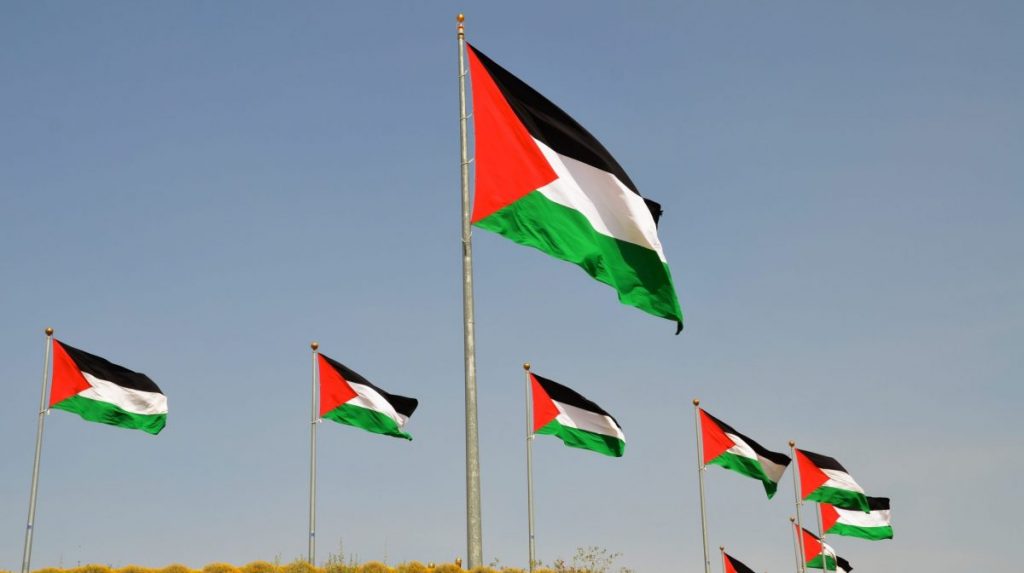
Several UK universities have restricted Palestine solidarity activism among students and academics, a new report from Amnesty International has claimed.
According to Amnesty, universities have cancelled meetings and events, framed peaceful protest as ‘disruption’, shut down encampments, and taken pre-emptive punitive measures against campaigners – all of which the campaign group says indicates attempts to restrict campaigning in solidarity with the Palestinian people.
Amnesty conducted research looking at events between 7 October 2023 and 30 September 2025 while also examining the preceding 18 months to contextualise patterns of practice.
According to the report, different universities took different approaches over this period. The report stressed that each interference or violation of rights Amnesty found was present in at least one case study, not all were found at each university it looked at.
Amnesty International found that the restrictions highlighted in case studies documented in the report often didn’t meet the high bar in international and UK law for interfering with political speech and peaceful assembly.
The report did, however, find that students and academics have been sanctioned for actions like chanting, clapping and wearing keffiyehs, with these sanctions including suspensions, campus bans, withdrawal of degrees and threats to visa status. Students who are visibly Muslim and those displaying symbols of Palestinian identity have been disproportionately impacted, Amnesty has alleged.
In several cases, Amnesty found that sanctions were imposed before disciplinary hearings had concluded. Amnesty argues that this effectively transformed precautionary measures into punishments and contributes to a chilling effect.
In some cases documented in the report, universities prolonged investigations without clarifying timelines, outcomes or routes for appeal. These prolonged investigations combined with campus bans, restricted access to services, and uncertainty about potential outcomes – had severe impacts on people’s education, mental health and future prospects, Amnesty claims.
Amnesty International found that some universities have relied on overly broad disciplinary codes to restrict solidarity actions, such as by unduly characterising protests as ‘disruptive’, or ‘offensive’, with no apparent evidence of targeted harm. The report found instances of universities treating peaceful protest as trespass, even in spaces such as campus squares, foyers and union buildings which have been used for protests for decades.
According to Amnesty, some universities have adopted measures that require advance approval for protests and others have resorted to court injunctions which impose blanket bans across large parts of campus, exposing students and staff to risk of fines and imprisonment for engaging in protest.
Kerry Moscogiuri, CEO of Amnesty International UK said: “This is an attack on our freedom of speech and the right to protest from the very institutions who are supposed to encourage free thought.
“Students and academics care about the victims of Israel’s genocide in Gaza. It’s beyond belief that some of our prominent universities see this as a threat that requires punitive measures like court injunctions, and harsh punishments that leave students with their lives turned upside down.
“This is part of a wider crackdown on communities coming together to make their voices heard on Israel’s genocide of Palestinians in Gaza and other issues they care about. Just as we’re seeing students facing sanctions for clapping and chanting on our campuses, we’re seeing grandparents, amongst many others, facing arrest for holding placards at the Defend Our Juries protests.
Universities should be an environment in which students feel safe in coming together and demonstrating on the issues they care about. That’s why we are asking universities to commit to our Defend Dissent Charter.”
Through its report, Amnesty argued that UK universities are not acting in isolation when responding to Palestine solidarity protests, but are operating within a network which encouraged repressive responses and that their responses reflect sector-wide practices, shaped by direct government pressure, regulatory direction, lobbying by advocacy groups, and advice from private law firms and security contractors.
Amnesty has found that some universities have shared legal strategies, received instructions from the Department for Education, and shared their security planning with the effect of clamping down on those perceived to be showing support for the victims of Israel’s apartheid and genocide in Gaza.
In cases profiled in this report, Palestine-related expression frequently came under greater scrutiny, or appeared to have been regulated differently from the way that other student protests at universities might generally be regulated. Students and staff who are Palestinian, Arab, Muslim and from other racialised communities, as well as students who are not British nationals, have experienced particular and disproportionate impacts, Amnesty claims.
22 year old student Usama Ghanem was suspended by Kings College London in 2025 over his involvement in pro Palestinian activism, and told to “return to [Egypt] during this period of suspension”, where he had previously been detained and tortured. His suspension was lifted after review in September 2026.
Usama said: “I left an authoritarian regime in Egypt to find one at King’s College London. For protesting a genocide our university was funding and demanding divestment, I was indefinitely suspended, monitored, and threatened with deportation to the very authoritarian regime I had fled. As a lead negotiator for our Palestine encampment, I saw King’s discipline 25 other students too. This was about more than punishment, it was an attempt to intimidate us into silence. A university should protect dissent, not surveil and punish students for challenging its complicity in genocide.”
Other universities criticised in the report include Oxford, Cambridge and LSE.
Chris Jarvis is head of strategy and development at Left Foot Forward
Image credit: Scotgunn – Creative Commons
Left Foot Forward doesn't have the backing of big business or billionaires. We rely on the kind and generous support of ordinary people like you.
You can support hard-hitting journalism that holds the right to account, provides a forum for debate among progressives, and covers the stories the rest of the media ignore. Donate today.
Donate today