What would a good night look like for Labour at the 2026 elections?
What would success look like?
On May 7, voters in Scotland will be electing new members of the Scottish Parliament. In Wales, it’s the Senedd up for election. And across England, more than 5,000 council seats are up for grabs, alongside six mayoralties.
Labour are currently struggling in the polls, and go into these elections in difficult circumstances. So what would a good night for them look like on 7 May?
What would a good night look like for Labour in Scotland?
Labour won 22 seats at the 2021 Scottish Parliament election, coming third behind the SNP and the Tories.
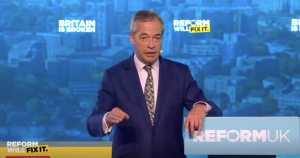
A lot has changed since then – not least the collapse of the Tories and the rise of both Reform and the Greens.
While it appears likely that Labour will lose seats this May (most seat projections based on current opinion polls suggest they will), keeping those to a minimum will be key to Labour’s future in Scotland.
Because of the splintering of the vote on the right of politics between the Tories and Reform, there is also a possibility that Labour could emerge as the second largest party in the Scottish Parliament after the election, even if they lose seats.
As a result, a good night for Labour in Scotland would see them ending up in the high teens of seats and becoming the official opposition. As a bonus, if Labour can prevent the SNP winning an outright majority in the parliament, the amount of influence they have in Holyrood will also increase.
What would a good night look like for Labour in Wales?
In Wales, a ‘good night’ for Labour has to be understood in relative terms. What we’re looking at here is what is the ‘least worst’ outcome for Labour in the Senedd.
This year, the elections to the Senedd will be taking place under a wholly proportional system for the first time. That means making effective projections are challenging.
Nonetheless, all the polls appear to have coalesced on the conclusion that Labour will be losing control of the Senedd for the first time since devolution began in 1999. What they can’t agree on is whether Reform or Plaid Cymru will emerge as the largest party.
For Labour’s part, a good (or least bad!) night would likely look like winning around 20 per cent of the vote and picking up somewhere in the region of 15-20 seats. As a minimum, Labour will want to emerge as at least the third largest party in the Senedd, ahead of the Tories, Lib Dems and Greens.
What would a good night look like for Labour in the English local elections?
Labour are defending over 40 per cent of the more than 5,000 council seats up for election this year. Of these, a substantial portion of them are in London or in other major urban areas like Birmingham, Bradford, Coventry, Manchester, Sheffield and Wolverhampton.
According to every piece of evidence we have, it looks set to be a very bleak night for the red team this year.
More in Common have published an MRP poll which suggests Labour could lose three quarters of the seats they are defending this year. The big beneficiaries of the Labour collapse seem to be Reform and the Greens, with the Lib Dems also looking likely to make gains.
It’s therefore already assumed that Labour are on track for a tough innings this year. But what would a good (or again, least bad) night look like for them?
If Labour can avoid losing more than 1,000 seats, that would see them outperforming current projections. Similarly, the party will be keen to retain control of lots of key councils – particularly in London and the other big cities.
Speaking of London, a good night would see them retaining control (or at least being the largest party) in the vast majority of the boroughs it currently holds. Stopping the Green surge in inner London boroughs like Hackney, Lewisham and Lambeth would also be a key measure of success.
What would a good night look like for Labour in the 2026 mayoral elections?
The six mayoral elections taking place on 7 May are in Croydon, Hackney, Lewisham, Newham, Tower Hamlets and Watford.
Labour currently holds three of these – Hackney, Lewisham and Newham. Naturally, Labour will be very keen to hold on to all of these.
Presently, Hackney looks by far the most vulnerable, with the Greens running an intensive campaign there.
On a good night, Labour would hold on to Lewisham and Newham. On a very good night, Labour also clings on in Hackney too.
What would a good night look like for Labour’s long-term future?
Ultimately, all of these elections taken together will be a test of whether Labour is experiencing ‘mid-term blues’ or something more existential. Political parties in government often fare badly in local elections but are able to turn things around by the time of a general election.
In 1999, for example, Labour lost well over 1,000 seats in the local elections. But just two years later Tony Blair led Labour into a second consecutive landslide general election victory.
By contrast, the Tories had a disastrous set of local elections in 2023, and Rishi Sunak was booted out of office just a year later.
So, overall, Labour will be hoping that the upcoming elections represent the former rather than latter, and that any losses they suffer don’t represent an existential crisis for the party.
Chris Jarvis is head of strategy and development at Left Foot Forward
Left Foot Forward doesn't have the backing of big business or billionaires. We rely on the kind and generous support of ordinary people like you.
You can support hard-hitting journalism that holds the right to account, provides a forum for debate among progressives, and covers the stories the rest of the media ignore. Donate today.
Donate today