Could York lead the way on proportional representation?
Labour and Lib Dem councillors in York unanimously supported a motion to replace First Past the Post with proportional representation
Celine Barry is a coordinator at Compass in York and North Yorkshire
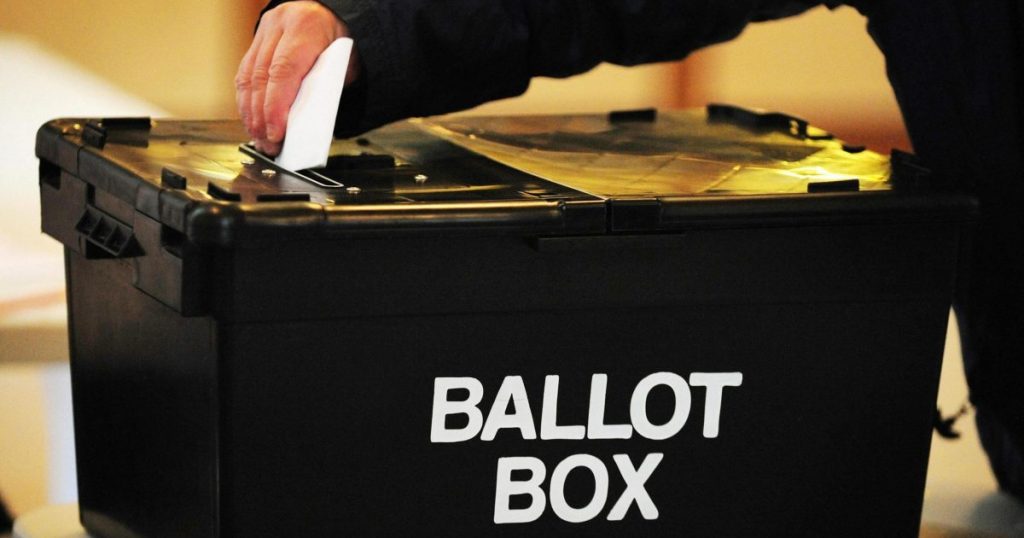
On Thursday 26 March, in a rare display of cross-party unity, the Labour-led City of York Council (CYC) publicly affirmed its support for proportional representation. CYC members voted overwhelmingly – by a margin of 38 to 2 – in favour of a motion entitled ‘Fair votes for all’, which was supported by the ruling Labour group after being proposed by the opposition Liberal Democrats.
This motion endorsed PR “as an essential element of a modern and democratic UK” and called for the government to urgently establish a National Commission on Electoral Reform, with clear terms of reference, to report in time for any recommendations to be implemented before the next General Election. Framed in non-partisan terms, it supported the position taken by the All-Party Parliamentary Group for Fair Elections – chaired by Alex Sobel, Labour MP for Leeds Central and
Headingley – and Labour for a New Democracy.
Labour currently hold CYC with an overall majority of just one seat, and there has been a longstanding rivalry between the Labour group and the Lib Dems for control of the council. With this in mind, it’s remarkable that every Labour and Lib Dem Councillor who was present for the vote supported the motion, with only the Conservatives voting against, demonstrating a level of cross-party consensus that, in the run up to the vote, campaigners from Make Votes Matter and Compass had urged Councillors to show.
This is also a significant moment in the ongoing campaign for electoral reform within the Labour movement, as it is the first time since the 2024 General Election that a local council – and moreover, a Labour council – has publicly demonstrated resounding support for a change to our First-Past-the-Post electoral system.
The government’s current resistance towards electoral reform at a UK level remains frustrating. Keir Starmer has previously stated that electoral reform is “not a priority” and appears to have ruled out any immediate changes, despite ensuring a return to the supplementary vote system for Mayoral elections in the English Devolution Bill.
However, CYC’s emphatic cross-party vote for this motion has reignited the ‘fair votes’ debate, especially among Labour Councillors, at a time when recent polling shows Labour’s support dropping to record lows.
With votes splintering between five or six parties, FPTP has become deeply dysfunctional and unpredictable. While it delivered Labour a “landslide” majority in 2024, handing the party 63.2% of MPs (411 out of 650 seats) with just 33.7% of the popular vote, there is now a distinct possibility that this could be turned on its head. Reform could win their own Parliamentary majority on as little as 30% of the vote, and any sort of ‘United Right’ strategy with the Tories could spell electoral oblivion
for the Labour Party.
Could this stark electoral maths now lead to the PLP realising the potential disastrous consequences of FPTP, including the destruction of whatever positive legacy Labour is able to build? And could the decisive vote for PR in the City of York which also hosts two Labour MPs, Rachael Maskell for York Central and Luke Charters for York Outer – trigger a process that influences the government to think again? Compass and Make Votes Matter believe so.
The CYC motion requires group leaders to write to the Prime Minister and Secretary of State for Housing, Communities and Local Government, formally requesting a National Commission on Electoral Reform. They are also mandated to send copies of their letters to both of York’s MPs and the Mayor of York and North Yorkshire, all of whom are Labour politicians.
This intervention by CYC coincides with the Representation of the People Bill that is. currently making its way through parliament. While the government has stated that the Bill aims to “restore trust in our democracy”, the retention of FPTP contributes to the distrust and alienation we see in politics. Democratic renewal depends on creating a truly fair and representative democracy in which every vote carries equal value and power.
We hope that, inspired by CYC’s example, other local councils will be encouraged to bring forward their own pro-PR motions, helping to build public momentum for change. This could also increase pressure on the government – and on Labour MPs within their council areas – to support calls for a National Commission on Electoral Reform, to examine the performance of FPTP and recommend suitable proportional voting systems for UK general elections and English local elections.
With the possibility of a difficult night for Labour in the upcoming local elections, these
changes would not only more accurately reflect voters’ wishes but could also
encourage council candidates to work together against the right-wing threat at a local
level too.
In the case of York, liaison with Labour-facing groups such as the Labour Campaign for Electoral Reform and Labour for a New Democracy helped to lobby Labour Councillors in the most effective possible manner. Ultimately, however, pressure from a targeted letter writing campaign and individual lobbying, demanding Councillors come together in nonpartisan co-operation, could not be ignored.
We hope that this cross-party focus will encourage other councils to work across party
lines for the greater public good.
Compass argues that such cooperative action is the only viable route to PR in the UK. As the All-Party Parliamentary Group for Fair Elections recognises, a commitment to work together for shared goals is not only the means of achieving ‘fair votes’ for all parties and every voter, but is a message of hope for the collaborative politics we need to see once PR is achieved.
Left Foot Forward doesn't have the backing of big business or billionaires. We rely on the kind and generous support of ordinary people like you.
You can support hard-hitting journalism that holds the right to account, provides a forum for debate among progressives, and covers the stories the rest of the media ignore. Donate today.
Donate today