




'Labour has a proud tradition of supporting our armed forces and defence industry, one which should not just be accepted but embraced as one of our greatest strengths.'
Panny Antoniou is the Founder and Executive Director of the Centre for International Security & Defence Studies
Defence and security is often an area which the progressive left are considered to be weak on, best left to the conservative right whilst we focus on our strengths – social policy and healthcare. However, the reality could not be further from the truth – Labour has a proud tradition of supporting our armed forces and defence industry, one which should not just be accepted but embraced as one of our greatest strengths.
It was the Attlee Government who founded NATO and put transatlantic defence at the heart of our foreign policy, and it was Tony Blair’s New Labour whose humanitarian military interventions in Sierra Leone and Kosovo saved thousands of lives and helped prevent genocide. In this increasingly dangerous world with a revanchist Russia looking to change borders in Europe by force, it is vital that we in Britain once again embrace this spirit of Attlee to keep Britain and our allies safe. This means a total rethink, not just on how we speak about defence but in our industrial strategy. We can no longer afford to leave defence to someone else and we must improve not just our individual defence but our collective defence, taking a whole of society approach to security and working alongside our allies to improve cooperation.
However, the argument for defence isn’t just a hardheaded security one; the increased spending on defence is an opportunity. An opportunity to build a new Britain with highly trained, highly skilled, unionised jobs at its core. An opportunity for Britain to lead the new industrial revolution which will not just be a Green New Deal but one founded on new and innovative technologies. Indeed; drones, artificial intelligence, and quantum computing technologies provide unparalleled dual use applications and result in skilled jobs on our shores whilst also increasing our strategic autonomy in times of crisis.
It is in this vein that we have set up the Centre for International Security and Defence Studies. We are the UK’s first progressive defence and security specialist think tank producing high quality reports and working with groups across our Labour Movement. As an organisation we are laser focused on how Labour in government can create a defence dividend which creates new jobs, develops new technologies, and remakes modern Britain in our progressive image.
Our work is organised around four core competencies and principles which we believe can be transformative for the UK’s defence and security and provide a progressive path forward which makes defence spending work twice – once for our security, and once for our economy and society. These are:
- Security Abroad: With ever increasing global insecurity, it is vital that we work with our friends and allies across the world to improve our interoperability, jointly develop new capabilities, and deter our adversaries. This is ever more vital in cases where deterrence fails, and we have seen how devastating this can be in the case of Ukraine. We will have to rely on our alliances in a combat situation, familiarity and logistics breed success on the battlefield and the aircraft carrier or airfield our planes take off from will often not be the same as the one they land on. As important as having a credible deterrent is the importance of peacebuilding and conflict resolution. We must position Britain – alongside our allies in Europe and beyond – as important intermediaries in creating peace and stability through negotiations with warring parties. Talks such as these where Britain acts as an interlocutor between different side must take place within the framework of the UN Charter, respecting territorial integrity and the right to human dignity of each individual.
- Security at Home: Whilst many of the threats we must be vigilant about are in the traditional military sense, we also face an acute domestic threat from terrorism, rising ethnic tensions, and far right extremism. In recent years we have seen a number of attacks on places of worship including mosques and synagogues and far right riots on the streets of our towns and cities. It is therefore important that we have integrated plans to tackle extremism within our communities through education and community cohesion. Additionally, grey zone tactics and disinformation is on the rise with societal and technological resilience being vital for combatting this threat. This emphasises the importance of media literacy education and recognising potential security risks amongst the public. In the event of an armed conflict with a peer adversary, the UK is only as strong as our Home Front. We have a number of volunteer organisations both nationally and within specific communities which provide vital services such as the St John’s Ambulance Service, the RNLI, and the Community Security Trust. Volunteer organisations such as these are the best of Britain and should be provided with additional training and assistance to provide domestic resilience in the event of a conflict.
- Technology, Procurement, and Industrial Strategy: Whilst the human and international aspects are both important, just as vital is our logistics, procurement, and industrial strategy. Artificial intelligence, cyber tools, and satellite technology have all played an important role on the battlefield in recent times. Additionally, the war in Ukraine has showcased an entirely new way of waging war with drones playing a vital role on both sides and artillery being a decisive factor in most battles for the first time since the Second World War. These battles of attrition have also decimated European reserves of basic equipment including ammunition, shells, howitzers, and raw materials such as black powder and nitric acid. It is clear that Britain must make a concerted effort to increase industrial capacity, not just for high tech emerging technologies which are vital to our security such as the GCAP fighter jet programme but for this more basic of warfighting materiel. Additionally, the progressive case for increased production and development is a strong one with such factories ensuring highly trained, highly skilled, unionised jobs. We must make this case or we will be left behind in this new industrial revolution.
- Resilience in a changing world: With climate change, increasing food insecurity, and the irregular migration patterns this causes it is also vital that we take a holistic and proactive approach to dealing with potential security threats. These are not distant humanitarian concerns but direct security issues affecting our sovereignty, security and prosperity. It is therefore vital that climate adaptation, humanitarian aid, and sustainable development are integrated into the wider defence agenda. By strengthening food systems and supporting vulnerable communities we strengthen Britain. We already have some of the tools at our disposal; BBC World Service helps build British reputation and spread our values abroad and our civil service and humanitarian aid programmes help millions across the world. We must continue to embody these progressive Labour values in making the world a safer and more secure place for all.
We look forward to working alongside organisations across the Labour Movement to build a safer and more secure world with our values at their heart.
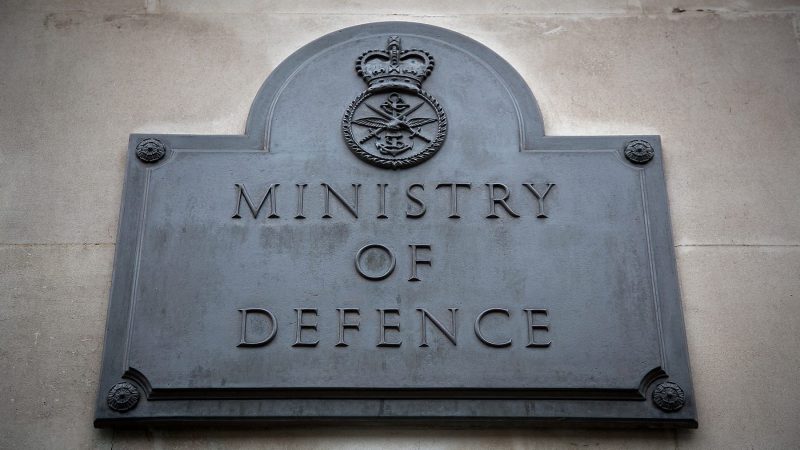
Image credit: Defence Imagery
Left Foot Forward doesn't have the backing of big business or billionaires. We rely on the kind and generous support of ordinary people like you.
You can support hard-hitting journalism that holds the right to account, provides a forum for debate among progressives, and covers the stories the rest of the media ignore. Donate today.