



A shadow hangs over democracy; the shadow of corruption
Tom Brake is director of Unlock Democracy
A shadow hangs over democracy; the shadow of corruption. Power is being leveraged – sometimes brazenly, sometimes discreetly – for money, influence, and future enrichment. The effect is the same: democracy becomes a marketplace, where ordinary voters play second fiddle to wealth.
In Donald Trump’s White House, we see the most naked expression of this phenomenon – not so much a shadow as a golden shower. As the New York Times has documented, Trump’s presidency has doubled as a platform for crypto ventures, licensing deals, and brand-building enterprises that have generated extraordinary sums for his family. This is the monetisation of public office – the presidency treated as a revenue stream. It shows what happens when the boundary between public duty and private business collapses entirely.
Britain is not immune. The recent revelations surrounding Peter Mandelson bring into clear view influence being deployed for private gain. Emails show Mandelson discussing plans for his lobbying firm with Jeffrey Epstein, describing a business model explicitly built around brokering political access for wealthy clients. He sought Epstein’s help in identifying rich individuals who might want political deals brokered. Emails also show, while in office, Mandelson sought to intervene on behalf of Epstein’s contacts, acting in ways that appeared to undermine his own government. In other words, he demonstrated precisely the kind of influence he would later seek to sell.
Global Counsel, the firm Mandelson went on to co-found, later represented major corporations that secured significant UK government contracts. Mandelson himself moved seamlessly between senior public office and private influence-peddling. Relationships, knowledge, and authority accrued in public service were leveraged to build a profitable lobbying operation. Even if every rule was technically observed, the ethical breach is profound: knowledge of the state’s inner workings became part of a private business model.
Once you accept the largesse of wealthy contacts, they acquire a hold on you. They become friends, benefactors, future employers. Everyone wants to do favours for friends – that is human nature. But when those favours involve shaping policy, facilitating access, or positions of patronage, the public interest is quietly subordinated to private relationships. Power becomes relational, transactional, and deeply unequal.
Boris Johnson’s premiership illustrated the same dynamic in different forms. The Downing Street flat refurbishment scandal – ‘Wallpapergate’ – revealed how wealthy donors helped fund a lavish renovation beyond the official allowance. Even if no explicit policy trade took place, the arrangement entrenched dependency and gratitude. A prime minister whose lifestyle is subsidised by private benefactors cannot plausibly claim to be insulated from their interests.
These are not isolated scandals. They are features of a system in which money saturates British politics. Wealthy donors bankroll parties, populate the House of Lords, and gain privileged access to decision-makers. Lobbyists sell introductions and insider knowledge. Former ministers and advisers cash in on networks built whilst they were on the public payroll. Citizens, meanwhile, increasingly conclude that politics is an insiders’ game, and they are not invited.
Fortunately, the exposure of Mandelson’s shadowy past has brought renewed focus on breaking the nexus of politics, money and influence that allows public office to be leveraged for private gain.
First, we must impose strict caps on political donations. Large donations create large obligations, whether acknowledged or not. No individual or corporation should be able to dominate a party’s finances.
Second, tighter rules on lobbying and post-government employment. The lobbying register should cover all individuals and entities engaging in lobbying activity – far from the case at present. Minutes of their meetings with ministers and officials must offer more than three-word descriptions of what took place. Cooling-off periods for former ministers should be extended to five years and enforced, with penalties that actually deter abuse.
Third, ethics enforcement must have teeth. Advisory bodies that can be ignored are theatre. Empowered ethics commissioners should be able to investigate conflicts of interest, block dubious appointments, and sanction misconduct in real time.
Trump’s behaviour is shocking because it is so blatant. But Mandelson’s conduct is no better for being concealed – it may even be more worrying, for how easily might it have remained in the shadows beyond our view? Influence-peddling is not an aberration in this system; it is the business model. That is why it has to be smashed.
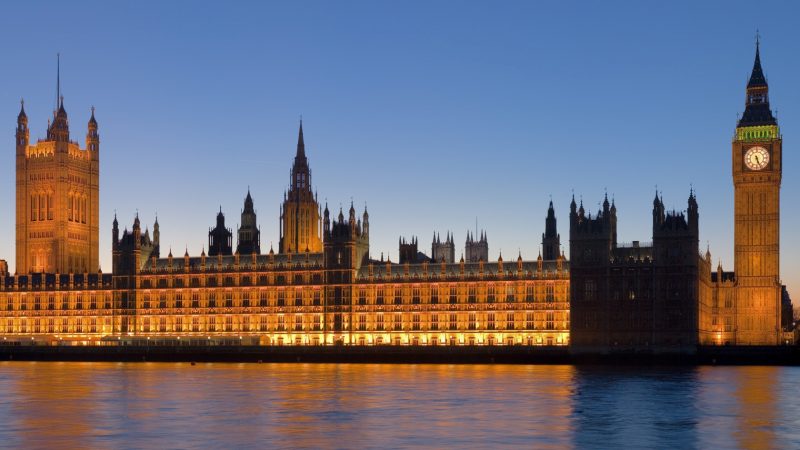
Image credit: Diliff – Creative Commons
Left Foot Forward doesn't have the backing of big business or billionaires. We rely on the kind and generous support of ordinary people like you.
You can support hard-hitting journalism that holds the right to account, provides a forum for debate among progressives, and covers the stories the rest of the media ignore. Donate today.