



His change of tone comes as Reform seeks to raise funds and boost its political profile among wealthy British expatriates in the Gulf.
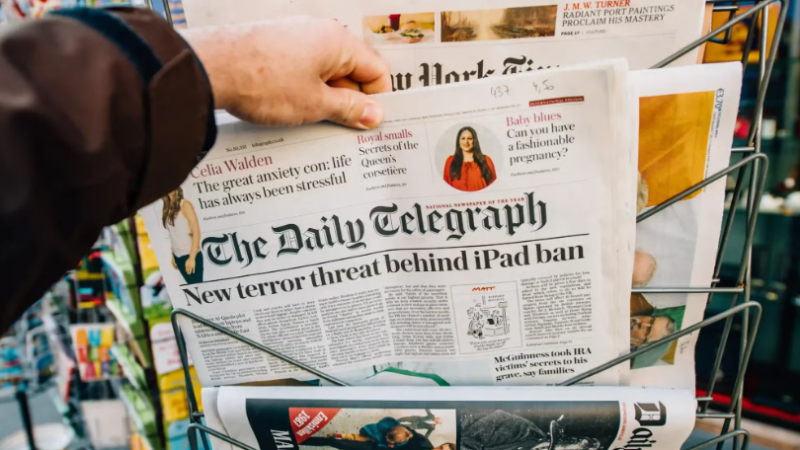
Just months after warning that Emirati ownership of a British newspaper would be “deeply troubling,” Nigel Farage has changed his position over the UAE’s attempted takeover of the Telegraph, criticising the UK for blocking the deal.
His change of tone comes as Reform UK seeks to raise funds and boost its political profile among wealthy British expatriates in the Gulf.
During a visit to Dubai last week, Farage claimed the UK had not been “very straight” with the UAE over its failed bid to acquire the Telegraph, which was blocked under rules banning foreign state ownership of British newspapers. Speaking to the Financial Times, the Reform leader suggested the UK’s handling of the deal had damaged relations with Abu Dhabi, accusing the Foreign Office of “lecturing” the Emiratis and arguing that they simply wanted a closer relationship with Britain.
The comments sit uneasily alongside Farage’s own previous position. Writing in the Telegraph in 2023, he said he would be “deeply uncomfortable” if RedBird IMI’s takeover went ahead, describing the UAE as an “absolute monarchy with an abysmal human rights record.” He questioned whether such a state could tolerate the irreverence of the British press, adding that it “seems fanciful that it would take jokes or questions in the spirit that runs through the British press.”
Farage was not alone at the time. A broad cross-party group of politicians raised concerns about the bid, which involved IMI, a media company owned by the UAE, alongside the US private equity firm RedBird Capital Partners. In 2024, Rishi Sunak’s Conservative government ultimately blocked the takeover by tightening the law to ban foreign state ownership of UK newspapers altogether.
The decision reportedly angered UAE officials, who believed they had been given assurances by the previous Conservative government that the investment would be welcome. The collapse of the deal reportedly strained bilateral relations.
Since then, the rules have shifted again. Under Keir Starmer’s government, foreign state investment in British newspapers has been permitted up to a capped 15 percent. RedBird Capital returned with a revised proposal that would have reduced IMI’s stake, but the consortium walked away in November after struggling to raise the £500m asking price and as regulators were poised to investigate the bid’s UAE ties.
Farage’s newfound sympathy for the Emirati position coincides with Reform UK’s efforts to cultivate donors in the region. British citizens living overseas are legally entitled to donate to UK political parties, and Reform is understood to be targeting expatriates in the UAE as it builds its war chest ahead of future elections.
While in Dubai, Farage lavished praise on the emirate’s business environment and criminal justice system and compared the oil-rich state’s approach to criminal justice to the UK’s.
Speaking at an event marking the fifth anniversary of GB News, where he is a presenter, Farage lauded Dubai’s “law and order,” low taxes and pro-enterprise culture, declaring: “These are all the things that we are going to do in the UK.”
The links between British right-wing media and Gulf-based capital are already well established. GB News is jointly owned by Sir Paul Marshall and the Legatum Group, a Dubai-based investment firm. Marshall himself acquired the Spectator in 2024 for £100m from RedBird IMI, after the magazine was separated from the collapsed Telegraph deal.
As Reform looks abroad for financial backing, the episode raises fresh questions about how firmly its leader holds the principles he once invoked, and how readily they bend when political funding and influence are at stake.
Left Foot Forward doesn't have the backing of big business or billionaires. We rely on the kind and generous support of ordinary people like you.
You can support hard-hitting journalism that holds the right to account, provides a forum for debate among progressives, and covers the stories the rest of the media ignore. Donate today.