


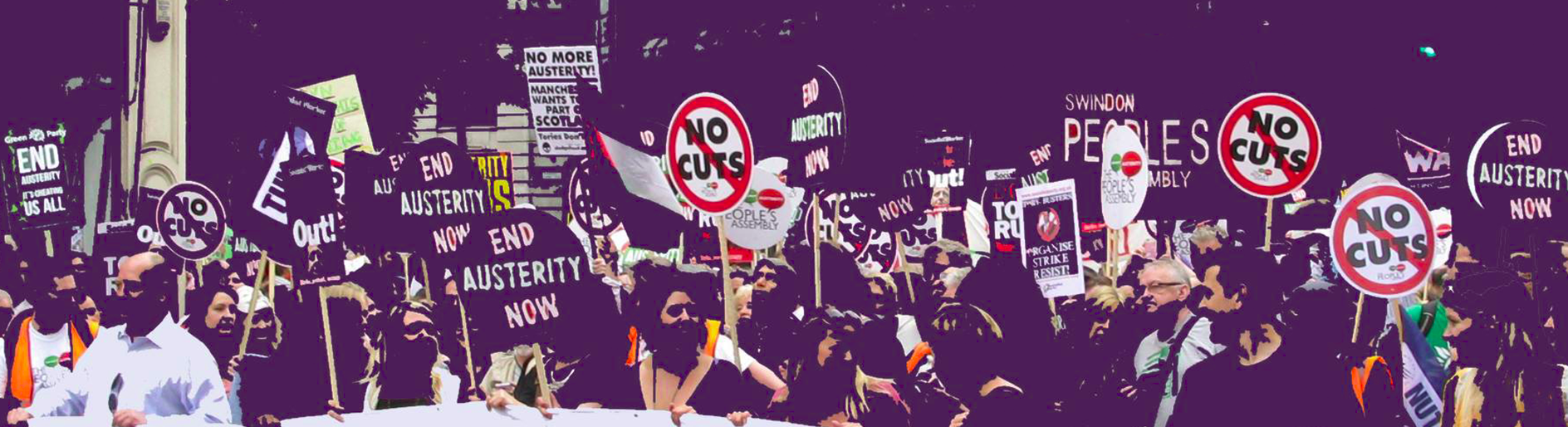

A posture designed to calm nerves in opposition has solidified into a constraint that now shapes every major policy choice
Jon Trickett is the Labour MP for Normanton and Hemsworth
Recent polling about Starmer’s government is not encouraging. And it’s more than the normal mid‑term wobble, nor a simple failure of ‘messaging’. It reveals a malaise at the heart of the government’s strategy. To understand we need to look back first. Labour won power by promising stability after years of Conservative chaos. Two founding myths were used to explain Starmer’s approach. The first related to the Corbyn years and the second to the Truss government. In opposition, Labour created a story that Corbyn and Truss were two sides of the same coin: reckless and disruptive.
The key to winning the election would be to offer competent, quiet ‘change’. But change was never defined and at the core of the offer was security, safety and tranquility. However, and this is the key point, the strategy for offering safety in opposition needed to pivot into transformation when in Government. This phase never happened. Instead what we have is governing through a fiscal framework that locks the country into the same stagnation, insecurity, absence of social justice and loss of agency that produced political disaffection in the first place.
This is not an unfortunate accident. It is the predictable outcome of elevating “fiscal responsibility” from an electoral tactic into a governing doctrine. A posture designed to calm nerves in opposition has solidified into a constraint that now shapes every major policy choice. The result is a politics trapped in a defensive crouch—managing problems rather than transforming the conditions that created them.
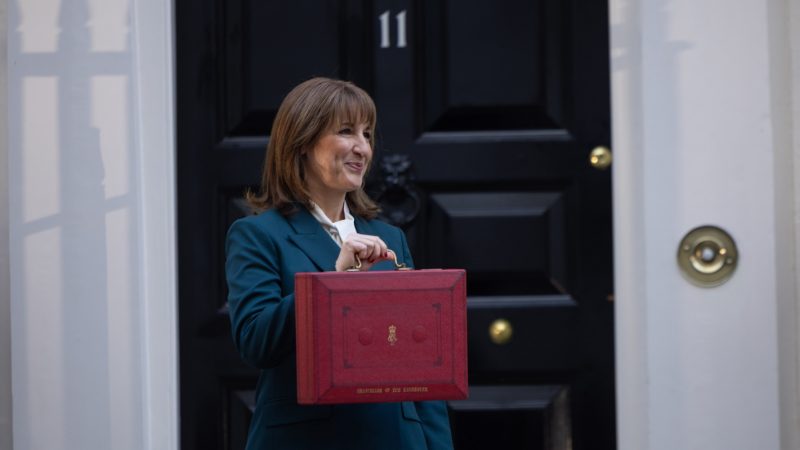
Reeves’ fiscal rules are framed as neutral instruments of economic prudence. In reality, they are political actors in their own right. By locking into fiscal restraint, rejecting meaningful tax reform and prioritising market reassurance above all else, Labour pre‑commits itself to scarcity before any democratic choice enters the picture.
This forces the burden of adjustment downward—onto welfare recipients, local authorities, pensioners and public services already on their knees. That is why decisions such as restricting winter fuel payments or tightening disability assessments keep emerging. They are not isolated missteps; they are the shackles of an imprisoning fiscal framework.
The voters have clocked what is happening. They see a government protecting the bond markets rather than promoting social rights. Talk of security applies to capital but the wider public sees unfairness ground into the government’s approach to ordinary lives. Incomes stagnating or falling, public services still under pressure and welfare safety nets under attack.
Reassurance may have been the chosen approach in opposition. After years of instability, the public wanted safety and competence. But a successful Labour government should have always understood reassurance as a phase, not a destination. The government ought to have organised a pivot—from reassurance to reconstruction.
Instead, the fiscal framework has hardened into a dogma, a fixed worldview. Security has become a ceiling on ambition, not a foundation for change. Every progressive impulse is deferred to a distant future; every constraint is treated as immovable. The result is drift, disillusion and political shortening of Labour’s mandate.
This matters because Labour is governing a country already in a deep structural crisis. Decades of underinvestment have left Britain with stagnant wages, weak productivity and dilapidated public infrastructure. Deindustrialisation has hollowed out towns and regions, leaving behind insecurity, poor health and a pervasive sense of abandonment.
This is not just economic damage—it has impacted on the psychology of millions. It erodes agency: the belief that politics can act, that effort matters, that the future can be shaped rather than endured. Where agency collapses, an angry kind of fatalism grows. People retreat from politics or seek control through more authoritarian avenues.
In this context, Labour’s fiscal caution does not read as seriousness. It reads as continuity—the same forces, the same priorities, the same limits. Constituents often say they voted for change but all they got is more of the same.
Cuts to pensioner benefits or disability support are symbols of whose security counts. When the government reverses course after backlash, it does not regain trust; it looks unsure of its own moral footing. Worse still, u-turns are interpreted as incompetence.
The same pattern appears in proposals to shrink jury trials, in restrictions on protest, in technocratic reflexes that treat democratic participation as a cost rather than a value. A government that prioritises order over agency ends up diminishing both.
This is not a communications problem. It is a political economy problem.
The consequences vary across the country. In deindustrialised regions, Labour’s caution reinforces the belief that politics offers only management, never renewal. In metropolitan centres, progressive voters tolerate restraint only briefly before turning away when ethical lines are crossed.
The result is fragmentation: abstention, drift to smaller parties, and weakening democratic legitimacy
The answer is not reckless spending or fiscal denialism. It is a re-politicisation of fiscal strategy—a clear transition from stabilisation to reconstruction.
A credible shift would:
- Explicitly define fiscal caution as temporary, with triggers for scaling up investment.
- Shift the burden of adjustment upward through taxation of wealth and economic rents.
- Launch large‑scale, place‑based industrial investment to restore purpose and productivity.
- Devolve meaningful power and resources to communities.
- Protect democratic rights as essential infrastructure for agency, not optional extras.
Security matters. But without agency, security is mere survival. Labour’s crisis is not that it failed to reassure—it is that it stopped there. Unless the fiscal framework becomes a stepping stone rather than a cage, Labour will drift into managerial politics and lose the coalition it needs to renew the country. Only a politics rooted in investment, justice and agency offers a future worth governing for.
Left Foot Forward doesn't have the backing of big business or billionaires. We rely on the kind and generous support of ordinary people like you.
You can support hard-hitting journalism that holds the right to account, provides a forum for debate among progressives, and covers the stories the rest of the media ignore. Donate today.