Prem Sikka: There’s a paradox at the heart of the Brexit debate
Brexit can’t square the circle of globalisation, national sovereignty and democracy.
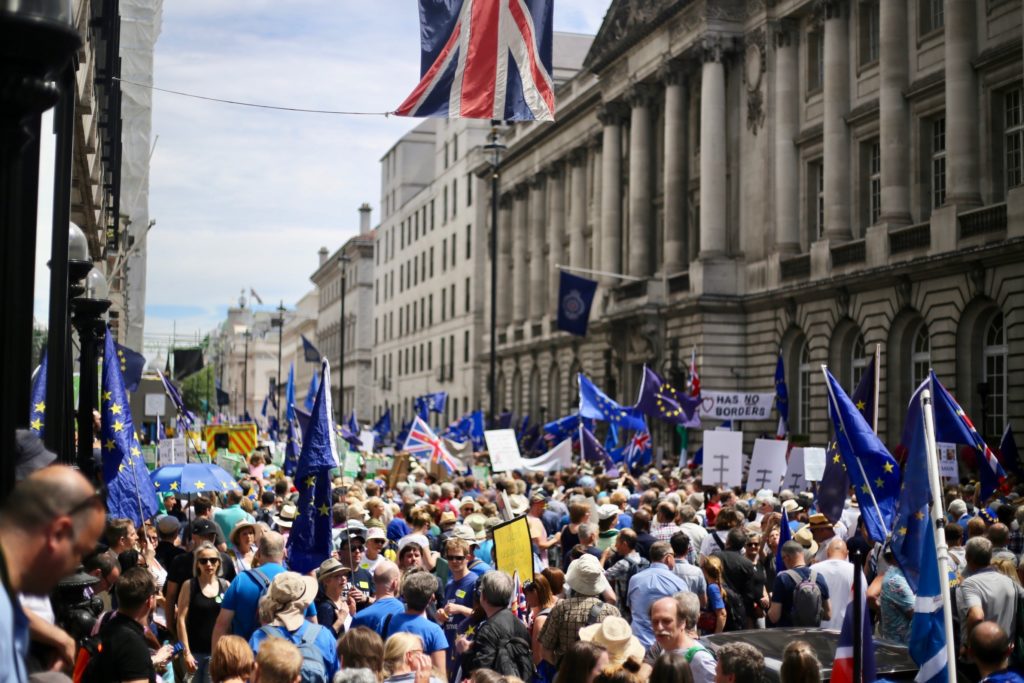
Brexit has paralysed British politics But the frenzied debate about process has crowded out discussion of the underlying issues.
The most notable features of the Brexit debate relate to forms of democracy, appeals to national sovereignty amplified by the Leave campaign’s slogan “take back control” and the allure of so-called free trade agreements with unspecified countries and/or the European Union. Yet these overlapping aspects cannot easily be squared
In his book The Globalization Paradox, Harvard economist Dani Rodrik argued that nation states are facing a trilemma. They cannot simultaneously achieve economic globalisation, national sovereignty, often characterised as national self-determination, and democracy. He argues that it may be possible to achieve two of the above but not all three.
How societies manage the tensions between the three objectives depends on institutional structures, politics and other resources. How is the UK doing?
National sovereignty
In the Brexit debate, some have associated national sovereignty with complete control over people and property within a defined geographical jurisdiction. However, this is rarely the case. If the UK was self-sufficient in everything, government could hermetically seal itself from the rest of world and make whatever policies were needed to meet citizens’ preferences.
A key feature of the post Second World War economic settlement was the shackling of capital and generally confining it to a defined geographical area with capital controls and foreign exchange controls. This gave the states greater control over the economy, and they could pull many levers to manage the economy.
However, such options are severely diluted in the neoliberal order of free movement of capital, goods/services and floating exchange rates. For fear of runs on currency and capital outflows, governments have adopted policies, such as austerity and wage freezes, which may be detrimental to the wellbeing of citizens and stewardship of the economy.
They also take cues from global neoliberal institutions (World Bank, International Monetary Fund, World Trade Organisation, etc.) – advancing neoliberalism in the process.
Globalisation
In a globalised world of interdependencies, states build alliances through agreements, treaties and protocols. Currently, the government’s preference is for a No Deal exit from the European Union (EU) with the claims that this would enable it to chart its own course and negotiate new trade deals with other nations.
However, in order to negotiate international treaties and agreements, all states have to dilute their demands. You can’t run airlines without international agreements, import/export food, medicines and automobiles without some common health and safety standards. Ecological and security issues require co-operation and compromises.
This means that states can’t do whatever they wish though more powerful ones may exert a greater degree of autonomy. The UK may replace the European globalisation with trade agreements with other countries, but to do so it will need to surrender or dilute some part of its sovereignty.
Democracy
Successive UK governments have promoted economic globalisation and attracted capital through deregulation, anti-trade union laws, wage freezes, subsidies, tax concessions and other means. This has increased the power of finance and diluted the power of the state to control the economy or levy taxes.
If anything, it has made societies less democratic and citizens are unable to exert control on footloose capital. Governments pay more attention to financial markets and financiers than to the wishes of citizens.
Economic globalisation has not been accompanied by global democratic structures or empowerment of citizens to take control of their futures. Many have criticised the EU for lacking democratic structures and object to the amount of power enjoyed by the European Commission, essentially unelected bureaucrats.
However, the UK government’s preferred globalisation options in the form trade treaties with the USA, India, China, Australian, Canada or other countries do not result in any democratic arrangements to empower citizens and cannot address their concerns about unemployment, income/wealth distribution or inequalities.
On the home front, democracy has been primarily confined to a periodic cross on a ballot paper. If Brexit was about the supremacy of the UK parliament, that illusion has quickly been shattered by Prime Minister Boris Johnson’s decision to side line it through prorogation.
In recent days, Ministers have also indicated that they may not respect any law which obstructs their ideological commitment to a No Deal with the EU. People spend a large part of their lives at work, but unlike many other EU countries the UK lacks industrial democracy. There are no statutory requirements for large companies to put workers on their boards.
The trilemma of globalisation, national sovereignty and democracy has rarely been discussed in the Brexit debate. All political parties are committed to some form of economic globalisation, but they rarely talk about its impact on national sovereignty.
Unlike the Conservative Party, Labour is committed to putting workers on the boards of large companies. But that alone will not bring footloose capital under people’s control.
Prem Sikka is a Professor of Accounting at University of Sheffield, and Emeritus Professor of Accounting at University of Essex. He is a Contributing Editor for Left Foot Forward and tweets here.
Left Foot Forward doesn't have the backing of big business or billionaires. We rely on the kind and generous support of ordinary people like you.
You can support hard-hitting journalism that holds the right to account, provides a forum for debate among progressives, and covers the stories the rest of the media ignore. Donate today.
Donate today