Andy Burnham must ‘make life easier for working people’ – interview with ASLEF general secretary Dave Calfe
LFF spoke to Dave Calfe at TUC Congress
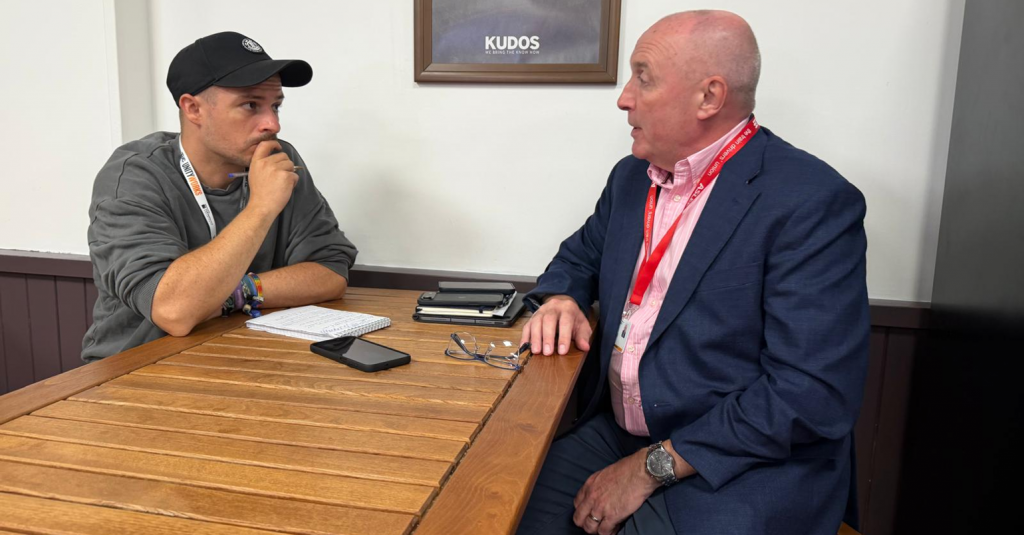
Dave Calfe was elected as general secretary of rail union ASLEF in November 2025. That means this year’s TUC Congress in Brighton is his first at the head of the union.
It’s also the first TUC Congress since Andy Burnham took over as Labour leader and prime minister. The new government’s plans have therefore inevitably been a major point of discussion throughout the event.
In an interview with LFF at TUC Congress, Calfe gave his views on the early days of Burnham’s government and what his union is seeking to secure for train drivers.
Calfe started by saying that Burnham’s government is “very different from the last one” and “a lot more engaged”, going on to add that he is “looking forward to the next few months of working with the government, particularly for us in rail, but also for working people across the board”.
What should the government’s priorities be? For Calfe, the “most pressing thing we need to get addressed” is the fact that people “with three jobs [are] still struggling to make ends meet”. As such, he told LFF that he wants the government to use the upcoming budget to “make life easier for working people”.
Alongside this, Calfe also called for the government to make changes to the tax system in the budget. He told LFF: “I think the taxation system in the country is probably out of kilter with with where most working people are”, before adding: “there are people with massive wealth in this country who literally pay nothing on that wealth”.
For Calfe, this kind of agenda will not only be important in improving workers’ lives, but it will also help to see off the threat of Reform and the populist right.
He told LFF: “I think if if Labour start making a difference for working people, then the focus will change”.
He went on to say: “People are desperate at the moment and they’ve been desperate for a very long time and they don’t see mainstream politics doing anything for them. And so they’re looking around to see who’s saying what, saying things that make them feel that they’re not being as worse off as they are today.”
Beyond the budget and the economy, Calfe spoke to LFF about another major issue affecting ASLEF members – the climate emergency. Climate is significant for ASLEF for two reasons – first because increasingly frequent extreme weather events have a direct impact on train drivers’ conditions and safety, and second because the rail industry is a central part of the transition to a decarbonised economy.
Calfe is under no illusions about the severity of the issue and the scale of the challenge it poses for both workers and the country, telling LFF: “They’re talking about next year being even hotter or more extreme than this year’s weather has been.” He went on to describe the impact this is having on ASLEF members, saying: “We still have train cabs without air conditioning, and we had our members in 40-50 degree heat for many hours through this summer, and I don’t thin we can put up with that next summer.”
Calfe said that “we need some mitigations in place” to address these impacts on drivers, before going on to address what is needed to secure the future of the railways more broadly. He told LFF: “Network Rail needs the funding to put in place the resilience for climate change”, adding: “Some of the soil conditions have changed because the soil is drying out, and that’s not happened just this year, that’s happened in previous years at other locations where they have to put emergency speed restrictions in place. And so we want to see a long-term plan”.
These calls were echoed by TUC delegates this week, who passed a motion calling for a maximum working temperature and for investment in climate resilience.
The climate crisis isn’t the only big issue facing the railways right now. Privatisation remains on the agenda.
Since Labour came to power in 2024, one policy area it has talked extensively about is its decision to take the rail operators into public ownership. However, this doesn’t mean that the whole of the railway is in public hands.
Presently, the rail operators don’t own the trains themselves. These are instead leased from privately owned rolling stock companies (ROSCOs).
ASLEF is pushing for change here, arguing that the trains themselves should be publicly owned too. At this year’s TUC Congress, the union got the support of the wider trade union movement for its Own Our Trains campaign, which is seeking to get the government to move in that direction.
LFF asked Calfe why the union is prioritising this campaign. “So ROSCOs took £2.9 billion out over the last five years in profit and dividends”, he highlighted, later adding: “It’s really important that the money stays in the industry and doesn’t get siphoned off elsewhere. They’ve [the ROSCOs] come into the industry to make money, but we want the money to stay in the industry.”
He would elsewhere go on to explain what the demands of the campaign are: “We’re not seeking for the government to go and buy the ROSCOs or renege on any contracts they’ve got. What we want them to do is put something different in place, use a different funding model – EUROFIMA or similar, or green bonds as we’ve discussed – as a way of procuring trains that are then owned by the government stroke the operator.” Calfe later added: “We’re not looking to try and buy them out or end up in court for year after year trying to break contracts. What we want to do is we want those contracts or that rolling stock to be procured directly”.
Chris Jarvis is head of strategy and development at Left Foot Forward
Image credit: ASLEF
Left Foot Forward doesn't have the backing of big business or billionaires. We rely on the kind and generous support of ordinary people like you.
You can support hard-hitting journalism that holds the right to account, provides a forum for debate among progressives, and covers the stories the rest of the media ignore. Donate today.
Donate today