Did the budget deliver for women?
Viktoria Szczypior, Women’s Budget Group The chancellor promised a Budget that would give families “breathing space”. After four years of […]
Viktoria Szczypior, Women’s Budget Group
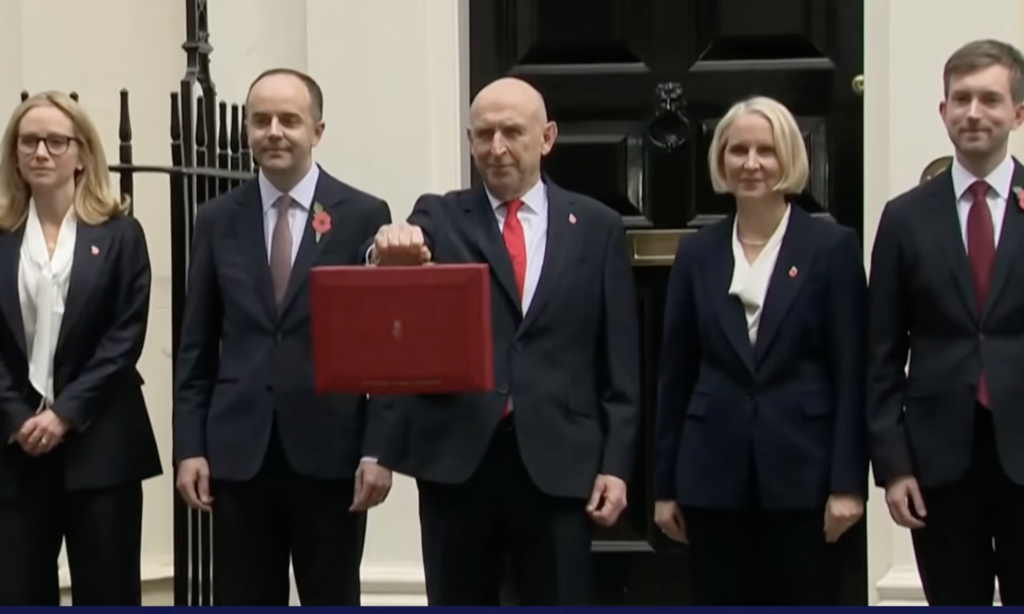
The chancellor promised a Budget that would give families “breathing space”. After four years of a cost of living crisis, preceded by a pandemic and a decade of austerity, women needed far more than that. What we got was a Budget of small measures and incremental tweaks: a “picky bits” Budget, complete with a record number of policy announcements, but little sign of a coherent plan to tackle the economic pressures bearing down on women.
Women are still bearing the brunt of the cost of living crisis. Because women earn less than men on average, and continue to carry out around 50% more unpaid care and domestic work, they have less financial resilience when prices rise. More of their income is already spent on essentials, leaving less room to absorb higher costs.
Earlier this year, debt charity StepChange reported that 71% of its clients with energy arrears were women. Single-parent families, the vast majority headed by women, have energy arrears at three times the national average. With interest rates expected to rise again, the cost of servicing those debts will only increase.
Against that backdrop, action on household bills was particularly important. The Chancellor’s package on energy costs – the removal of VAT on energy bills and standing charges on gas bills, and a £100 council tax rebate – will undoubtedly help shield many from even steeper energy bills.
Yet a closer look reveals that the support is not particularly well targeted. According to the Resolution Foundation, higher-income households will benefit almost as much in cash terms as lower-income households. At a time when public finances remain tight, the government should have provided more meaningful support to those struggling most, rather than offering modest help to millions.
Housing is perhaps the clearest example of a missed opportunity.
The Chancellor announced several measures to help people onto the housing ladder. But for many women, the pressing question is how to pay next month’s rent. Our analysis showed that women now spend an average of 57% of their earnings on private rent, compared with 41% for men. For many, housing costs have become the single biggest pressure on household budgets.
That is why the decision not to unfreeze Local Housing Allowance (LHA) is so disappointing. More than 900,000 low-income private renting families now face a gap between the housing support they receive and the rent they are expected to pay.
While additional funding to tackle rough sleeping is welcome, preventing homelessness is every bit as important as responding to it. Single mums already make up the majority of statutory homeless families. But keeping housing benefits frozen will put more families at risk of losing their home.
While the Chancellor did say extending paternity pay to self-employed fathers was a ‘downpayment’ on wider reforms to parental leave, he also needed to address the inadequacy of maternity pay. At less than half the minimum wage, it continues to put many mothers under severe financial pressure. Our analysis has shown that improving maternity pay would put more than £1bn in families’ pockets and deliver social and economic gains.
This highlights a wider persistent blind spot in British economic policymaking: the tendency to overlook the social infrastructure that makes economic participation possible. Investment in care, education and local government services is too often treated as secondary to traditional physical infrastructure spending. That comes at a significant cost. We estimate that the UK loses £113 billion in economic output because women’s skills and labour are underutilised. If the Chancellor wants to unlock growth in every postcode and boost living standards across the UK, women must be at the heart of economic policy.
And while a new fund to tackle misogyny is welcome, £5 million a year for three years is a drop in the ocean. It is, notably, just half the amount allocated to a single new parkway station in Cardiff. Violence against women and girls is a national emergency, and it needs to be treated as such. 1 in 4 women in England and Wales will experience domestic abuse in her lifetime and one woman is killed by an ex/partner every five days.
The biggest question left unanswered at the dispatch box was what will happen to the spending envelopes for most departments including those covering justice, education and local government. While health and defence absorb the vast majority of spending growth, other departments face growing pressure on their existing budgets from inflation and rising costs. The Chancellor’s promise of efficiency savings may reassure the Treasury, but it will raise concerns for those who remember how similar language paved the way for austerity. Cutting waste is one thing; asking overstretched services to do more with less is another. Women are likely to bear the consequences most acutely, both as the majority of users of public services and as the majority of the workforce that delivers them. When public services are stretched beyond capacity, women are often the first to fill the gaps.
The forthcoming spending review is an opportunity to address current shortfalls, but without commitment to spending increases, we are looking at real-terms cuts. That is why it is disappointing that more ambitious revenue raising measures were left on the table. Doubling the bank levy was a welcome step and a recognition that sectors which have benefited from higher interest rates should contribute more. But the increase is temporary and remains below previous levels. Similarly, not raising capital gains tax rates to align with income tax rates is a huge missed opportunity to bring in much-needed tax revenue.
No one expected this Budget to dismantle 40 years of neoliberalism overnight. But it could have started shifting priorities.
So, while this Budget may have offered some breathing space, it did not deliver a convincing answer to the question of how women’s living standards will improve over the long term.
The Women’s Budget group is a feminist economics think tank that raises awareness of and provides evidence for a gender equal economy. We put feminism into economics and economics into feminism. www.wbg.org.uk
Left Foot Forward doesn't have the backing of big business or billionaires. We rely on the kind and generous support of ordinary people like you.
You can support hard-hitting journalism that holds the right to account, provides a forum for debate among progressives, and covers the stories the rest of the media ignore. Donate today.
Donate today