How Andy Burnham can fund defence spending without cutting welfare
Slashing benefits isn't the answer
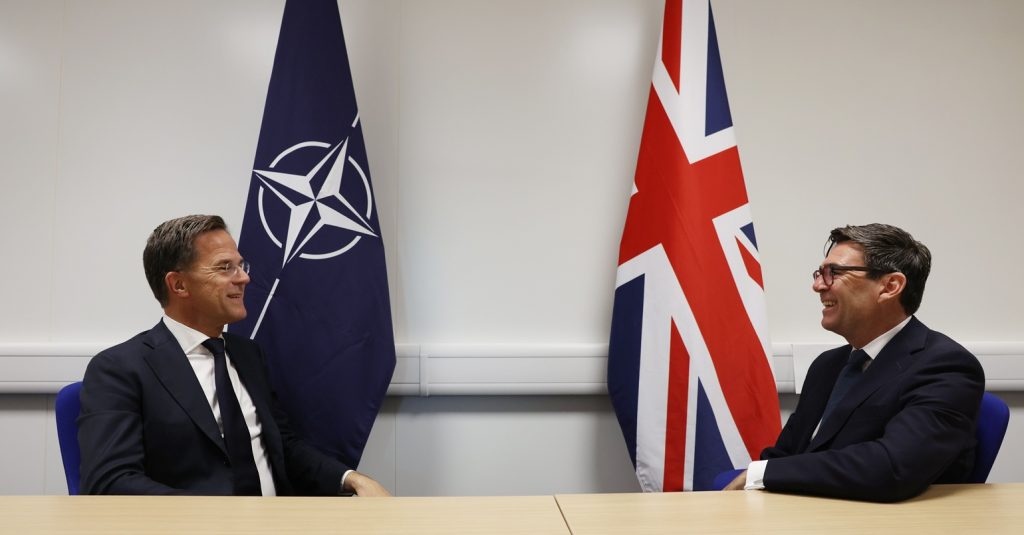
The first duty of any government is to keep the country secure and its citizens safe.
And right now, you would be hard pushed to find anybody who didn’t think more money should be spent on doing just that.
Under the last Tory government defence spending was slashed by 22% between 2010 and 2017 before it began to tick upward again, both as a percentage of GDP and in real terms.
Many of the voices at the time who defended those cuts, are the same voices now calling for £billions more in additional spending. Their hypocrisy would be rank if it wasn’t for one simple truth; in today’s uncertain, volatile and increasingly hostile world, their calls have justification.
Defence spending peaked at the height of the cold-war in the early 1980’s when the spectre of nuclear war between the USA and Soviet Union, was at its height.
As US and Soviet relations began to thaw in the warmth of perestroika, a ‘peace dividend’ lured many a government to believe that the days of resolving conflicts with bullets and bombs were, if not truly over, less likely.
Warfare, its devastating and destructive consequences forever indelibly stained in countless pages of history books, would not so often leave their stains in the history books of the future.
Negotiation and diplomacy were the order of the day. Words, not armies, would be sent to fight battles in diplomatic dispatch boxes and only verbal, not hand, grenades would be launched across negotiating tables.
Russia’s invasion of Ukraine in 2022 and its illegal, unjustified and abominable war, brought any notion of a peace dividend, sorely tested after Russia’s annexation of Crimea in 2014, crashing firmly to the ground.
A war was now being prosecuted in a European country where four, of its seven borders, were with NATO member states.
If the world feels less safe today than since the peak of the cold-war, that’s because it is and I haven’t even begun to talk about China, Iran or North Korea, all of whom regularly attempt to test the strength of our national security.
At the 2025 NATO Summit in The Hague, a commitment was made by all member states to invest 5% of their GDP annually on defence spending by 2035. This included 3.5% on core defence and 1.5% on resilience and security.
To reach 3.5% of GDP by 2035 would mean the UK spending around an additional £35billion per year. The ongoing political battle is not whether more should be spent, but how the money will be found.
Ultimately ‘the how’ will come down to two hard choices; either cuts to government expenditure or an increase in tax receipts.
Reform have suggested funding additional defence spending by, amongst other measures, reducing the cost of welfare. This they say would be achieved by slashing £50billion from the benefits bill largely through cuts to disability payments.
If enacted, this could potentially see 2.9 million people have disability payments removed, or modified. To put that another way, that’s around 4% of the entire UK population impacted.
The Tories have also talked of welfare reform to fund extra defence spending and have suggested making a £4billion start through cuts to housing benefit. Many have claimed, if enacted, that would lead to an increase in homelessness and hardship.
Welfare costs today are in the region of £334billion per annum. That is a huge number but what rarely gets mentioned is that as a percentage of GDP, welfare costs proportionately less now than it did more than twenty years ago.
Another thing rarely mentioned is that more than half of that amount, around £178billion, is spent on pensioners and I have yet to hear calls for the state pension bill to be slashed by £50billion.
Andy Burnham was right to say national security cannot come at the expense of social security.
He was also right to say that defence could be funded and the welfare bill reduced ‘the Labour Way’ by getting more people into work and through the provision of better mental health services.
‘The Labour Way’ makes sense. For every 100,000 people placed into work, the Universal Credit bill reduces by around £700million per annum. Having more people in work is a positive thing but ‘ the Labour Way’ alone, unfortunately, won’t be enough to bridge the £35billion per year defence spending gap.
Here are some suggestions that might help:
- An annual 2% wealth tax on those with assets over £10million could raise £24billion per annum. Even if the monies realised were half that, it would be a significant and sizeable chunk.
- The estimated (provisional) overall UK tax gap (in fiscal year 2024/25) was £59billion. That figure surely has scope to be reduced by £billions. Let’s assume a 10% improvement. That’s almost £6billion.
- Around £6billiion is lost to tax evasion each year. Reduce that by half and there’s another £3billion.
- Increasing the bank corporation tax surcharge to 8% would bring around an extra £8 billion by 2030 and imposing a windfall tax of 38% on profits, around another £19billion.
- Replacing a windfall tax on big energy with a price triggered mechanism could bring, on average, an additional £1.5billion in tax receipts per year for the next ten years.
Whilst funding additional defence spending by cutting the welfare bill might grab a headline, it would only serve to create a whole host of other, mostly unwelcome, consequences for the millions of people it would affect.
A wealth tax however would affect around 0.04% of our citizens, that’s only about thirty thousand people. Yet the money it would raise would help protect an entire population of sixty-nine million.
And in fulfilling its first duty, the government could do with all the help it can get.
Image credit: Lauren Hurley / Number 10 – Creative Commons
Left Foot Forward doesn't have the backing of big business or billionaires. We rely on the kind and generous support of ordinary people like you.
You can support hard-hitting journalism that holds the right to account, provides a forum for debate among progressives, and covers the stories the rest of the media ignore. Donate today.
Donate today