Farage‘s Iceland victory lap falls flat as he’s reminded of the nation’s close ties to Europe
“Is that now official Reform policy for UK independence too? If so sign me up.”
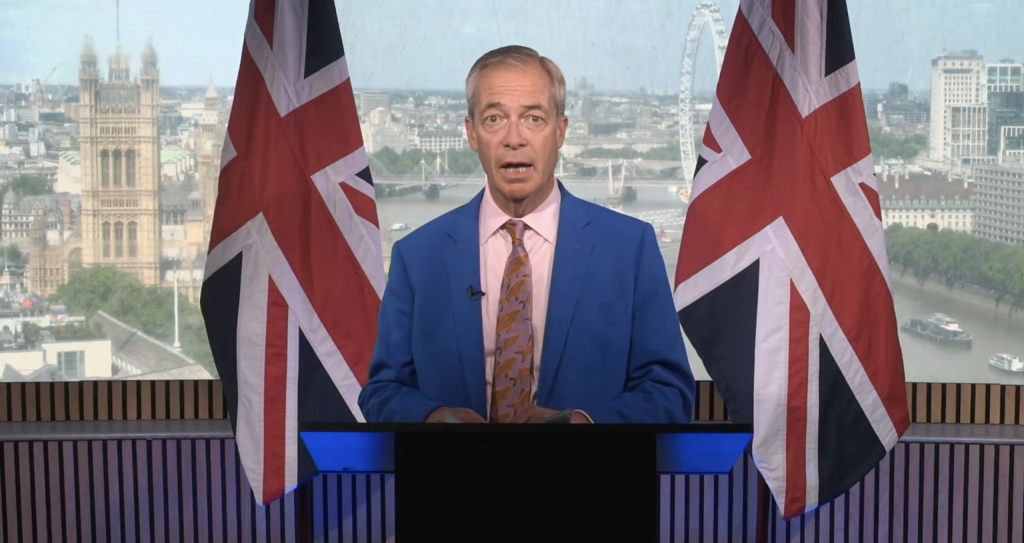
Nigel Farage has been mocked for celebrating Iceland’s decision not to restart talks on joining the European Union, despite the country already enjoying many of the benefits of close integration with the bloc.
On August 29, Icelanders voted against resuming EU accession talks 13 years after negotiations were abandoned. Of the more than 225,000 people who voted, 52.8 percent rejected the government’s proposal, while 47.2 percent backed it.
Prime Minister Kristrún Frostadóttir’s centre-left government had promised a referendum by 2027, but brought the vote forward amid growing international tensions, including President Donald Trump’s threats towards Greenland.
For Farage, however, the result was a triumph for national sovereignty and a rejection of the European Union.
“Congratulations to Iceland on voting to keep their independence,” the Reform UK leader posted on social media.
But the celebration was widely mocked, with many reminding Farage that Iceland’s relationship with the EU is nothing like Britain’s after Brexit. Iceland is not an EU member, but it is already part of the European Economic Area (EEA), giving it access to the EU single market, and is part of the Schengen passport-free travel area.
“Reminder: Iceland is already in the EU’s single market and the Schengen free-travel zone – that’s not going to change!” one person pointed out.
“But they are already part of the EU’s single market and Schengen border-free zone. So they do have more sense than us!” another wrote.
Another commenter mocked what Iceland’s arrangement might mean for Reform’s own definition of independence:
“So they kept their independence but are full members of the EEA, Schengen travel area, adopts the main freedoms, full member ECHR and pays in to the budget. Is that now official reform policy for UK independence too? If so sign me up.”
And therein lies the problem with Farage’s triumphalism.
Icelanders were not asked whether they wanted to leave the European Union. They were not asked whether they wanted to tear up existing agreements with Brussels, leave the single market or restrict freedom of movement.
They were not even asked whether they wanted to join the EU. The referendum asked whether the government should resume accession negotiations. Any eventual agreement on membership would then have been subject to a separate referendum, potentially as early as 2028.
That makes the Icelandic vote a rather awkward example for anyone seeking to use it as evidence of a broad European rejection of the EU.
As Dr Simona Guerra, senior lecturer in comparative politics at the University of Surrey and author of Central and Eastern European Attitudes in the Face of Union: A Comparative Perspective, has pointed out, that Iceland presents a particularly unusual case when it comes to understanding attitudes towards the EU.
“Most referendums on the EU ask citizens to evaluate something they already live inside. Icelanders were in the odd position of being asked to evaluate a relationship they have never had.”
She argues that the result demonstrates why attitudes towards the EU cannot simply be reduced to a question of support or opposition.
“For the study of public Euroscepticism, Iceland makes clear that attitudes to the EU cannot be reduced to levels of support and opposition, because those levels presuppose that citizens know, with some adequacy, the thing they are for or against. Iceland was asked to decide about a membership it has never experienced and, offered the chance to find out, narrowly chose not to.”
The Guardian’s Europe correspondent Jon Henley made a similar point, arguing that Iceland’s circumstances bear little resemblance to Brexit.
“Its situation bears precious little relation to Brexit or even to a broader EU-critical movement. Icelanders did not vote to isolate themselves from the EU, tear up any treaties or “take back control” – they voted to preserve a close, customised and largely successful relationship.”
Indeed, Iceland is already deeply integrated into the European economy. Through the EEA, it participates in the EU single market and accepts the free movement of goods, capital, services and people. It is also part of Schengen and operates under a range of EU-derived regulations and standards.
Its position highlights one of the central contradictions in the Brexit argument. It is possible to maintain formal national sovereignty while choosing to cooperate closely with European neighbours, participate in shared markets and accept common rules.
What Icelanders rejected wasn’t Europe, free movement or economic integration. They narrowly rejected taking the next step towards formal EU membership.
Iceland has maintained its independence while remaining firmly embedded in the European economic and travel systems that Farage and his fellow Brexit campaigners spent years attacking as constraints on British sovereignty.
If that is the model of independence Reform now wants for Britain, it would be quite a departure from Brexit.
Left Foot Forward doesn't have the backing of big business or billionaires. We rely on the kind and generous support of ordinary people like you.
You can support hard-hitting journalism that holds the right to account, provides a forum for debate among progressives, and covers the stories the rest of the media ignore. Donate today.
Donate today