If Andy Burnham wants to deliver power in every postcode, he has to overhaul our broken democracy
If it doesn't happen, "power in every postcode" will take its place alongside levelling up: a phrase that moved attention around the country without ever moving power.
Emma Harrison is CEO of Make Votes Matter
My parents live in Rutland and Stamford, and in all the years they have been there, no political party has ever seriously asked for their vote. Not the Conservatives, who don’t need to. And not Labour, or the Liberal Democrats, because they long ago worked out that they weren’t going to win, and stopped pretending otherwise. At general elections, the campaign reaches them as something occurring on social media, on radio talk shows, in other people’s constituencies. Nobody knocks. The seat – under various names – has returned a Conservative MP at every election since 1918.
I mention this not to complain about my parents’ postal district, but because it is the part of the argument about power that the Labour Party keeps leaving out.
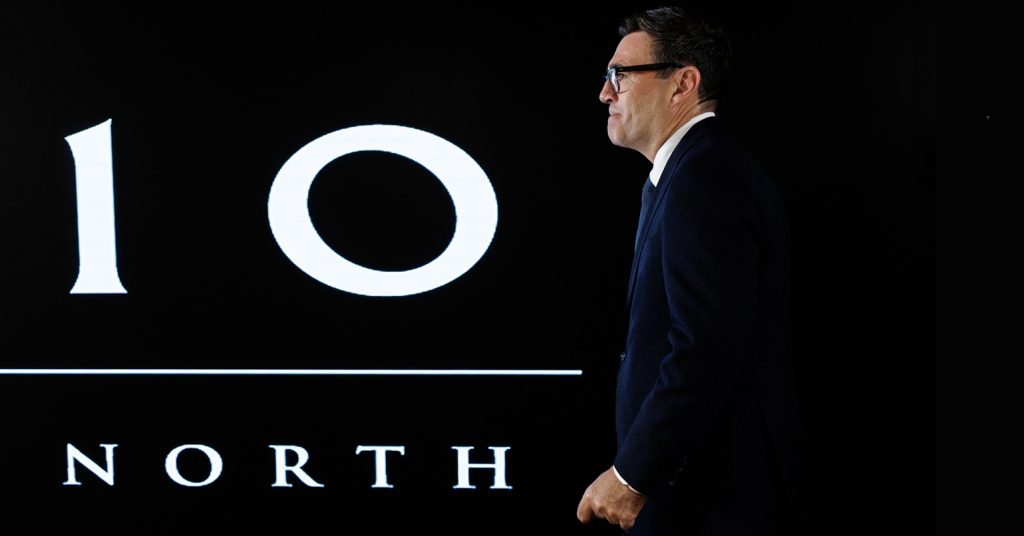
Labour has spent a decade rightly saying that Britain is too centralised, that Westminster hoards decisions it has no business making, that whole regions have been governed as an afterthought by people who have never lived in them. Andy Burnham has made that case more forcefully and more consistently than anyone in Labour politics, and he now gets to act on it. No 10 North is not window dressing if it means officials, budgets and authority physically leaving SW1. Deeper devolution to mayors and combined authorities is worth doing on its own merits.
But you cannot devolve your way out of a problem that begins at the ballot box.
On his first day in Downing Street, the Prime Minister promised to take power out of Westminster and carry it into every postcode in the land. Four days later, opening No 10 North, he said it again: “power in every postcode”. It’s a good line. It also happens to describe the precise thing First Past the Post prevents. Under our voting system, the value of your ballot is determined by where you happen to live. Move a voter forty miles into a marginal and their vote acquires a weight it simply does not have in Oakham or Stamford.
In 2024, more than 27,000 people in Rutland and Stamford voted for someone other than the winner, and as at every election before it, not one of them got the representation they had asked for. Nationally, the Electoral Reform Society found that 21.2 million votes, nearly three quarters of all those cast, made no difference to the result, either because they backed losing candidates or because they were piled on top of majorities that were already safe.
The individual unfairness is real, but the structural damage is worse. Parties are rational organisations with finite money and volunteers, and they spend both where seats can move. Everything else follows from that: which town gets the visit, whose hospital gets the pledge, whose cost-of-living story survives into the manifesto and whose concerns are deemed safe to ignore. Labour has institutionalised this, and then acts surprised when people conclude that politics is something done at them rather than with them, and grow resentful.
Here is the part the party has to face squarely. The usual objection to Proportional Representation is that it would hand Reform a large bloc of seats. That is probably true. But look at where we actually are: Reform, Labour and the Conservatives are separated by two or three points in most polls, with the Greens and Liberal Democrats taking another quarter of the vote between them. MRP models are producing hung parliaments. First Past the Post does not protect us from that. It converts it into a lottery. In 2024 the split on the right handed Labour 411 seats on 34% of the vote; a split on the left, would hand the right a majority just as undeserved. Defending the current system on tactical grounds now means betting the country’s future on which side happens to fracture more.
The good news is that this argument has already been won inside the party . Conference passed a motion for PR in 2022. Roughly two-thirds of members support it. Ninety-six Labour MPs, more than a quarter of the parliamentary party, signed Alex Sobel’s amendment to the Representation of the People Bill calling for a National Commission on Electoral Reform, alongside nearly 200 parliamentarians from across the House. And the Prime Minister himself has argued for years that people in all places will never be equally represented until every vote counts, that the current system funnels the votes of millions into the hands of a small Whitehall elite, and that his own experience of running under a preferential system taught him a more collaborative kind of politics.
He is the first Labour leader, and the first Prime Minister, to hold that view openly on entering Downing Street. He did so without a general election, which makes the question of democratic renewal more urgent for him, not less. A National Commission on Electoral Reform, established within his first hundred days (by the end of October) would demonstrate that the analysis he has been making since 2021 was a programme rather than a positioning exercise.
If it doesn’t happen, “power in every postcode” will take its place alongside levelling up: a phrase that moved attention around the country without ever moving power. And in my parents’ village, the next election will arrive exactly as every other one has. As something happening somewhere else.
If you agree, add your name to our open letter here.
Image credit: Lauren Hurley / Number 10 – Creative Commons
Left Foot Forward doesn't have the backing of big business or billionaires. We rely on the kind and generous support of ordinary people like you.
You can support hard-hitting journalism that holds the right to account, provides a forum for debate among progressives, and covers the stories the rest of the media ignore. Donate today.
Donate today