Starmer’s departure won’t change anything while the Westminster system remains intact
'Our goal is not simply to change who governs Britain, but to change how Britain is governed.'
Jennifer Forbes is chair of Your Party
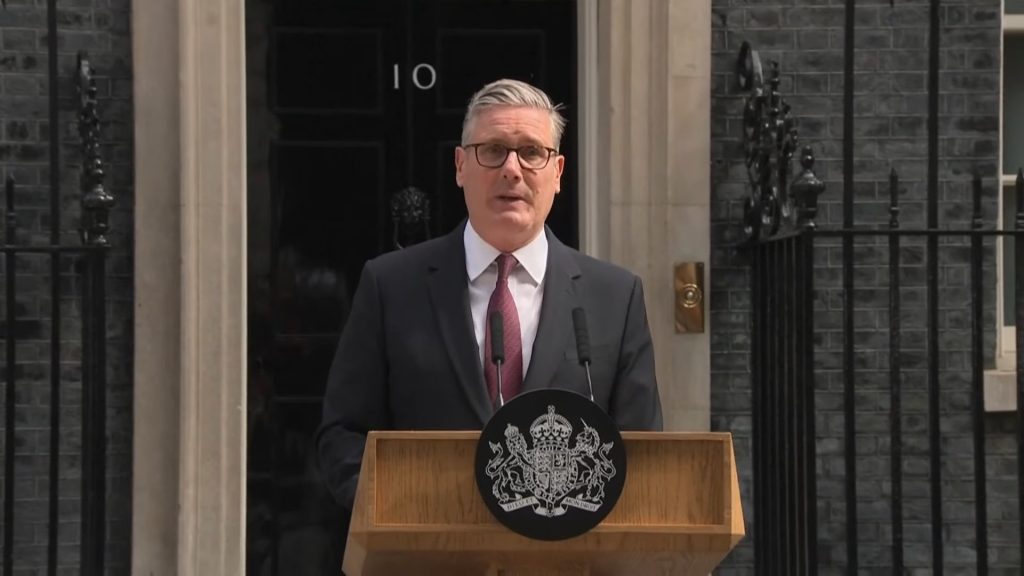
Keir Starmer’s resignation will inevitably spark a familiar conversation. The commentariat will turn its attention to who comes next, whether it is Andy Burnham, Wes Streeting, or another figure from Labour’s upper ranks, and to whether a new leader can reconnect the party with voters who have become increasingly disillusioned over recent years.
Indeed, it already appears that Britain may be heading towards a de facto coronation rather than a genuine contest of ideas, with the country’s future direction once again determined by negotiations between Labour MPs behind closed doors. For millions of people watching from the outside, it is a stark reminder of how little influence ordinary citizens have over a political system that claims to represent them, yet too often leaves them as spectators to the manoeuvrings of Westminster factions.
But focusing solely on the individual at the top risks missing the much bigger story.
Starmer’s resignation is not simply the downfall of one political leader. It is the culmination of a broader political failure, one that extends far beyond Labour and speaks to the growing disconnect between Westminster and the people it claims to represent. For years, millions of people have watched living standards stagnate, public services deteriorate, and economic insecurity become a permanent feature of everyday life. At the same time, politicians of all stripes have offered little more than different ways of managing the same problems, while asking voters to place their faith in a new leader, a new slogan or a new electoral strategy.
When Starmer became Labour leader, many hoped he would offer something different. Instead, his leadership came to symbolise a politics that increasingly appeared cautious, managerial and detached from the scale of the challenges facing the country. On issue after issue, from workers’ rights and public ownership to the National Security Bill, the right to protest and the UK’s response to Israel’s assault on Gaza, Labour’s leadership seemed more concerned with reassuring establishment interests than with articulating a bold alternative vision for the future.
In doing so, Starmer did not simply disappoint Labour supporters. He helped deepen a much wider crisis of faith in politics itself. Many people who once looked to Labour as a vehicle for social change increasingly came to see it as another institution unwilling or unable to challenge a status quo that is failing millions.
It is clear that this sense of frustration cannot be resolved by replacing one leader with another.
Whether Labour’s next leader is Andy Burnham or someone else entirely, the underlying problem remains. Britain is governed through a political system that concentrates power in Westminster, rewards conformity over imagination, and leaves communities with remarkably little control over the decisions that affect their lives. Leadership contests come and go, governments rise and fall, but too often the underlying distribution of power remains exactly where it has always been.
The consequence is a political culture that feels increasingly distant from the experiences of ordinary people. Communities are asked to trust professional politicians to solve problems that those same politicians frequently appear incapable of understanding. Citizens are invited to participate at election time, only to find themselves shut out of meaningful decision-making once the votes have been counted.
This is not simply a problem of Labour, nor is it a problem that can be solved by finding the right personality to occupy Downing Street. It is a structural problem rooted in a political model that has become increasingly centralised, insulated and unresponsive.
Nor is the answer simply to transfer support to another Westminster party. Too often, parties that present themselves as outsiders ultimately accept the same assumptions about where power should sit and how politics should be conducted. They may offer different policies, different personalities or a different tone, but they remain committed to a system in which power is concentrated at the centre, and political participation is reduced to choosing between competing brands every few years. The result is a politics of perpetual reshuffling, new faces, new branding and fresh promises, but very little change in who holds power and how decisions are made.
That is why Your Party exists; we are not seeking to become another party competing for control of Westminster while leaving the underlying system intact. We are building a movement that seeks to redistribute power itself, away from Westminster and into the hands of ordinary people. Our goal is not simply to change who governs Britain, but to change how Britain is governed.
History teaches us that meaningful change rarely begins at the centre. It is won when people organise collectively, build power together, and refuse to accept that the way things are is the way they must always be. From the trade union movement to the struggle for women’s suffrage, progress has always come when ordinary people have challenged established power rather than waiting for it to reform itself.
That tradition is alive today. Across the country, Your Party branches are already being established by local people who are tired of being treated as spectators in a political system that no longer listens to them. From Wales to the Isle of Wight, and in towns and cities across Britain, people are coming together to build a different kind of politics, one rooted in participation, community power and democratic accountability.
This is what makes Your Party different. We are not asking people to place their faith in a charismatic leader or a parliamentary faction. We are asking people to organise, participate and build power where they live. We believe that the people most affected by political decisions should have the greatest influence over them, and that democracy should be something people do, not something that is done to them.
Keir Starmer’s resignation may mark the end of one political chapter, but Britain does not need another leadership contest, another Westminster rebrand, or another party asking people to place their faith in a different set of politicians. It needs a genuine radical alternative, one that puts power in the hands of communities and begins the long-overdue task of democratising Britain itself.
That work has already begun.
Left Foot Forward doesn't have the backing of big business or billionaires. We rely on the kind and generous support of ordinary people like you.
You can support hard-hitting journalism that holds the right to account, provides a forum for debate among progressives, and covers the stories the rest of the media ignore. Donate today.
Donate today