Tom Watson: The bins, the bombs, the ballot box
Local elections collide with national anger as voters walk away from the two-party system
Tom Watson was the Labour MP for West Bromwich East between 2001 and 2019, and was Deputy Leader of the Labour Party between 2015 and 2019. He now sits in the House of Lords.
This article was originally published on Tom Watson’s Substack
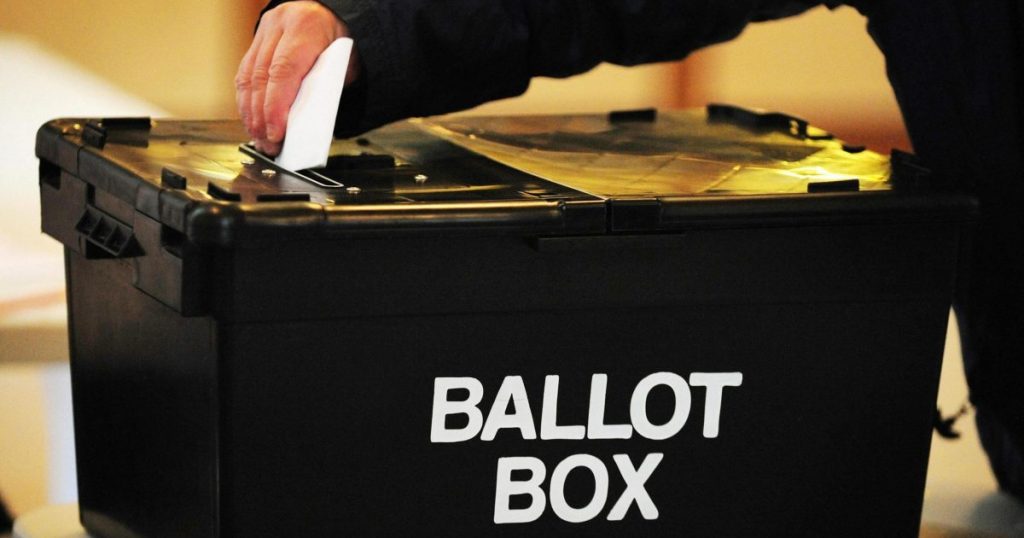
Thursday’s elections will no doubt be reported as a referendum on Keir Starmer. That is partly true, as far as it goes. Governments always get the blame. Prime ministers always carry the can. That is one of the less attractive privileges of the office.
But it would be a mistake to stop there. The polls and projections suggest something larger is happening. This is not simply a judgement on Starmer, or even on Labour. It is beginning to look like a judgement on the two-party system, and on the Whitehall way of governing that has sustained it.
The figures are stark enough. Recent polling has Reform in the mid-twenties, Labour and the Conservatives in the high teens, the Greens in the mid-teens and the Liberal Democrats still very much in the field. Psephologists have pointed to heavy losses for both main parties. Some projections have Labour losing nearly 2,000 council seats, the Conservatives also going backwards, and Reform, the Greens and the Liberal Democrats making the gains.
If it happens, it will represent a fissure in our two-party system.
The sad truth is that many people will not be voting on Thursday for the party they think will run local services best. They will be voting against. Against Labour. Against the Conservatives. Against Westminster. Against a system that feels remote, slow and incapable of doing the things it promises.
Local elections have always carried national messages. That is not new. What feels different this time is the extent to which the local has been crowded out altogether. Nigel Farage and Zack Polanski have helped turn the campaign into a vote about race, migration, Israel, Iran and a whole range of questions which have little to do with who collects the bins most efficiently, fixes the roads or keeps the libraries open.
That does not mean those issues are unimportant. It does mean that the poor councillor defending a record on social care, housing, libraries or potholes may find himself judged on matters over which he has no control at all. Local democracy is often unfair. This year it may be positively brutal.
I can remember two years of terrible results for Labour during the Gordon Brown years. They were a blow. They chipped away at his authority. They added to the sense of a government losing altitude. But they did not stop the daily flow of crises being dealt with in Number 10. The phones still rang. The papers still came in. The decisions still had to be made. Government carried on.
What feels different now is the shape of the punishment. In the Brown years, the system still made a kind of sense. Labour lost. The Conservatives gained. The pendulum moved. The shock was painful, but the mechanism was familiar.
This time, the vote is scattering. Reform gains here. Greens there. Liberal Democrats somewhere else. Independents in places where local anger has found its own candidate. The two-party system is not simply under pressure. It is nose down, hurtling towards the runway, while everyone in the cockpit insists the instruments are being reviewed.
In Wales, the polling tells the same story in a sharper form. YouGov’s MRP has Reform and Plaid Cymru effectively neck and neck, with Labour a distant third. Other polls point in the same direction.
The striking point is not simply Labour’s weakness. It is the wider displacement of the old parties. Labour and the Tories are losing their place in the system. The Conservatives, already weak in much of Wales, risk becoming almost peripheral, while the main contest shifts towards Plaid and Reform.
That is the pattern across Britain. The governing party is being punished, but the official opposition is not the automatic beneficiary. In Wales, as in England, the protest is scattering. Reform takes one kind of discontent. Plaid takes another. Labour falls back. The Conservatives struggle to remain relevant.
That is why Thursday should not be read only as an anti-Starmer election. It is also an anti-Tory election, and a warning about the failure of the old alternation: Labour in, Conservatives out; Conservatives in, Labour out. Voters are not simply changing government. They are changing the terms of two-party politics.
That raises a harder question than whether Starmer has had a bad week. It asks whether the old bargain still holds. Britain’s governing model rests on the idea that a party wins power, commands the Commons, controls Whitehall, sets the direction for local authorities and delivers change. But voters increasingly look at housing, the NHS, social care, migration, energy bills, transport, planning and policing, and conclude that the machine does not work as advertised.
Whitehall still thinks in departments, consultations, reviews and efficiencies. The public thinks in broken appointments, rising bills, unanswered calls and things that never seem to get fixed. The gap between those two worlds is now a political fact.
Kemi Badenoch’s position is not easy either. I may be the only person who thought she was actually doing well as leader. She had begun to sound sharper and more settled. Then she disastrously called it wrong on the Iran conflict and overplayed her hand by calling Keir Starmer a liar. There are moments when an opposition leader must wound the Prime Minister, but the danger is that in doing so, they look less prime ministerial. I cannot help thinking Kemi is too addicted to social media moments rather than long-term strategic clarity.
Ed Davey, whom I like very much, appears to have been forced into chasing the daily media cycle, from Trump to Mandelson and whatever else happens to be passing across the screen. One assumes his team worry that the one-man media machine of Zack Polanski will steal the oxygen. They may be right. But it is not always wise to chase a populist, particularly for liberals.
And what of the potential winners, Polanski and Farage? Their success would tell us as much about the weakness of the old parties as about the strength of the new ones. Both have understood that attention now moves faster than organisation. The danger is that attention is not the same as trust, and noise is not the same as government.
Polanski is certainly a media sensation. No one can deny that. But short-term sensation is not the same as long-term strength. He has allowed his party to be drawn into the hands of people whose political style will be familiar to anyone who watched the autocratic grip placed on Labour under Corbyn. That may work well on TikTok, but he has already turned himself into the riskiest choice for PM in a generation.
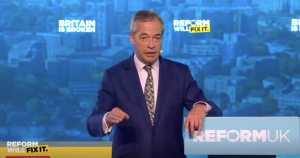
And then there is Nigel Farage. He will claim victory on Thursday whatever the numbers say. It is hard to lose from a standing start, especially when you have spent years explaining that every setback proves the establishment is terrified of you. Whether this projects him towards office is another question. A reported £5 million personal gift from Christopher Harborne, now under scrutiny by the Electoral Commission and the parliamentary standards commissioner, ought to matter in the arguments ahead. These are unusual times, though. Perhaps in the new politics, £5 million is just a rounding error. Who knows, in the present climate?
Meanwhile, the people who deserve most sympathy are barely in the national story at all. There are some very fine civic leaders facing serious challenges this week. They will not all deserve the verdict they receive. Many will have worked hard, served decently and tried to hold together public services under impossible pressure.
They are in my thoughts. I have always believed local parties are nothing without their councillors. They are the lifeblood. They are the glue. They keep the organisation alive when the national leadership is popular, and they keep it breathing when it is not.
As commentators say this is going to be the worst night in human history for an incumbent government, one thing can safely be said: Labour has at least got its expectations management right!
Somewhere in Tory and Labour HQ, clever young men and women with lanyards are drafting lines saying they always knew the asteroid was coming and are pleased it has landed broadly within the expected blast radius.
But the more serious point is not the size of the defeat. It is the meaning of the fragmentation. Voters are no longer merely changing sides. They are losing faith in not just the main parties, but the whole system.
That is a much more dangerous thing.
Left Foot Forward doesn't have the backing of big business or billionaires. We rely on the kind and generous support of ordinary people like you.
You can support hard-hitting journalism that holds the right to account, provides a forum for debate among progressives, and covers the stories the rest of the media ignore. Donate today.
Donate today