Right-wing commentators seize BBC investigation to advance anti-migrant agenda
What begins as a story about limited abuse within the system is quickly sold as proof that the entire system is broken.
The BBC recently faced criticism over a report described as “misleading” in its portrayal of asylum seekers. The report centred on what it called a “shadow industry,” allegedly helping migrants “pretend to be gay” in order to secure asylum in the UK.
According to the BBC, this was the first instalment of a major undercover investigation into how individuals nearing the end of their visas are coached to fabricate asylum claims, complete with supporting letters, photographs, and even medical documentation.
The investigation uncovered instances of legal firms charging up to £7,000 to construct such claims, sometimes assuring clients that their chances of refusal by the home office were “very low.” Those implicated were often individuals already in the UK on expired student, work, or tourist visas, not people arriving through irregular routes such as small boat crossings.
Taken at face value, the BBC’s focus seems directed less at asylum seekers as a whole and more at the intermediaries profiting from and potentially manipulating vulnerable people.
But critics argue that the report risks distorting public understanding, saying it “massively distorts” reality by presenting what may be a very small set of cases as broadly representative of the asylum system. Such critics include the campaign group Rainbow Migration, which highlighted government data suggesting that only around 2% of asylum claims cite sexual orientation as grounds for protection.
Yet predictably, the report was seized upon by commentators and politicians advancing a nationalist, anti-migrant agenda.
Conservative MP Nick Timothy used the story to argue that human rights laws have undermined immigration control, accusing lawyers and charities of “abetting thousands of crimes.”
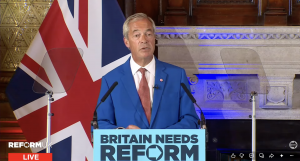
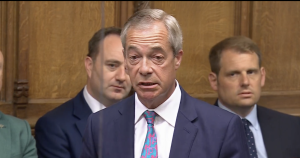
Similarly, Reform UK’s Matt Goodwin described the asylum system as “a complete and utter joke,” using the report to reinforce calls for sweeping reform.
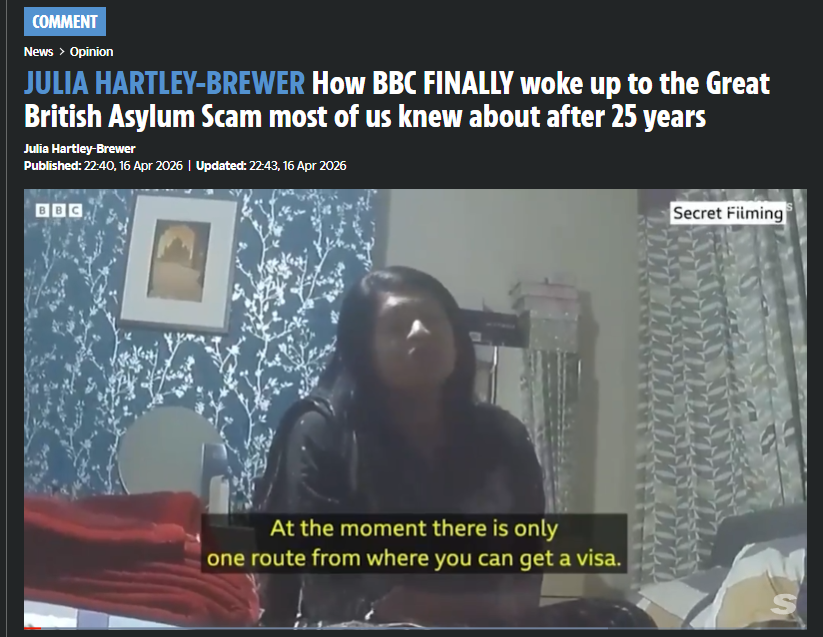
But the most hysterical reaction came from Sun columnist Julie Hartley-Brewer, who framed the BBC’s investigation as validation of long-standing claims about widespread abuse of the asylum system. In a celebratory column, she argued that the broadcaster had finally acknowledged what she called the “Great British Asylum Scam,” and provocatively suggested that the BBC had effectively joined the “far-right bandwagon.”
She ended: “So to those at the BBC who have finally woken up to the Great British Asylum Scam, welcome on board the far-right bandwagon! We’ve been expecting you.”
We’ve seen it time and time again. What begins as a story about limited abuse within the system is quickly sold as proof that the entire system is broken, less an exercise in scrutiny than a case study in how narratives are bent to fit political ends. In that sense, the BBC’s reporting, however intended, risks being folded into the same kind of agenda-driven framing it is meant to interrogate.
Left Foot Forward doesn't have the backing of big business or billionaires. We rely on the kind and generous support of ordinary people like you.
You can support hard-hitting journalism that holds the right to account, provides a forum for debate among progressives, and covers the stories the rest of the media ignore. Donate today.
Donate today