




Removing hereditary peers won't go far enough to give the Lords legitimacy
Tom Brake is CEO of Unlock Democracy
With passage of the hereditary peers bill earlier this month, we see the House of Lords for what it is – and what it isn’t.
For years, defenders of the upper chamber have leaned on a familiar set of arguments. The Lords, they say, performs a vital revising function. It brings expertise that is too often absent from the Commons. It is less tribal, less dominated by party machines, and therefore better placed to scrutinise legislation on its merits. There is truth in all of this. At its best, the Lords can and does improve legislation, asking detailed questions that elected MPs, constrained by time and party discipline, often do not.
But this is only half the story. Even the most expert and diligent peers recognise the Lords lacks legitimacy.
Over the last century, hereditary privilege in the Lords has gradually given way to prime ministerial patronage, culminating this month in the long-overdue removal of the remaining hereditary peers. Yet the composition of today’s House of Lords owes no less to powerful connections than it did in the days of a landed aristocracy. Successive prime ministers have treated life-long seats in our Parliament as rewards for loyalty or fundraising prowess. At least in earlier times, the shape of the Lords made some sense – it was not democratic, but it ensured certain key interests in the country had a stake in government. No such defence can be made of the cronies who comprise so much of the chamber’s current membership. So strong, indeed, is the “whiff of corruption” their presence in the Lords exudes that it tarnishes the entire House, with damaging political consequences.
Because peers know they lack legitimacy, they are constrained in how far they can push back against the government. The Lords may advise, suggest, and occasionally delay, but it cannot decisively challenge. Its influence depends on the willingness of the government to listen – and governments, unsurprisingly, are selective in when they do so.
This suits those in power. A second chamber that offers the appearance of scrutiny, without the capacity to enforce it, is politically convenient. It allows ministers to claim that government legislation has been carefully examined, while ensuring that ultimate control remains firmly in the executive’s hands. In this sense, the weaknesses of the Lords are not a bug; they are a feature. On the rare occasion the Lords does try to assert itself, its very lack of legitimacy is turned back against it.
The next general election could bring all this to a head. Reform UK has held a consistent lead in the opinion polls for over a year. It has zero representation in the Lords. The Greens, on the rise and vying in recent polls for second place, have two peers.
In the event either party were to lead the next government, the Lords would be in an impossible position. It could defer completely to the elected government, reducing itself to an advisory body in all but name. Or it could assert itself and risk accusations of thwarting the will of the electorate, inviting calls for its abolition or reform. Neither path is sustainable. The more the Lords resists, the more illegitimate it appears; the more it complies, the more redundant it becomes.
Most likely, to try to redress the party imbalance, will be the creation of yet more new peers – to a chamber second only in membership size to China’s National People’s Congress. Keir Starmer has paved the way, already appointing 96 peers – more than any Prime Minister since David Cameron – with a larger share going to his own party than ever before. It is a blueprint Prime Minister Farage, with no party backing in the Lords and plans to bring business leaders in as ministers, could readily follow.
For the Lords to play a meaningful role in scrutinising legislation and holding government to account, it must have the legitimacy to match. Removing 84 hereditary peers alone will not provide it. Prime ministerial patronage cannot provide it. Continue without it, and the House of Lords may not stand much longer.
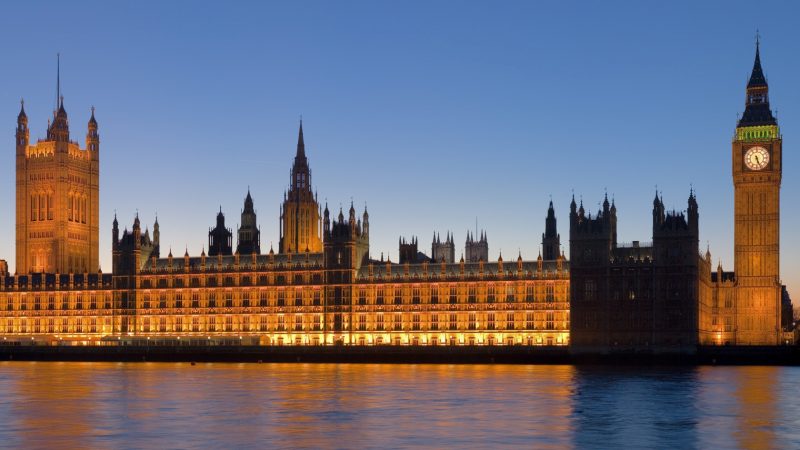
Image credit: Diliff – Creative Commons
Left Foot Forward doesn't have the backing of big business or billionaires. We rely on the kind and generous support of ordinary people like you.
You can support hard-hitting journalism that holds the right to account, provides a forum for debate among progressives, and covers the stories the rest of the media ignore. Donate today.