



Pinning an electoral defeat on conspiracy-tinged claims of fraud is often easier than confronting why voters turned elsewhere.
Where have we seen a politician throw all the toys out of the pram after an election defeat? In the United States, of course, when Donald Trump refused to accept his loss to Joe Biden in the 2020 presidential election, insisting, without evidence, that the vote had been rigged.
Fast-forward six years and some 3,600 miles east, to Gorton, Manchester, and the echoes are hard to ignore. This time it’s not a single defeated president railing against the result, but a cross-party chorus, amplified by a sympathetic press, casting doubt on a local by-election outcome.
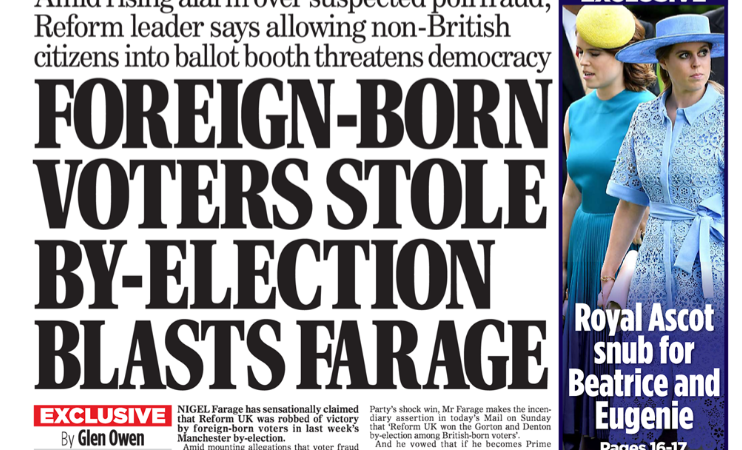
The trigger was the Green Party’s landslide victory in the Gorton and Denton by-election. Rather than conceding defeat and reflecting on what might be learned, leading figures in Reform and the Conservatives instead alleged wrongdoing. The Daily Mail splashed: “Foreign-born voters stole by-election.” The narrative quickly solidified, suggesting something suspicious had occurred and that the integrity of the vote was in question.
Nigel Farage was first out of the blocks, declaring the result “a victory for cheating in elections” after poll monitors “raised the alarm.” He contacted police and the Electoral Commission, claiming that what had been witnessed in “predominantly Muslim areas” raised “serious questions about the integrity of the democratic process.” He went further still, inviting readers to “imagine the potential for coercion with postal votes.”
Shadow housing minister James Cleverly followed suit, citing a report from Democracy Volunteers to claim there was “clear evidence that electoral offences were committed.” Kemi Badenoch blamed Labour, the Greens and Reform for “grievance politics,” while Keir Starmer struck a dismissive note, referring to the “extreme of the left in the Green party.”
Yet Manchester City Council stated that no issues had been reported. The allegations centred on claims by Democracy Volunteers of “concerningly high levels” of so-called family voting, where one family member influences how others cast their ballot. That is a legitimate issue to monitor in any democracy. But transforming unproven observations into sweeping claims of criminality and sectarian corruption is quite another matter.
What followed was classic conveyor belt of media amplification. The Daily Mail and the Telegraph relied heavily on the fraud narrative, the latter warning that Britain’s “ancient norms and traditions won’t survive a sectarian turn.” The story then migrated into more ostensibly neutral outlets. The BBC foregrounded the fraud allegations in its coverage. Even the Guardian reported that Reform and the Conservatives had referred “family voting” claims to the watchdog, though to its credit it noted prominently that the council had received no complaints.
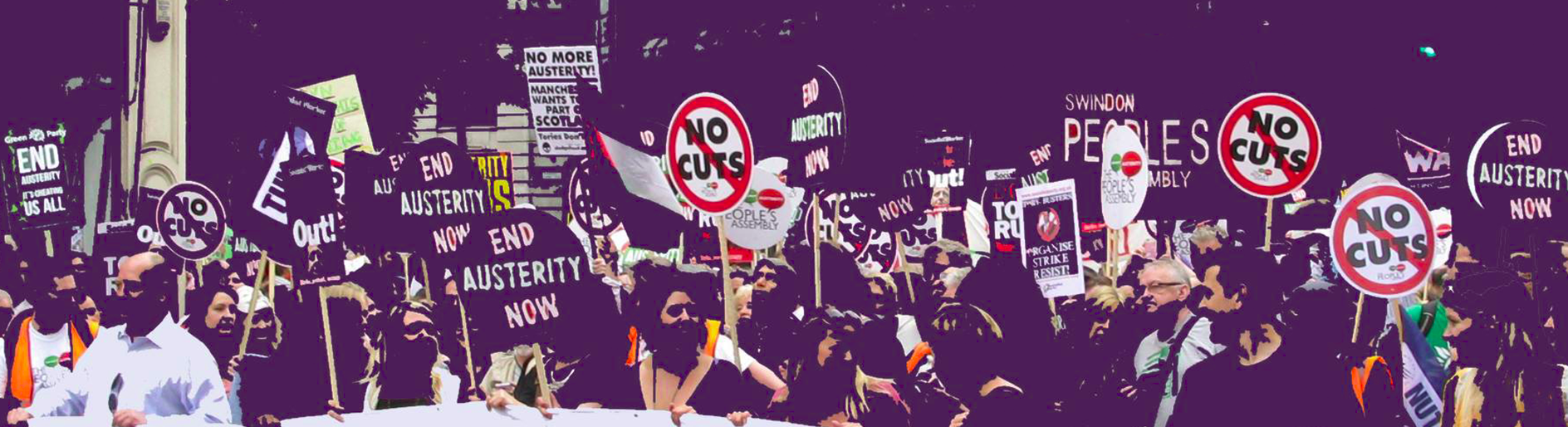
But notice what was sidelined in all of this. The Greens’ candidate, Hannah Spencer, a working-class plumber from Manchester, overturned a seat held by Labour since the 1930s. The campaign was powered by hundreds of volunteers knocking on doors and focusing relentlessly on the cost-of-living crisis. By polling day, observers reported, the Greens had more activists than they knew what to do with. It was a ground campaign rooted in bread-and-butter concerns, not sectarian mobilisation.
The rush to frame the result as tainted says as much about the losing parties as it does about the media ecosystem that sustains them. Allegations of “family voting” may warrant investigation, as all credible concerns should. But elevating them into a narrative of systemic cheating, particularly in “predominantly Muslim areas,” risks stoking division while evading harder questions about political strategy and voter appeal.
Pinning an electoral defeat on conspiracy-tinged claims of fraud is often easier than confronting why voters turned elsewhere. If anything, the reaction to Gorton and Denton exemplifies the very grievance critics claim to deplore and helps explain why the Greens were able to present themselves as the alternative.
Left Foot Forward doesn't have the backing of big business or billionaires. We rely on the kind and generous support of ordinary people like you.
You can support hard-hitting journalism that holds the right to account, provides a forum for debate among progressives, and covers the stories the rest of the media ignore. Donate today.