



The UK has a crisis of democracy
Prem Sikka is an Emeritus Professor of Accounting at the University of Essex and the University of Sheffield, a Labour member of the House of Lords, and Contributing Editor at Left Foot Forward.
In a democracy people reign supreme and governments are expected to increase their prosperity and happiness. So, how democratic is the UK?
There is universal suffrage but a cross on a ballot paper every 4-5 years does not necessarily lead to representative governments, equitable distribution of income and wealth, rule of law or political accountability. All too often people are subjected to policies advanced by the super-rich.
Did you vote for any of these policies?
Cuts in real wages – The average real wage has barely moved since 2008. 37% of all universal credit claimants are in work.
Wages taxed at higher rates that return on wealth – Wages are taxed at marginal rates of 20%-45%. In addition, national insurance contributions (NIC) are levied. In contrast, dividends are taxed at rates of 8.75% to 39.35%; capital gains at marginal rates 18% to 32%. No NIC is levied.
Poverty is endemic – 24m people live below the minimum living standard. Just 50 richest families have more wealth than the bottom 50% of the population combined. The poorest 20% pay a higher proportion of their income in taxes than the richest 20%.
Want to buy a home, dream on – Wages have not kept pace with house prices. In February 2026, the median gross annual wage of an employee was £31,056, £25,880 after income tax and national insurance. The average house priced at £300,000 remains beyond the reach of most people.
Unchecked profiteering – Profiteering is rife in most sectors as there is little effective regulation. For example, energy companies have made over £125bn profit since 2020. Around 120,000 people a year die in fuel poverty.
Sewage in rivers, lakes and seas – Sewage was dumped for 4.7m hours was into UK rivers in 2024. Despite record increases in customer bills since privatisation, water companies have not made adequate investment in infrastructure. They paid £85.2bn in dividends to shareholders.
Healthcare neglect – 6.17m individuals in England await 7.29m hospital appointments. Around 300,000 people a year die prematurely whilst waiting for a hospital appointment.
The Public Authorities (Fraud, Error and Recovery) Act 2025 empowers the state to 24/7 snoop on bank accounts of recipients of universal credit, employment & support allowance, and pension credit. The poor are denied financial privacy whilst the same does not apply to accountants and lawyers designing tax abuse schemes.
The above are a tiny sample of policies made in a supposedly democratic society. It is hard to recall any mass petitions or marches demanding any of the above.
People could change their voting patterns but that cannot produce a representative government. Under the First-Past-the-Post system (FPTP) governments are elected by a minority of the electorate. In the 2024 general election, with just 34% of the vote Labour Party secured 411 of the 650 House of Commons seats.
Despite an annual salary of £93,904 plus expenses 236 out of 650 MPs have second jobs, mostly contrived corporate consultancy contracts. Conflicts of interests are inevitable. MPs are also under pressure to toe the party line. Those resisting, risk loss of the party whip which can damage their parliamentary career. In July 2024, Labour government decided to continue with the two-child benefit cap introduced by the previous Conservative government. It condemned nearly 450,000 children to poverty. Seven Labour MPs voted against the government. In response, Labour withdrew the party whip from them, effectively a warning to others in case they were thinking about exercising independent judgements.
The whipping system results in perfunctory scrutiny of legislation and bad laws. The Criminal Justice Act 2003 introduced indefinite sentence of Imprisonment for Public Protection (IPP sentences) for offenders considered to pose a significant risk of causing serious harm to the public. Between 2005 and 2012, 8,711 people were given an IPP sentence . The IPP sentence was abolished in 2012. In December 2025, 924 people were still held in prison for indefinite periods. One person has spent over 11 years in prison for stealing a mobile phone. Another has spent over 20 years for the same offence. Many are psychologically damaged and can’t easily be reintegrated into society. Was it worth having a government with a huge majority, or a whipping system that pressurises legislators to vote for laws that destroys lives?
People have the power to remove MPs, but they cannot remove the 800+ unelected members of the House of Lords. In principle, the Lords are supposed to provide independent scrutiny of laws, but the House is stuffed with faithful former MPs, advisers and party donors to tip the scales. Most rarely dissent. Conflicts of interests abound. For example, 10 of the 13 members of the House of Lords financial services regulation committee, which scrutinises effectiveness of regulation, were on the payroll of the industry.
Self-disclosure: I am a member of the House of Lords and long for the day that I can vote to replace it with an elected chamber.
Democratic deficit has disconnected governments from the people. The state is unable or unwilling to provide people with clean water, timely healthcare, decent housing, pension, affordable education, energy or transport but welfare of the rich is a priority. Privatisation of public assets, Private Finance Initiative (PFI), outsourcing of public services, bailouts and subsidies are major policies for transferring wealth to a few. Instead of expanding the capacity of heath and care services, governments are handing more to corporations. They are making profits of 32%-43% from cataract surgery. Fostering services for children have been commodified and corporations have profit margins of up to 21%. Companies providing residential care for children have profit margins of around 19% – 25%.
Governments demonise people for receiving social security benefits, but subsidise highly profitable energy, auto, water, steel, shipbuilding, internet, engineering, and other companies. Rolls Royce made £6.9bn profits in 2025. It handed £1bn to shareholders in 2025 and has promised another £7bn-£9bn by 2028. Its CEO has demanded free money from the government for its £3bn new product with the threat that it will shift production abroad if the cash is not forthcoming. It is not alone. AstraZeneca and other pharmaceutical companies demanded 25% price rise in drugs supplied to the NHS with the threat of pausing or cancelling major expansion of R&D facilities. AstraZeneca paused a £200m expansion of its research site in Cambridge. The government capitulated. AstraZeneca CEO hailed NHS drug price deal but the £200m UK investment has not materialised.
People spend a large part of their life at work, but there is no industrial democracy. Unlike most of Europe, UK workers are not permitted to elect directors. They have no say in how wealth generated with their brains and brawn is distributed. It takes a typical FTSE100 CEO just two days to collect the median UK worker’s full time annual salary. Some CEOs collect 1,110 times the average worker pay. Governments preach pay restraint to workers but do nothing to curb executive pay, dividends and share buybacks.
It is one law for the super-rich and another for normal people. Workers pay income tax on their earnings but that doesn’t apply to private equity managers, whose income or share of profits is taxed as a capital gain. The Chancellor promised to end the anomaly. Private equity bosses threatened to move abroad. The government capitulated and gave them a tax perk worth about £500m a year.
Thousands of unpaid carers have been prosecuted for inadvertently breaching the benefit rules, but the same does not apply to corporations or their controllers. The Post Office knowingly falsely prosecuted hundreds of postmasters. After 30 years, neither the post office nor any of its directors have been fined or prosecuted. In 2017, 72 people died in the Grenfell Tower fire. A public inquiry drew attention to government failures and “systematic dishonesty” of manufacturers of building materials as the main reason. One manufacturer “deliberately concealed” the fire risks its cladding posed. No one has been prosecuted.
Around £1bn of frauds occurred at HBOS (bought by Lloyds Bank in 2008-09) between 2003 and 2007 as bankers intentionally forced struggling small businesses into bankruptcy and stole their assets. No regulator wanted to investigate. Finally, the Thames Valley Police and Crime Commissioner took action. In February 2017, six miscreants, including two former HBOS employees were jailed for a total of 47 years. Still, no one fully investigated the frauds. In 2017, Lloyds Bank appointed a former High Court judge to investigate and publish a report by 2018. No report has been published, and victims are still waiting for compensation.
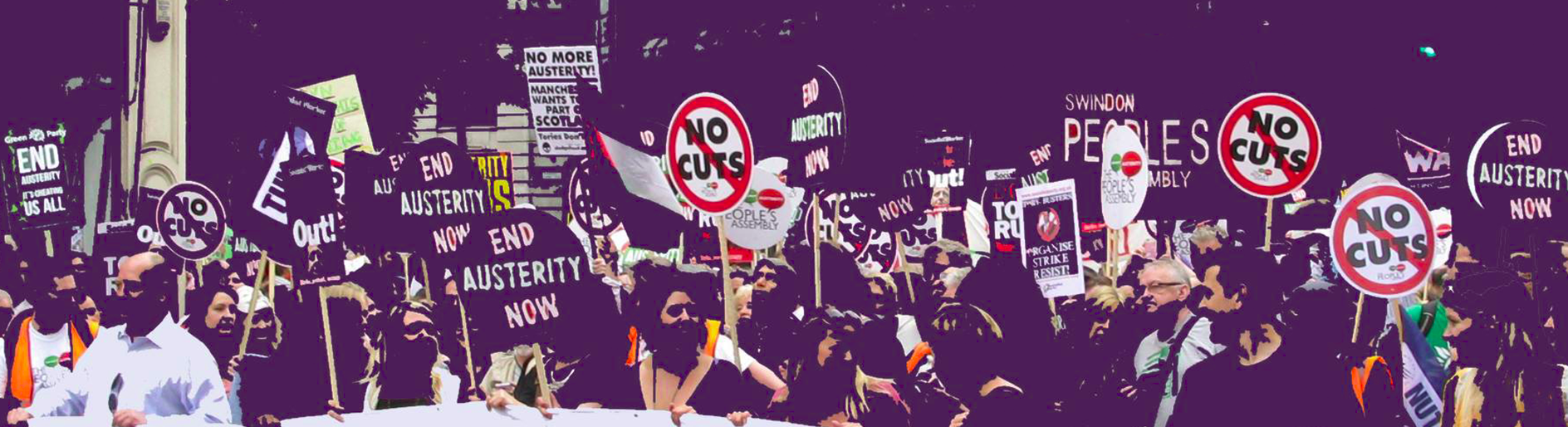
The above analysis highlights a crisis of democracy. The state apparatus is increasingly subservient to corporations and the super-rich though occasionally some crumbs are thrown to pacify the masses. The choice is stark; we can have powerful corporations and oligarchs or democracy but not both. Major political, economic, and social reforms are needed, but no major party wants to undertake them. Against all the odds, our predecessors secured a modicum of rights by awakening people through protests, civil disobedience, oratory, seminars, leaflets, theatre, songs, music, boycotts and by building communities. The same is necessary for long-term prosperity and happiness.
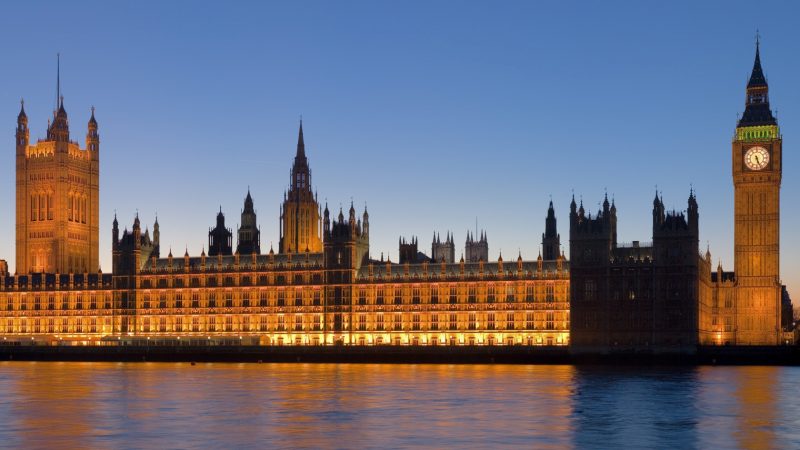
Image credit: Diliff – Creative Commons
Left Foot Forward doesn't have the backing of big business or billionaires. We rely on the kind and generous support of ordinary people like you.
You can support hard-hitting journalism that holds the right to account, provides a forum for debate among progressives, and covers the stories the rest of the media ignore. Donate today.