



Critics point out that Palestinian statehood ‘is not a bargaining chip’
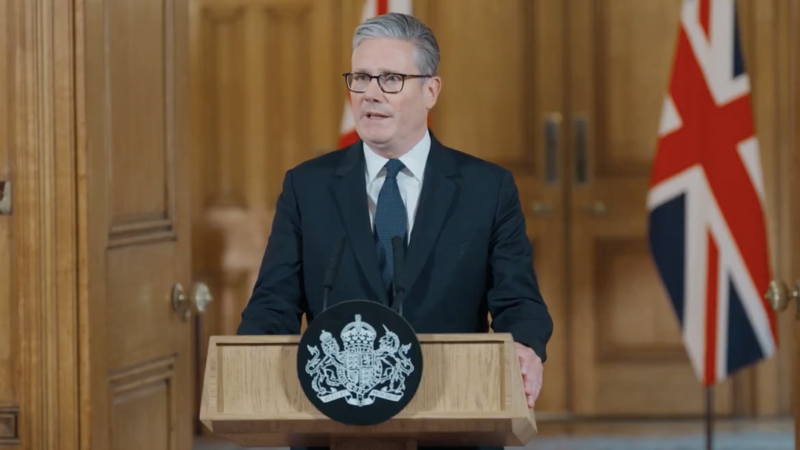
Prime Minister Keir Starmer emerged from yesterday’s emergency cabinet meeting to announce that the UK government will recognise Palestine as a state.
However, Starmer introduced some caveats. He said Palestinian statehood will be recognised in September at the United Nations General Assembly unless the Israeli government “takes substantive steps to end the appalling situation in Gaza”, agrees to a ceasefire and revives the prospect of a two-state solution.
In a speech delivered yesterday, Starmer said: “I’ve always said we will recognise a Palestinian state as a contribution to a proper peace process, at the moment of maximum impact for the Two State Solution.
“With that solution now under threat, this is the moment to act.”
The move comes after French President Emmanuel Macron said last week that France will recognise Palestine as a state at the UN General Assembly in September.
The Israeli prime minister has already hit out against the plan. Benjamin Netanyahu said in a statement: “Starmer rewards Hamas’s monstrous terrorism & punishes its victims.
“A jihadist state on Israel’s border TODAY will threaten Britain TOMORROW.
“Appeasement towards jihadist terrorists always fails. It will fail you too. It will not happen.”
Responding to the announcement, Lib Dem leader Ed Davey said that the Lib Dems welcome this first step but that “recognition of the state of Palestine should not be a bargaining chip. It should have happened months ago.”
Davey added that the government needs to end all arms sales to Israel and sanction the Israeli cabinet.
While Starmer has committed to recognising Palestine, the UK is still providing arms to Israel.
Research by Palestinian Youth Movement, Progressive International and Workers for a Free Palestine published in May found that the UK has sent 14 shipments of military items to Israel since September 2023.
This included one maritime delivery to Haifa that contained 160,000 items.
In September 2024, the government suspended 29 Israeli arms export licences, but this still left 200 arms licences in place.
Between last September and March, 8,630 items were exported under the category “bombs, grenades, torpedoes, mines, missiles and similar munitions of war and parts thereof – other”.
Ben Jamal, director of the Palestine Solidarity Campaign, said: “The Palestinian people’s right to self-determination is inalienable, not something to be made conditional as a bargaining chip to put pressure on Israel. Starmer is effectively saying the UK may take steps to recognise that right in 2 month’s time, but not if Israel takes action to stop its forced starvation and removes its threats to ethnically cleanse and annex Palestinian territory.
“At a moment when the world’s foremost experts on famine are declaring ‘the worst case scenario of famine that could see hundreds of thousands of Palestinians starved to death’ Israel must be forced right now to accept a ceasefire and allow the UN into Gaza to distribute food.”
Jamal continued: “The government still refuses to introduce the sanctions that would apply real pressure such as a full arms embargo, an end to all military cooperation, suspension of all trade, and the freezing of all Israeli assets held in UK banks. That is the action that is needed right now.”
Olivia Barber is a reporter at Left Foot Forward
Left Foot Forward doesn't have the backing of big business or billionaires. We rely on the kind and generous support of ordinary people like you.
You can support hard-hitting journalism that holds the right to account, provides a forum for debate among progressives, and covers the stories the rest of the media ignore. Donate today.