


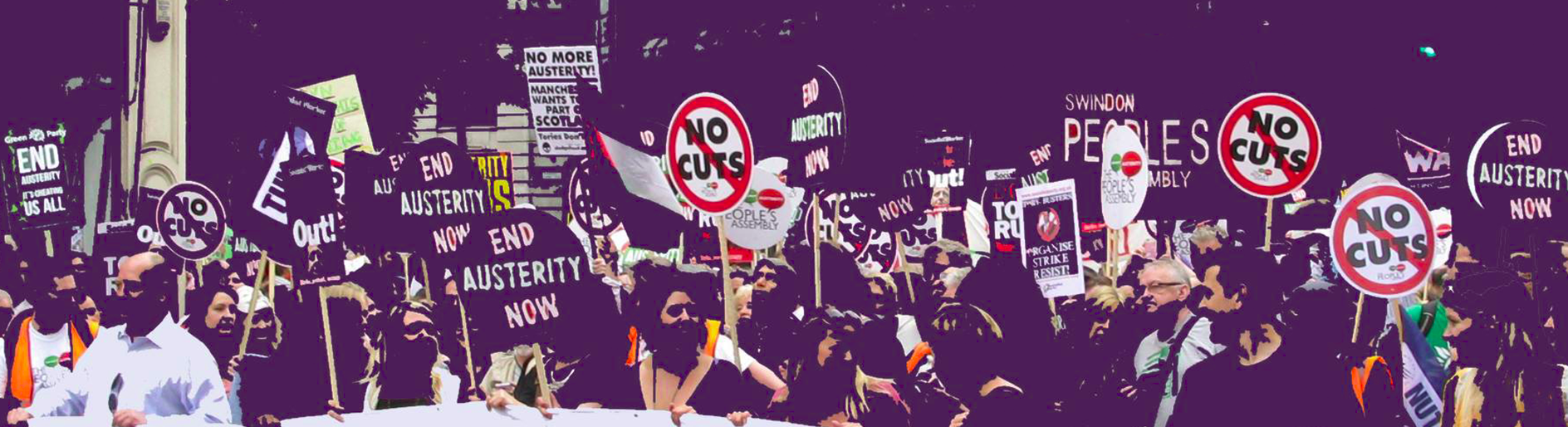

Cuts to tax credits will make things even worse for the poorest households

New data from the Office for National Statistics (ONS) has confirmed that the richest people in the UK are contributing a lower share of income tax than the poorest.
In its latest statistical bulletin looking into the effects of taxes and benefits on household income (for the financial year ending 2014), the ONS finds that the richest and poorest fifth pay 34.8 per cent and 37.8 per cent of their gross income respectively.
The richest fifth of households paid £29,200 in taxes (direct and indirect) compared with £4,900 for the poorest fifth.
This is despite the fact that, before taxes and benefits, the richest fifth of households had an average income 15 times greater than that of the poorest fifth.
After taxes and benefits are taken into account, the ratio between top and bottom was reduced to four-to-one, leading the ONS to note the importance of benefits and tax credits in rebalancing the top and bottom sections:
“The overall impact of taxes and benefits are that they lead to income being shared more equally between households…
“The distribution of cash benefits between richer and poorer households has the effect of reducing inequality of income.
“After cash benefits were taken into account, the richest fifth had an average income that was roughly six and a half times the poorest fifth (gross incomes of £83,800 per year compared with £12,900, respectively).”
The Tories’ planned cuts to tax credits could make up as much as £5bn of the planned £12bn cut to welfare. As well as helping to reduce inequality, tax credits have been hailed as a driving force in reducing child poverty.
Ruby Stockham is a staff writer at Left Foot Forward. Follow her on Twitter
Left Foot Forward doesn't have the backing of big business or billionaires. We rely on the kind and generous support of ordinary people like you.
You can support hard-hitting journalism that holds the right to account, provides a forum for debate among progressives, and covers the stories the rest of the media ignore. Donate today.
82 Responses to “Richest are paying lower proportion of income tax than poorest, says ONS”
Selohesra
The poor in this country are hardly poor on the world scheme of poverty – if you truly believe in redistribution of wealth from rich to poor shouldn’t you be arguing for all our wealth to be transferred to third world to even things up a bit. Or do the left only want redistribution when it benefits them?
Mike Stallard
This, apparently, is not the case. The rich people do not like wasting time which they can spend grinding the faces of the poor. they do not like paying a lot of money for accountants either. a simple system pleases everyone.
Matt Booth
No, instead they donate money to the Conservative party, who grind the faces of the poor for them.
A “simple” tax system would not please the poorest in society, who vastly outnumber the richest.
The problem with tax is that it doesn’t scale properly.
For instance when there was a 50p tax rate if you were earning £140k, you’d be at 40% and get £84k after tax (roughly). Then your boss gives you a pay rise (because you apparently deserve it) and now you get £155k, you’d end up with £77.5k after tax. A pay rise of $15k loses you about £7k annually.
This promotes those at the top to either stay below a threshold, or to seek rises well above the threshold to balance it out.
Whereas scaling properly, £140k is 93-94% of £150k, so it would be fairer and make more sense to tax someone on £140k at 46.5% (since that is 93% of 50).
Scale this down and everyone is paying a fair amount that scales linearly. The poorer in society would pay slightly more too (someone earning £28k would pay more than they would now, but only marginally) but it would lessen the sting of going up a tax bracket (since they’re not really exist) and encourage people to earn more.
AnneGFuqua
Extra-time working I looked at the draft which said $9958@mk7
f…
http://www.FinancesworkworldCrowd/lifetime/work...
steroflex
If you keep it simple, then immediately everyone knows where they are. They also know that everyone is equally fleeced.
In Singapore, the income tax is just 15% across the board. This offers a Welfare system that seems to me to be pretty good, and it allows people to work hard and get rich.
To pay for the poor and PRC immigrants, however, there is imposed a swingeing purchase tax. Buying cars is virtually impossible, but the buses and trains are a dream.