


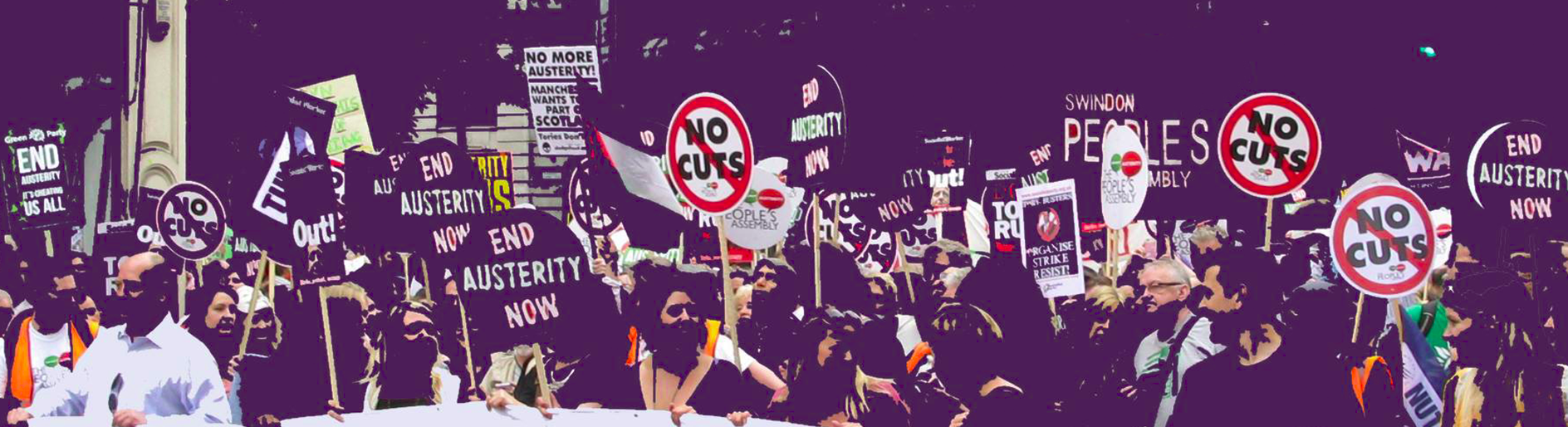

The average seat hasn’t changed hands since the 1960s

How democratic is Britain? On the face of it, pretty democratic. We tick all the boxes: fair elections, a free press, free speech and assembly, the right to petition and more. But look a little deeper, and there are massive political inequalities that mean the UK is far from as democratic as it could be.
Most of us instinctively know this – that some people have far more of a say than others. And of course, nowhere is perfect. But the cracks in our democracy need dealing with soon if we are not to become democratic in name only, according to a new report by the Institute for Public Policy Research on our ‘Divided Democracy’.
Unfair odds
The cracks are clear to see. In 2010, it took over 33,000 votes to elect a Labour MP, 35,000 for a Conservative and nearly 120,000 to elect a Lib Dem. UKIP got nearly a million votes and no MPs, while the Greens got over a quarter of a million and just one representative. In the process, millions of voters were written off by the disproportionality of the voting system. The fact that some votes are worth much more than others should raise alarms bells.
Nowhere is this more evident than in ‘safe seats’ – constituencies where the same party has been elected for decades, with little chance of them being challenged. In the 2010 General election, the Electoral Reform Society were able to call the winners in nearly 400 of Britain’s safe seats. Out of a list of 382 MPs we got two wrong. This election we’ve predicted a similar number of seats. Sadly, it looks like we’ll be mostly right again.
The average seat hasn’t changed hands since the 1960s, while some haven’t switched party since the reign of Queen Victoria. Holding a seat this long means parties build up major incumbency factors, and other parties give up on fighting for them.
The result of this is that parties focus on the small number of marginal seats – while the rest of us are ignored. It’s a postcode lottery – and like most lotteries, most people end up losing.
There are other ways our democracy is stacked in favour of some voters more than others. Between 2001 and 2010, just 224 donations from 60 sources made up nearly 40 per cent of the three main parties’ donation income. This raises inevitable suspicions about donors buying influence. Three-quarters think big donors have too much influence, and 61 per cent believe the whole party funding system is corrupt and should be changed.
These problems are reflected in people’s attitudes to our democracy. According to IPPR’s research, just one in four people from ‘DE’ (traditionally working-class) backgrounds think our democracy serves their interests well, half the figure for more middle-class AB individuals. Participation in democracy is still greatly weighted by class and age, something which can only damage the policy agenda.
At the same time, formal participation in politics has collapsed (perhaps with the notable exception of Scotland). Just one per cent of the population now belong to political parties, a quarter of the figure 50 years ago, while turnout among the young in particular has plummeted – a trend that is set to continue. And when certain groups don’t vote, it’s likely that they’ll be ignored by policy-makers.
It doesn’t have to be this way. These political inequalities are unusual by European standards – most advanced democracies have far higher levels of participation in politics among the young and a far smaller voting gap between demographics.
Where do we go from here?
Improving our democracy and levelling the playing field therefore requires modernising the way we do things. So, some solutions.
In this multi-party era, we need a fair electoral system where everyone’s votes count equally. We need a say over who votes on our laws – instead of leaving much of it to unelected Lords. And we need a cleaner party funding system, so people aren’t put off by the suspicion that donors are buying influence.
All of these are just a start, of course. Democracy can and should go much deeper. In the wake of the Scottish independence referendum, we need to have a UK-wide conversation about where power should lie. And for democracy to flourish, that conversation must be led by citizens. A ‘Constitutional Convention’ of citizens discussing the future of our democracy would be a great way to lay out a clear path for reform.
The IPPR’s next report will set out their own response to the problem of political inequality. But we all have to start taking the problems with our democracy seriously. We need to see real reform of our system in order to meet the promise which democracy makes to its citizens.
Josiah Mortimer is communications assistant at the Electoral Reform Society. Follow him on Twitter
Left Foot Forward doesn't have the backing of big business or billionaires. We rely on the kind and generous support of ordinary people like you.
You can support hard-hitting journalism that holds the right to account, provides a forum for debate among progressives, and covers the stories the rest of the media ignore. Donate today.
45 Responses to “Our ‘democracy’ is stacked in favour of certain voters”
Leon Wolfeson
Well I don’t think we should throw the idea of electoral reform it away, and I don’t think Jack had a good idea about electoral math.
uglyfatbloke
I think you’re right – I suppose McConnell and Wallace thought it was a good idea at the time.
Denis Mollison
Because we are all individuals, you, me and everyone else. Democracy derives from two greek words, and means rule by the people.
Sure, individuals cannot all thrive unless their community and society thrive. But the fundamental democratic aim is that all the individuals in the population should be able to have what they themselves judge to be a good life.
Duncan_McFarlane
No i don’t think there are natural rights – i think there are rights that are widely agreed by the vast majority of people in pretty much every democracy – and they include freedom of expression and the right to express minority views and have .Try the Universal Declaration of Human Rights for a start – you know, the one written as a result of the one party states, dictatorships and Holocaust in World War Two
Duncan_McFarlane
Aung San Suu Kyi is completely wrong in claiming that Rohingya Muslims are not Burmese – she is pandering to irrational prejudice whipped up by the Burmese military and some religious fundamentalist fanatics among Burmese Buddhist monks. The Rohingya did come in as migrant workers under the British, but many have been there for generations – the British left in 1948.So Aung San Suu Kyi, after showing great bravery in the past, is either being gutless, or else is prejudiced herself, or pandering to the prejudiced minority in her party.
She’s no better than the BNP fascists in the UK who want to send black people who were born here and whose parents and grandparents were born here ‘back home’. in fact she’s worse, because she knows Rohingya are being massacred and starved.
And if you think the Rohingya shouldn’t be there because many came from 1826 and arent the same religion as most of the people who were there before them, where would that leave all the Jews in Israel who came as immigrant settlers there from the 19th century to present?
(and don’t try to use the kingdom of Israel here – modern states are not based on kingdoms and empires from thousands of years ago – if they were Italy would have a claim to rule the whole of western Europe, North Africa and the Middle East – including Israel – on the basis that it used to be part of the Roman Empire)
You seem to think that states with an official religion are normal democracies. They are not – the French and American constitutions uphold freedom of religion and the separation of church and state. The UK technically has Anglicanism as the official religion, but no politician here who talks about religion is going to do anything but put off the vast majority of voters, because the vast majority back freedom of religion and keeping religion separate from politics (and most aren’t religious in any case – church attendance is tiny)