


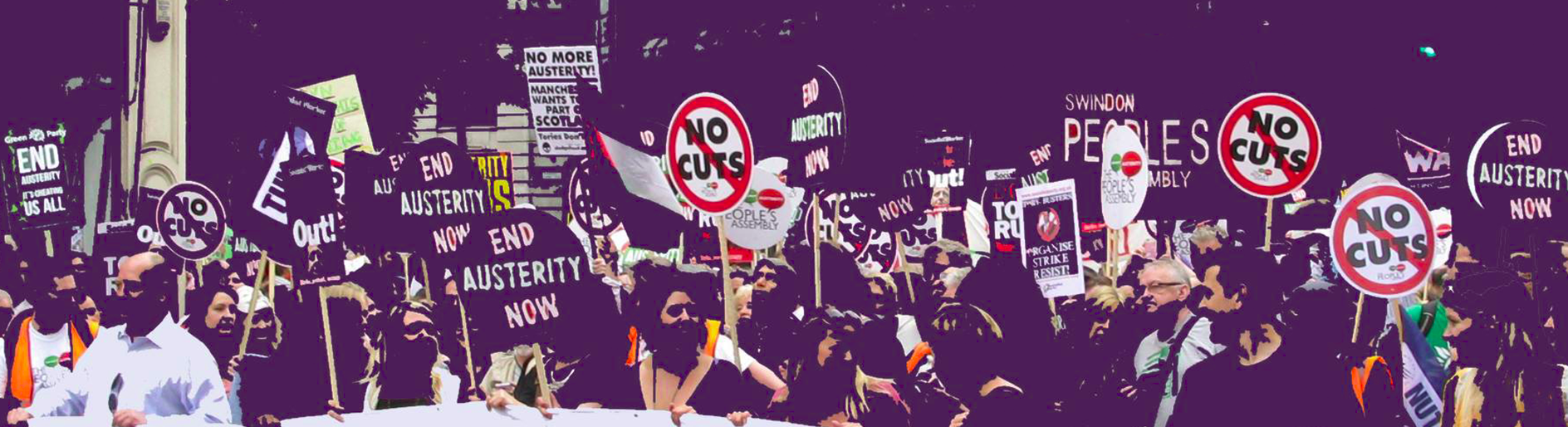

The bedroom tax might be the clearest example of the coalition punishing the poor for the financial crisis.

The bedroom tax might be the clearest example of the coalition punishing the poor for the financial crisis
It was claimed by the government that the bedroom tax had two aims – to reduce spending on benefits and to help the 300,000 people living in overcrowded accommodation by incentivising those tenants ‘over occupying’ to move to smaller homes.
But the maths didn’t add up.
When the policy was first proposed, critics pointed out that there were not enough homes for the so-called ‘over occupiers’ to move to. There were only 85,000 one bedroom social properties available in England, and 180,000 social tenants “under-occupying” two-bedroom houses. That’s quite a large gap.
Hardly surprising then, that research carried out by the BBC a year after the tax was implemented showed that only 6 per cent of people affected by it have moved home. There are simply not the homes for them to move to.
Despite this, the Conservatives gleefully claimed a victory for the tax, saying that it saved the government the conveniently round figure of a million pounds per day.
As professor Rebecca Tunstall, director of the centre for housing policy at the University of York, told the New Statesman:
“There were two major aims to this policy – one was to encourage people to move, and the other was to save money for the government in housing benefit payments. But those two aims are mutually exclusive.”
The government saves money from the people who have no choice but to stay where they are.
And what happens when people with a low income have that income cut? They go into arrears on their rent.
According to the BBC, this is what’s happened to a third of tenants affected by the tax. The debt has been successfully shifted from the government to benefit claimants.
Could this have been the main aim all along?
Supporters of the bedroom tax certainly focused on the under-occupancy issue. Ian Duncan Smith, for example, pointed out how unfair it was on those who did not have a spare bedroom:
“It is unfair on taxpayers, it is unfair on those in over-crowded accommodation and it is unfair that one group of housing benefit tenants cannot have spare bedrooms and another group are subsidised.”
Yet it’s unlikely that the government did their housing sums wrong and genuinely believed the main outcome of the tax would be people moving home. It seems more likely that focusing on the ‘unfair’ behaviour of benefit claimants suited their rhetoric of vilifying a certain section of the general public.
Without discussing the possibility that an increase in homelessness caused by the tax could result in it saving the government no money at all, how ethical is it for a government to shift debt on to the general public?
There is a faint silver lining to this deplorable tax, however, and that is the creativity it has brought out in campaigners.
In North London, for example, one group of artists are protesting by putting on an exhibition inspired by the bedroom tax, hosted in a bedroom subject to the tax. The 27-year occupier is moving out for a week and will be exhibiting art along with other artists, all inspired by the tax. The exhibition will be free and also show short films on the housing shortage so that local people can visit and learn more about it.
It seems the bedroom tax might be the clearest example of the coalition government punishing the poor for the financial crisis, but there are always ways to fight back.
Left Foot Forward doesn't have the backing of big business or billionaires. We rely on the kind and generous support of ordinary people like you.
You can support hard-hitting journalism that holds the right to account, provides a forum for debate among progressives, and covers the stories the rest of the media ignore. Donate today.
72 Responses to “Was the aim of the bedroom tax always to shift debt from the government to benefit claimants?”
Leon Wolfeson
“At least we agree on the assets. Zero. Fully unfunded.”
So you are going to genocide the workers, the assets. You’re a lunatic.
Yes, why should people pay you to rip off the UK? keep demanding that workers are subject to a fraud to ensure you can rip Britain off harder, as you spew nonsense about how even very low-return pensions can’t possibly be allowed.
Leon Wolfeson
Ah, so you’re using anti-British propaganda. Well, that makes sense.
That is not data, that is pure 100% propaganda from non-taxpayers.
Leon Wolfeson
And you spew more insults, right.
You are *demanding* you get the funds to gamble with, and you’re just sore that you can’t, right, It’s as plain as day, as you once more say you’re going to genocide the British, the asset.
LB
So what’s the figure for borrowing?
That’s reported, and those payments aren’t due tomorrow.
Explain why one should be reported and the other not?
Even for the borrowing, the figures aren’t known now, because they are inflation linked bonds, just as the pensions are inflation linked.
John
Right. 45 Billion. If I remember correctly HMRC suspects they are getting less than half of corporate tax due to evasion and avoidance.
That’s at least 90 billion.
sure, that pales in comparison to the £9,000 you mentioned, but then, we’re moving pensions from state to private through auto-enrolment. So we can forget that in the long-term (as indeed I forecast not all that long ago. To you, if I remember correctly)
But if you DO put aside pensions (which is the biggest ‘welfare’ problem right now; not fruad, not underoccupation or any of the other smokescreens the government throws up) then tax evasion EASILY pays for the benefits bill.
So how DO we deal with pensions? Easy. Write it off. The government has little choice in this matter. It CAN’T make the payments. Either it sells the debt to someone who CAN or it admits it can’t, and does something about it. State subsidised care homes perhaps. Who knows.
(As an aside; this is why I have never, nor will ever, get a pension. I’m going to secure my future through a revenue stream, not capital. We can see where this leads)