


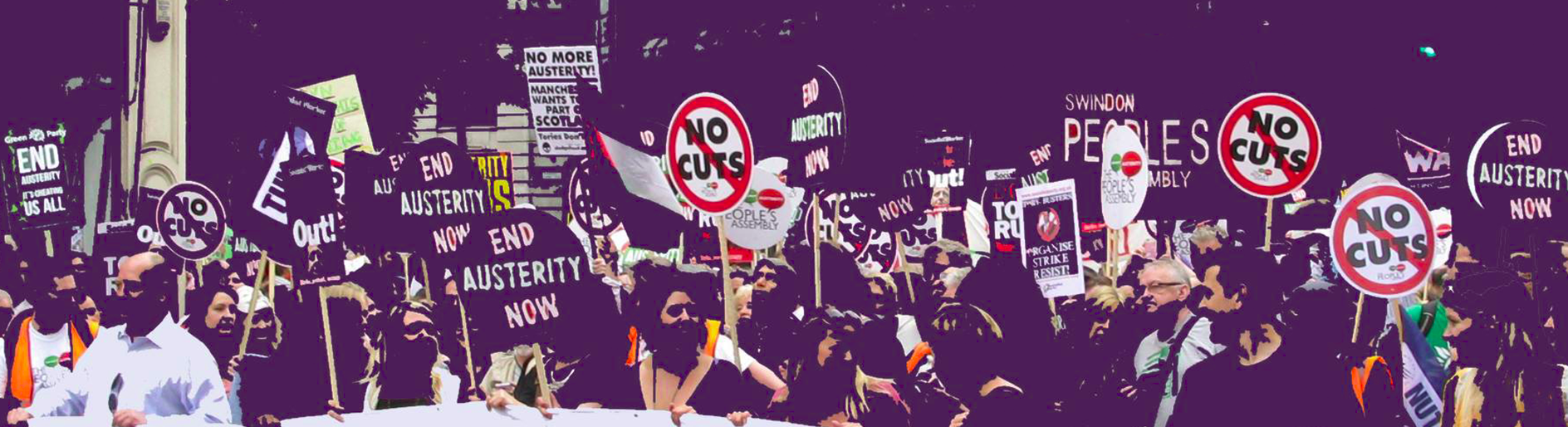

The bedroom tax might be the clearest example of the coalition punishing the poor for the financial crisis.

The bedroom tax might be the clearest example of the coalition punishing the poor for the financial crisis
It was claimed by the government that the bedroom tax had two aims – to reduce spending on benefits and to help the 300,000 people living in overcrowded accommodation by incentivising those tenants ‘over occupying’ to move to smaller homes.
But the maths didn’t add up.
When the policy was first proposed, critics pointed out that there were not enough homes for the so-called ‘over occupiers’ to move to. There were only 85,000 one bedroom social properties available in England, and 180,000 social tenants “under-occupying” two-bedroom houses. That’s quite a large gap.
Hardly surprising then, that research carried out by the BBC a year after the tax was implemented showed that only 6 per cent of people affected by it have moved home. There are simply not the homes for them to move to.
Despite this, the Conservatives gleefully claimed a victory for the tax, saying that it saved the government the conveniently round figure of a million pounds per day.
As professor Rebecca Tunstall, director of the centre for housing policy at the University of York, told the New Statesman:
“There were two major aims to this policy – one was to encourage people to move, and the other was to save money for the government in housing benefit payments. But those two aims are mutually exclusive.”
The government saves money from the people who have no choice but to stay where they are.
And what happens when people with a low income have that income cut? They go into arrears on their rent.
According to the BBC, this is what’s happened to a third of tenants affected by the tax. The debt has been successfully shifted from the government to benefit claimants.
Could this have been the main aim all along?
Supporters of the bedroom tax certainly focused on the under-occupancy issue. Ian Duncan Smith, for example, pointed out how unfair it was on those who did not have a spare bedroom:
“It is unfair on taxpayers, it is unfair on those in over-crowded accommodation and it is unfair that one group of housing benefit tenants cannot have spare bedrooms and another group are subsidised.”
Yet it’s unlikely that the government did their housing sums wrong and genuinely believed the main outcome of the tax would be people moving home. It seems more likely that focusing on the ‘unfair’ behaviour of benefit claimants suited their rhetoric of vilifying a certain section of the general public.
Without discussing the possibility that an increase in homelessness caused by the tax could result in it saving the government no money at all, how ethical is it for a government to shift debt on to the general public?
There is a faint silver lining to this deplorable tax, however, and that is the creativity it has brought out in campaigners.
In North London, for example, one group of artists are protesting by putting on an exhibition inspired by the bedroom tax, hosted in a bedroom subject to the tax. The 27-year occupier is moving out for a week and will be exhibiting art along with other artists, all inspired by the tax. The exhibition will be free and also show short films on the housing shortage so that local people can visit and learn more about it.
It seems the bedroom tax might be the clearest example of the coalition government punishing the poor for the financial crisis, but there are always ways to fight back.
Left Foot Forward doesn't have the backing of big business or billionaires. We rely on the kind and generous support of ordinary people like you.
You can support hard-hitting journalism that holds the right to account, provides a forum for debate among progressives, and covers the stories the rest of the media ignore. Donate today.
72 Responses to “Was the aim of the bedroom tax always to shift debt from the government to benefit claimants?”
Castilian
“burden on the state”?
I thought criminal bankers had enough money to pay their own way? I’m sure they don’t need social security.
Castilian
“Which bank is responsible for the civil service pensions?”
The Bank of Gravy Train.
LB
Ah, but the joke, whilst mildly amusing, avoids the core question.
There are no banks. No blame can be spread when it comes to the welfare state and pensions.
Hence the complete absence of the left talking about pension debts. They are shit scared that the electorate will find out.
blarg1987
So, Local Government pensions do so the above and your moaning about it, also private sector companies who have similar pension problems have done a variety of things, including increasing prices on products, and paying in over a longer period to make up the shortfall.
I have answered your question in the past so shall repeat it, the answer is it is impossible to tell as the evidence you keep claiming does have a paragraph that states, the data can not be used to claim how much debt there is as there are so many unknown variables that any approximation is meaningless, this is also backed up by full facts.
The question that we have to ask is have you contacted OBR and ONS and told them your concerns? If so what was there reply, are they changing their figures to match yours or are your figures proven wrong?
John
“Why is it that the left can’t tell people (or won’t), the horror that is hidden.”
There is where you generalised
“Back to the question you won’t answer.”
I’ve answered the question elsewhere. Three times now. I can repost what I’ve said already if you like
“So the consequences are that the state won’t pay. Who suffers the most?
Those who are owed the most as a percentage of their income, and that’s
the poor.”
I’ve quoted this bit as a summary. I’m not arguing your figures for two reasons. One, there is no need and the second is it’s as good a starting place as any.
So. You can’t generate enough taxes through Income Tax as is needed to pay the state debts. Fine. On this both left and right can agree.
The disagreements happen (at least for me) past this point. I.E; WHY wages are so low, whether to change that (and how) and what OTHER taxes should be levied since I’m FIRMLY in the camp that since it was business who screwed the country, (big) business which has consistently undermined democracy and business which is infringing on our rights of free speech and privacy then it’s business who should foot the bill.