


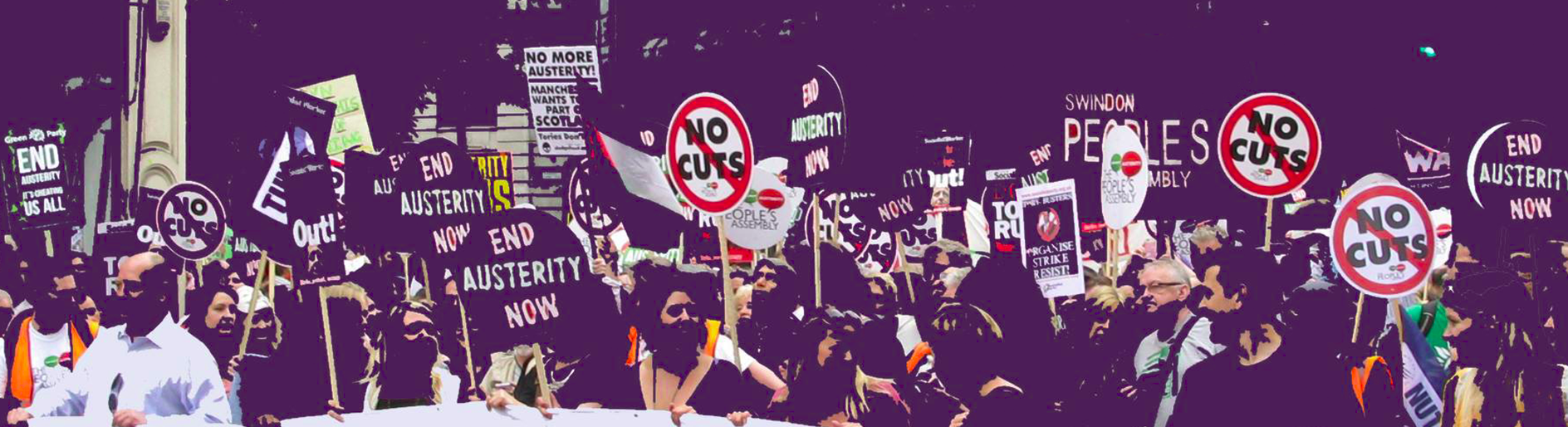

The bedroom tax might be the clearest example of the coalition punishing the poor for the financial crisis.

The bedroom tax might be the clearest example of the coalition punishing the poor for the financial crisis
It was claimed by the government that the bedroom tax had two aims – to reduce spending on benefits and to help the 300,000 people living in overcrowded accommodation by incentivising those tenants ‘over occupying’ to move to smaller homes.
But the maths didn’t add up.
When the policy was first proposed, critics pointed out that there were not enough homes for the so-called ‘over occupiers’ to move to. There were only 85,000 one bedroom social properties available in England, and 180,000 social tenants “under-occupying” two-bedroom houses. That’s quite a large gap.
Hardly surprising then, that research carried out by the BBC a year after the tax was implemented showed that only 6 per cent of people affected by it have moved home. There are simply not the homes for them to move to.
Despite this, the Conservatives gleefully claimed a victory for the tax, saying that it saved the government the conveniently round figure of a million pounds per day.
As professor Rebecca Tunstall, director of the centre for housing policy at the University of York, told the New Statesman:
“There were two major aims to this policy – one was to encourage people to move, and the other was to save money for the government in housing benefit payments. But those two aims are mutually exclusive.”
The government saves money from the people who have no choice but to stay where they are.
And what happens when people with a low income have that income cut? They go into arrears on their rent.
According to the BBC, this is what’s happened to a third of tenants affected by the tax. The debt has been successfully shifted from the government to benefit claimants.
Could this have been the main aim all along?
Supporters of the bedroom tax certainly focused on the under-occupancy issue. Ian Duncan Smith, for example, pointed out how unfair it was on those who did not have a spare bedroom:
“It is unfair on taxpayers, it is unfair on those in over-crowded accommodation and it is unfair that one group of housing benefit tenants cannot have spare bedrooms and another group are subsidised.”
Yet it’s unlikely that the government did their housing sums wrong and genuinely believed the main outcome of the tax would be people moving home. It seems more likely that focusing on the ‘unfair’ behaviour of benefit claimants suited their rhetoric of vilifying a certain section of the general public.
Without discussing the possibility that an increase in homelessness caused by the tax could result in it saving the government no money at all, how ethical is it for a government to shift debt on to the general public?
There is a faint silver lining to this deplorable tax, however, and that is the creativity it has brought out in campaigners.
In North London, for example, one group of artists are protesting by putting on an exhibition inspired by the bedroom tax, hosted in a bedroom subject to the tax. The 27-year occupier is moving out for a week and will be exhibiting art along with other artists, all inspired by the tax. The exhibition will be free and also show short films on the housing shortage so that local people can visit and learn more about it.
It seems the bedroom tax might be the clearest example of the coalition government punishing the poor for the financial crisis, but there are always ways to fight back.
Left Foot Forward doesn't have the backing of big business or billionaires. We rely on the kind and generous support of ordinary people like you.
You can support hard-hitting journalism that holds the right to account, provides a forum for debate among progressives, and covers the stories the rest of the media ignore. Donate today.
72 Responses to “Was the aim of the bedroom tax always to shift debt from the government to benefit claimants?”
LB
If you are the one owing the money, you can’t sell it.”
Tell that to banks.
=========
The banks have sold loans where they are owed the money.
If a client can’t pay, the bank can sell the loan.
If the client can’t pay the client can’t sell the loan and get more money.
The state owes money. How can the state sell what it owes and make money?
============
More importantly; pension povision is a business. The government has off-loaded the NHS, Education and Welfare.
============
They have in part off loaded the administration. They haven’t offloaded the debt.
Where’s capita going to find a couple of trillion pounds?
============
All, arguably, loss-making by their nature.
============
Now yes. It’s because the state spent all the contributions. Assets zero. Back to that question that you can’t answer. How much does the state owe? Unless you get that number you can’t conclude anything.
============
Why not pensions?
============
It would be a good plan. The reason goes to what the state offers and what you could have got.
For a 26.5K a year worker, 40 years ago that was 800 a year. Median wage. Drop all their NI into the FTSE, and grow a fund.
830K generating 28K a year, with the capital intact. There would have been no pension debt. About 50K per taxpayer of borrowing.
The state offers no fund. Zero. 5.7K a year state pension, and a 300K share of the debt.
So yes, offloading the pensions would make the public better off going forward.
All the state should do is drive down charges. That starts with no Brown taxes on dividends in pensions. (100K off the fund), No stamp duty, 10K. Driving charges down also makes a difference..
What’s not to like? That sort of sum makes a real difference, and it boosts the economy. Money going into investment creates jobs.
LB
Sure – I posted the link.
How about you posting the state and civil service liabilities or do you want a hand with that?
John
If you want to generalise why can’t i?
John
“The state owes money. How can the state sell what it owes and make money?”
By selling the business. As it has done. And will no doubt continue to do.
“They have in part off loaded the administration. They haven’t offloaded the debt.”
If they aren’t liable for the debts of the administration (NHS), provision (partly NHS and education) or funding (NHS, education and welfare) then how have they NOT reduced their exposure to the debt? All they need do (and they’re good at this) is show how the part of the debts owed is actually acquired either during the sale, or during the handover period and they can argue the debt away.
Meanwhile, we’re left with shoddy private provions. Yay.
“Where’s capita going to find a couple of trillion pounds?”
Us, of course. The ones who are receiving the pension. Or perhaps, more pertinently, when we come to actually GET our pension we’ll get a nice letter about how we’ve saved enough for about £10 a week; aren’t they generous.
“Now yes. It’s because the state spent all the contributions. Assets
zero. Back to that question that you can’t answer. How much does the state owe? Unless you get that number you can’t conclude anything.”
We’ve argued this one together twice now. It doesn’t matter. Whatever the number there is. No. Solution.
I’ll say that again.
There is no way any government of any nature can pay our pension liability. Not a chance.
So we’ve GOT to find another way of dealing with this mess. Arguing over whose to blame is pointless and destructive. You can point at the Beveridge Report, Dear old Maggie, Blair, Brown and Cameron, to a lesser extent Major. All dabbled with the Welfare State leading us, sometimes quickly, sometimes slowly, but inevitabely to the place we’re at now.
THIS is why more OAP’s are working. THIS is why I have an 83 year old client (builder) who CANNOT retire; he literally can’t afford to. That is a vision of the future.
“What’s not to like? That sort of sum makes a real difference, and it
boosts the economy. Money going into investment creates jobs.”
All of this, as applied to pensioners, would be wonderful. So long as it WAS just pensioners. Otherwise that last point? Investment making jobs? That’s happening now. Yet living standards are plummetting, wages are falling and growth is flat-lining as demand is being chocked off.
Keynes is right; you have to ensure that the benefits of investment benefit ALL of the economy; not just the ones doing the investing.
LB
Where have I generalised.
Back to the question you won’t answer. Won’t being the right word because you’ve been asked often enough, and refused at each time of asking.
How much does the state owe for the pensions?
I’ll tell you. 7.1 trillion. Add on the other debts, and the state owes 9,000 bn,.
Each tax payer, on average (it’s a generalisation) owes 300K, going up faster than inflation.
Given the median wage is 26.5K. you don’t have to be a rocket scientist to see its not going to be paid. Not when each of those earners costs 11.5K a year to maintain in state services.
So the consequences are that the state won’t pay. Who suffers the most? Those who are owed the most as a percentage of their income, and that’s the poor.