



If Cameron really cares about Syria, he must not turn his back on her refugees.

Like the other revolutions that came to comprise the Arab Spring, Syria’s Revolution began when aggrieved citizens took to the streets to protest decades of barefaced dictatorship.
The Revolution grew from a spontaneous movement of small, disparate anti-government demonstrations across Syria into a cohesive, nationwide revolution against the country’s Ba’athist government.
However, as the government’s response to protests grew more brutal, opponents of the regime took to arms to oust Assad. Shortly thereafter, the Syrian Revolution metamorphosed into the Syrian civil war and thus began “the worst humanitarian crisis since the end of the Cold War”.
In August and early September, after the horrifying chemical attack in Ghouta, the Obama administration finally admitted that the Assad regime had crossed Obama’s infamous ‘red line’: talks of military intervention commenced in Washington and weeks of debate followed.
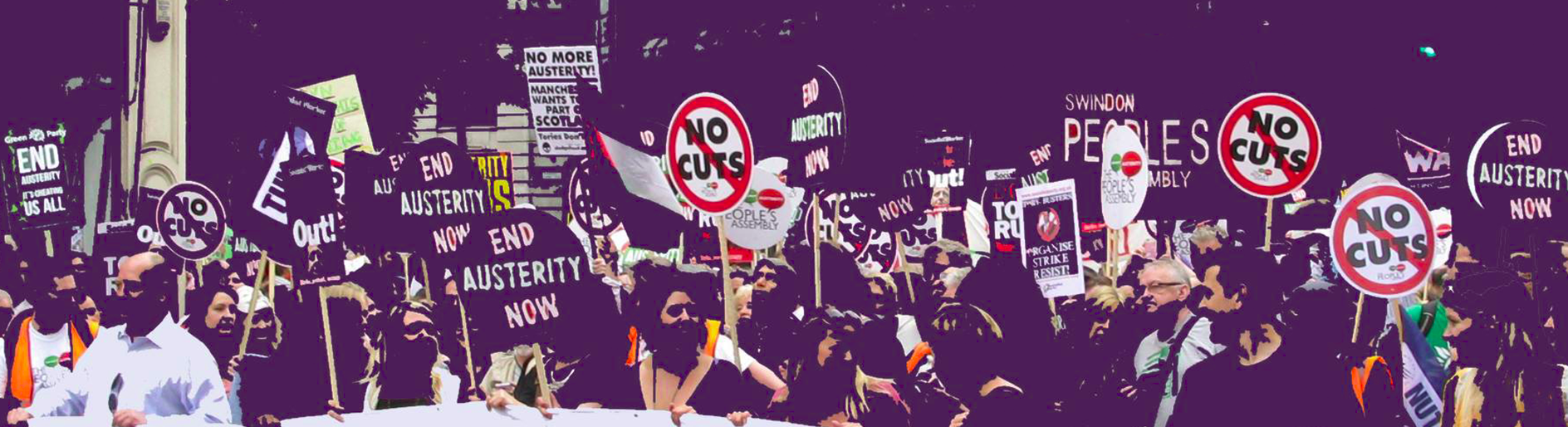
‘Anti-war’ activists took to the streets, brandishing signs reading ‘Hands Off Syria’, Vladimir Putin wrote an op-ed for The New York Times warning against intervention in Syria (the tragic irony) and David Cameron – after recalling Parliament to debate and vote on intervention – became the first British Prime Minister in over 200 years to lose a vote on military intervention.
A deal reached in September whereby Assad would surrender his arsenal of chemical weapons finally extinguished the embers of foreign intervention. Anti-interventionists and ‘anti-war’ activists celebrated their endeavours as a victory, boasting that they had ‘Stopped the War!’ (Unaware, apparently, that the war rages on regardless, with Aleppo seeing one of its bloodiest weeks over Christmas.)
The Syrian Civil War, with or without western intervention, will ultimately be determined by foreign hands: not, as the non-interventionists insist, by the Syrians themselves. It’s common knowledge among even the most tepid followers of the Syrian civil war that Islamic extremist groups – fuelled by Saudi money and jihad-hungry foreigners from around the world, including Britain – have gained serious authority in Syria.
They now command the lion’s share of the opposition to Bashar al-Assad in Syria and in September formed a new alliance after declaring their independence from the Syrian Opposition Coalition. (The Islamic Coalition did eventually fall apart, but a new coalition, the Islamic Front, was formed in November.)
Bashar al-Assad has recruited extremists of his own, in the form of Hezbollah and Iran’s Revolutionary Guard, to aid him in his fight to retain control of Syria (ironically, at the cost of Syria itself), negating any Assadist claims that the regime fights only for ‘secularism’ against the forces of ‘extremism’.
To use a cliché, there are no good guys left in Syria, and there hasn’t been for quite some time.
Writing this as somebody who supported the government’s calls for humanitarian intervention in August and September, I feel embarrassment and shame to have to rebuke the UK for its ongoing refusal to accept Syrian refugees.
As with most wars of the past century, civilians are the principal victims and all too often targets of the fighting in Syria. Millions have fled their homes since the start of the conflict in 2011. The Zaatari refugee camp in Jordan, which has steadily grown to become the country’s fourth largest ‘city’, provides a home to more than 100,000 Syrian refugees and costs an estimated $500,000 a day to run. Turkey and Jordan have taken in more than 500,000 refugees each, Lebanon up to one million.
The UK has played, in comparison to many other countries (including Russia and China, the Assad regime’s chief benefactors), a great role in providing aid to Syria. However, the UK’s refusal to resettle Syrians who have lost everything but their lives is indefensible.
Labour is pushing for the UK to allow between 400 and 500 Syrian refugees into the country, but this is still a meagre figure when one considers that the war has produced, at the very least, 3.2 million registered refugees. A number of other countries, including the US, Germany and France have pledged to allow more 10,000 refugees into their countries in the near future.
In August the options for ending the war in Syria were few and precarious. Today they are only fewer and more precarious. Peace talks next month in Geneva are unlikely to elicit any lasting peace (or maybe I’m just a pessimist) and the refugee crisis will continue to worsen.
Nigel Farage, whose opposition to migrants has been making headlines all year, said on Sunday that “there is a responsibility on all of us in the free West to try and help some of those people in Syria fleeing literally in fear of their lives” (he shifted his position on Monday during an interview on BBC Radio 2’s Jeremy Vine Show, saying that the UK should offer shelter to fleeing Christians only).
Three years of civil war in Syria has engendered a refugee crisis unparalleled in recent history. If Cameron doesn’t want to discredit his calls for humanitarian intervention, if Cameron really cares about Syria, he must not turn his back on her refugees.
Left Foot Forward doesn't have the backing of big business or billionaires. We rely on the kind and generous support of ordinary people like you.
You can support hard-hitting journalism that holds the right to account, provides a forum for debate among progressives, and covers the stories the rest of the media ignore. Donate today.
16 Responses to “For his own credibility, Cameron must not turn his back on Syrian refugees”
tamimisledus
One of the primary reasons why peace talks will not succeed is that the rebel factions will not participate until they have won the war (and therefore they will dictate, underline dictate, peace terms) and that it is recognised by the world community.
tamimisledus
Funnily enough I don’t care what your views are either. What I wrote was to show others some other truths that you do not wish to reveal.
IN that vein, now you are showing a complete misrepresentation of the interaction on the topic raised by swatman. You did not say that “let … turn on them” was factually incorrect, you said “that is easy for you to say”. ” .. easy for you to say” neither proves or disproves the topic of the statement.
You falsely raised the accusation of strawman against me. But you have absolutely no qualms about using that very tactic yourself. First, let me rephrase the swatman contention in my own way. Intervention in the affairs of the islamic countries rarely leads, if ever, to a positive outcome. Therefore we should not intervene in the affairs of such countries, including resolving their refugee issues. Whether those refugees will turn against the cause of their misery, which they should, is entirely a matter for them to resolve, not for us. So a topic on intervention you tried to turn to a discussion the side issue of refugees. Prime example of a strawman.
Suada
There were no ‘truths’ in your comment, you provided no empirical facts whatsoever, every word was your own personal, inane opinion.
and yet another misrepresentation from tamimisledus. I said “it’s easy for you to say” because I can understand why people would want to flee from their own countries if they were in a similar situation to Syria. I was arguing that swatman saying that they should stay within their own borders, and condemning them for doing so, is easy for him to say, having very likely never actually been in that situation himself. I never said that the UK should take all of them in, or even some of them in. Even if I had said that, I would hardly say that that constitutes intervening in a country’s internal affairs, given that refugee issues are not solely a country’s internal affairs to begin with.
tamimisledus
The truth again “We are under no moral obligation …”. If you think that is not true then you have to provide the proof that we are. Otherwise it is nothing more than your personal opinion entirely without substance. If we help refugees in the country we are intervening directly. If we help refugees outside the country we are intervening indirectly by not obliging the country to deal with a problem it has caused.
Cole
Oh yes, Labour plotted to let in lots of immigrants because they’d vote for them. Pull the other one…