


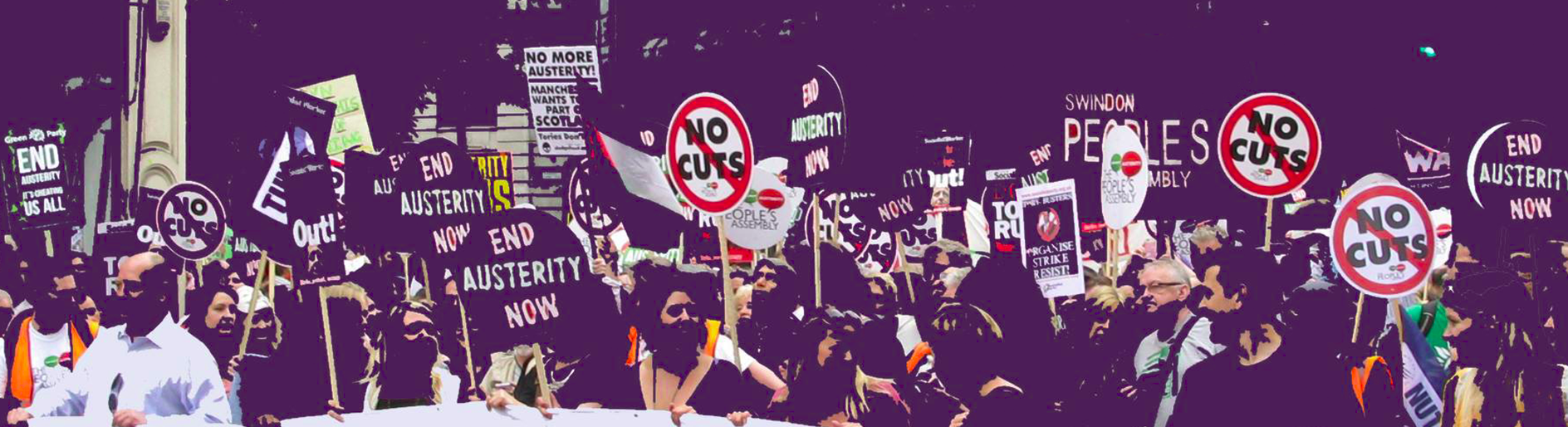
Critics of the living wage must stop exaggerating, as research shows the cost to employers could be minimal.

.
Larissa Hansford is a campaigns assistant for One Society
Critics of the living wage must stop exaggerating, as research shows the cost to employers could be minimal.
 To mark tax freedom day on Tuesday, the Adam Smith Institute called for “lower taxes… to ease the tax burden on London’s low and middle-income workers…” instead of mandating a “job-killing living wage”.
At first glance, it may seem intuitive to reduce poverty and stimulate demand by cutting taxes rather than pushing up wages. It would probably be simpler but there are many reasons why it would not be effective.
Prime amongst them is that low pay is effectively taxpayer subsidised. The Institute for Fiscal Studies estimates that sub-living wage pay costs taxpayers £6 billion a year (due to the costs of in-work benefits etc). But this is only a fraction of the real cost.
Once the indirect impacts of poverty and inequality are factored in, the figures are staggering. These include the Joseph Rowntree Foundation’s estimate that child poverty costs the taxpayer £25 billion each year, despite the fact that 57% of children in poverty have at least one working parent.
As for the cost to businesses, recent research by the IPPR and Resolution Foundation suggests that in many sectors it would be minimal. For banking, construction and computing companies, paying staff a living wage would add roughly 1% to the total wage bill (even the notoriously low-paying retail sector would only see a 5% rise).
• Hotel group leads the way in granting London living wage to hospitality staff 23 May 2012
• Will consumers support Living Wage products and services? 10 May 2012
• To end inequality without redistribution of wealth, we should pay a living wage 8 Dec 2011
Some employers, such as the London Borough of Islington, have implemented a living wage without increasing their costs.
In addition, the introduction of a living wage has tended to improve productivity in businesses by reducing absenteeism and improving motivation.
Those who think that decent pay is bad for business tend to forget that business suffers from the reduction in consumption brought on by stagnating wages. As Chris Huhne pointed out yesterday:
“When I talk to businesses at the moment, the overwhelming issue that they have is that there aren’t enough customers spending enough money to get the economy going.”
In the decade before the recession, consumer spending made up 63-64% of GDP in the UK so a boost to disposable income is essential if we are to find our way out of recession. This is particularly important in low income households which consume a greater proportion of their income than wealthier ones.
There are always siren voices warning that any increase in pay will lead to job losses. Those voices were raised when the national minimum wage was introduced (and subsequently increased) but these concerns have proved to be unfounded. The Low Pay Commission concludes:
“Despite the deepest recession since the 1930s, aggregate employment (whether measured by the number of jobs or the number of workers) and total hours worked have grown since the introduction of the minimum wage in April 1999.”
If we are to move away from poverty pay and reduce the cost of its consequences to the taxpayer, the only sustainable answer is raising wages.
As Adam Smith himself pointed out:
“No society can surely be flourishing and happy, of which the far greater part of the members are poor and miserable.”
Left Foot Forward doesn't have the backing of big business or billionaires. We rely on the kind and generous support of ordinary people like you.
You can support hard-hitting journalism that holds the right to account, provides a forum for debate among progressives, and covers the stories the rest of the media ignore. Donate today.
41 Responses to “Why not pay the living wage? The cost to employers could be minimal”
Blarg1987
I agree with you fully however somepne else would have to pay the cost be it richer tax payers or employers, now employers believe they pay enough tax as it is etc, and to pay a living wage would they would say they can not afford etc, when the opposite is true.
Partially there should be a naeming and shaming of companies who are unwilling to pay a living wage, yet easily have to profits to do such a thing withiut it affecting overall company performance i.e. 10% of orofits after tax or less would be required to pay a living wage.
Through a combination of this and public pressure a living wage for all workers could bee achievable.
Anonymous
The problem is they’re then “scroungers”, and they’re immediately an easy target for the right to dump on in all sorts of ways, arguing to withdraw services, rights and so on becomes FAR easier for them.
Tax credits usually offset than for people working a full time job, too.
While in theory it’s a good idea, I can’t support it simply because the Government will NOT do it without adding to the poverty premium when they do so, or as part of measures which hammer the tax base far more broadly.
(I don’t trust them)
Anonymous
1. Stop importing cheap labour. Increasing the supply drives down the price (wages).
2. Stop running up debts. Government then extorts cash from the poor, the middle class and the rich to pay for its errors.
Average government debt per taxpayer (that includes the min waged), 230,000 quid when you include the off the book debts.
Tim Worstall
“Yep, not taxing folk on minimum wage would be a start. How about also: pay a living wage so other pressed taxpayers stop having to subidise low paying employers? ”
Because the current minimum wage, if no income tax and NI was paid on it, is in fact the post tax post NI living wage. To within a few pennies per hour in fact. Thus the ASI recommendation: “lower taxes… to ease the tax burden on London’s low ……income workers”.
And yes, I do know why the ASI puts it this way: I was the first person to do the calculation which points this out. The living wage, as defined by the campaigners, minus tax and NI is the minimum wage assuming the NMW pays not income tax or NI.
So the solution is simple: just stop taxing the poor so damn much.
Anonymous
It’s because you want to control poor people. It’s the slave owner mentality.
If you take their money and give it back, you can control what they do with it. Plus you get your cut in the process.