


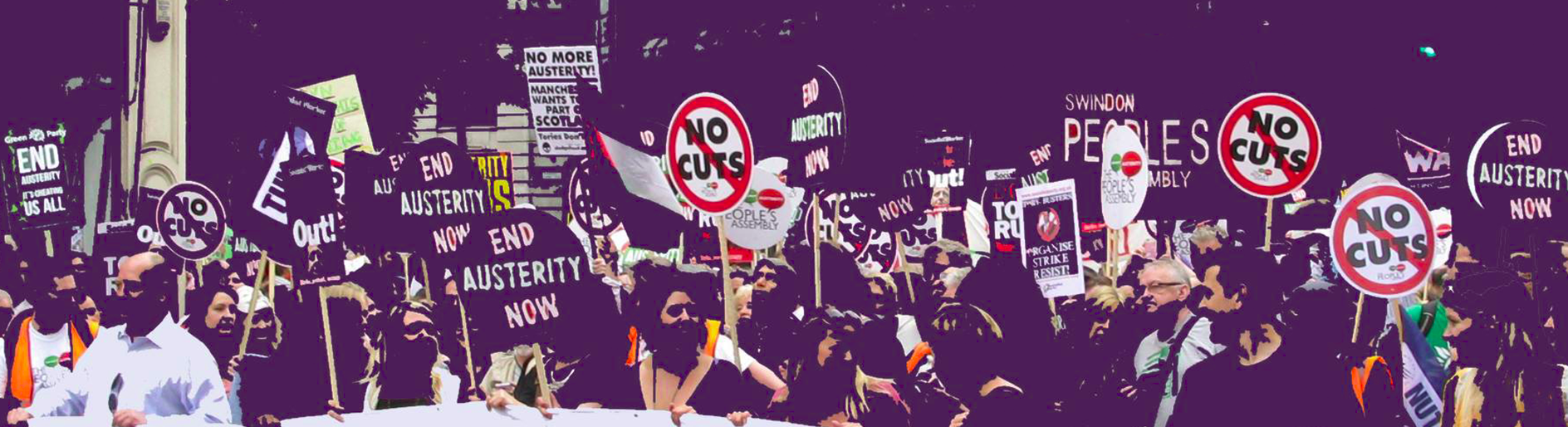
Tim Nichols, of the Child Poverty Action Group, looks at the policies brought in under Labour thast helped bring child poverty down to the lowest levels for 25 years.

Tim Nichols is the Press and Parliamentary Officer of the Child Poverty Action Group
The coalition government has argued for an approach to ending child poverty that is not simply about moving a few families over an arbitrary line. They want a strategy that is about making work pay, rather than income transfers, or “poverty plus a pound” as Nick Clegg often puts it in his dismissive soundbite.
But the new child poverty figures out yesterday present a problem for the government’s analysis and strategy.
Not only do they show a fall of 200,000 in the number of children in poverty – bringing the figure, measured before housing costs, to its lowest level in 25 years – but they also show a reduction of 100,000 in the coalition’s new measure of material deprivation combined with severe relative low income (below 50 per cent median income).
It had been predicted that any fall in poverty for 2009/10 would be largely a consequence of a fall in median income following the recession. The headline poverty mark is 60 per cent median income, so if median income falls, so does the poverty line, leaving some people who were just below it now just above it. But median income actually rose slightly.
Therefore we can only really attribute the fall in child poverty to three key investments the previous government made in families from April 2009:
• A rise in child benefit for the oldest child to £20;
• A £50 annual rise in child tax credit above indexing;
• The introduction of a child benefit disregard in housing benefit and council tax benefit, so that working families on low income got more help with their rent and council tax.
This strategy, combining universal benefits, income transfers, housing support and tax rebates, was of course working in parallel with other elements of a broad strategy on child poverty, such as a decade of growing investment in Sure Start centres. Clearly, it was working.
Not only was relative poverty impacted, but also so was severe poverty and material deprivation. This is not just a paper exercise of children moving over an arbitrary line, the evidence clearly shows a real impact on the lives and wellbeing of children affected by socioeconomic disadvantage.
But all this progress is now under threat. The Institute for Fiscal Studies (IFS) has predicted that, as a consequence of the coalition’s programme of cuts, especially cuts to family welfare, child poverty will begin to rise again.
See the table below:
Millions % of children
Baseline year: 1998/99
3.4
26%
Latest figures: 2009/10 2.6 20% IFS estimate: 2010/11 2.5 – IFS estimate: 2013/14 2.7 – Coalition’s 2020 target – Below 10%
Sources: HBAI 1998/99-2009/10 (rounded figures before housing costs); Children and Working-Age poverty from 2010 to 2013, IFS 2010Many of the coalition’s cuts run directly counter to ministers’ stated priorities of making work pay and increasing work incentives. Tax credits and support to help meet childcare costs are suffering the swing of the axe from chancellor George Osborne and his Liberal Democratic deputy, Danny Alexander, while Iain Duncan Smith’s much vaunted Universal Credit is also being hobbled by the Treasury.
The work incentives that his Centre for Social Justice calculate are needed are now being wrecked by a refusal from the Treasury to fund the scheme at the level needed. Meanwhile Eric Pickles at the Department for Communities and Local Government is throwing another spanner in the works by insisting Council Tax Benefit is replaced by a complicated plethora of local schemes, turning the transparent work incentives that were intended into a postcode lottery for many claimants.
David Cameron made a great promise when he was seeking election to 10 Downing Street, saying in 2007:
“We can make British poverty history, and we will make British poverty history.”
But with the deputy prime minster taking the lead, the drive for progress on poverty has been lost due to his dismissal of adequate incomes today in favour of a focus on ‘life chances’ for tomorrow. It is time the coalition left behind the deputy prime minster’s vague rhetoric and got back in touch with the prime minster’s ambition.
The evidence base clearly dictates the kind of policies that successfully impact on children’s lives and wellbeing today. If the progress achieved – despite the awful economic circumstances – in the final year of the previous government were to be replicated throughout a full five-year term of the coalition government, there would be a million fewer children in poverty by the next election.
Only this concrete progress will change life chances for the next generation.
Left Foot Forward doesn't have the backing of big business or billionaires. We rely on the kind and generous support of ordinary people like you.
You can support hard-hitting journalism that holds the right to account, provides a forum for debate among progressives, and covers the stories the rest of the media ignore. Donate today.
34 Responses to “Coalition must not destroy legacy of lowest child poverty for 25 years”
Anon E Mouse
scandalousbill – The point I’m making is that benefits should be just that. A benefit based on need and not on lack of need just to try to force state control on the people.
Millionaires shouldn’t get benefits because they don’t need them and thanks to Labour’s financial incompetence we don’t have the money. People retired overseas shouldn’t get Winter fuel payments either. The Queen shouldn’t have a bus pass.
Realising that socialism has been rejected in every single country it has been tried – basically it is universally hated so the daft elements of the left in this country try to wangle it in via things like universal benefits.
Whilst I accept that unlike the Guardian Newspaper Eric Clapton isn’t a tax evader, he doesn’t need child benefit so shouldn’t get it. Those with the broadest shoulders should carry the most weight I say.
Funnily enough looking after the poor seems to be something no longer considered by Labour in this country…
Anon E Mouse
Tim Nichols – Please don’t make claims about me that are incorrect. My first sentence reads: “Perhaps if the gap between the rich and the poor hadn’t increased under Labour it would be better”.
Your comment about double means-testing bureaucracy is nonsense and is just an excuse for your socialist leanings Tim. Or have you now renamed them as your “progressive” leanings?
All that happens is the tax system is used to calculate benefits which are paid automatically based on need. Using my system the whole thing actually costs less than it does currently for one set of means testing. To suggest that it costs the figure I used, £4000 to tell the state that Eric Clapton doesn’t need that money is also unbelievable.
You say it isn’t a socialist agenda Tim so perhaps you’ll confirm that in keeping with the rest of the country socialism, like “progressiveism”, has been resoundingly rejected and you’ll have no part of it. Assuming you want the return of a Labour government…
scandalousbill
Murray Rothbard,
“You say:
Child Poverty is a socialist contrivance designed to promote income redistribution. It has nothing to do with the poverty of children at all.”
You base this on your referenced “analysis” that notes the following premise taken from the OECD, which you say is, “how the OECD define child poverty”, i.e. :
“A child living in a home with less than half the median disposable income”
You further maintain, “”You will see immediately, that this is not a measure of child poverty, it is a poorly disguised measure of income equality.”
The mistake is yours. The OECD note the 50% of median disposable income as a threshold of, not the definition of, child poverty. A quick look at their child poverty database easily illustrates this point
http://www.oecd.org/els/social/family/database
Using your alleged definition in place of theirs, would be about as accurate and fruitful as attempting to observe atoms through a set of binoculars.
Ash
Anon –
“Millionaires shouldn’t get benefits because they don’t need them”
Does this also apply to the state pension (a universal benefit very similar to Child Benefit, which I guess could be described as a “young age pension”)?
How about *services* not needed by millionaires – e.g. the NHS, state education? Should we restrict access to these to people who really need them?
If not, why not? Why doesn’t your argument regarding Child Benefit apply equally to other currently-universal benefits and services?
scandalousbill
Anon,
You say:
“The point I’m making is that benefits should be just that. A benefit based on need and not on lack of need just to try to force state control on the people.”
So, if for example, you are in an auto accident and taken to A&E for treatment, this somehow infringes on your right to have a faith healer?