


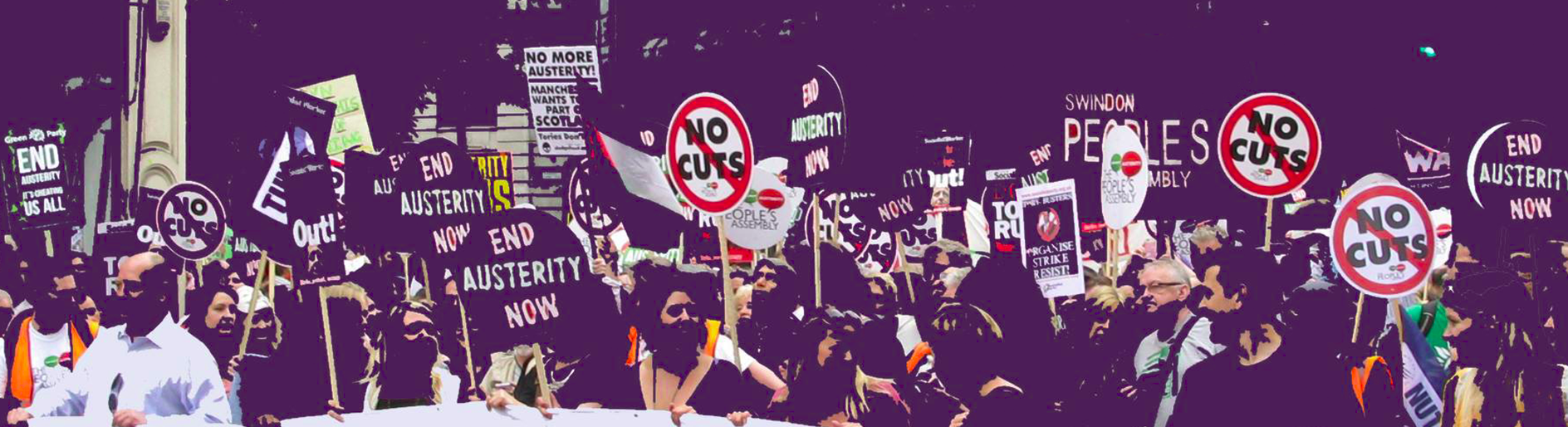

In addition to the 3,000-plus hospital job cuts outlined by Left Foot Forward on Friday, further evidence emerged today of the savage cuts being inflicted on the NHS.

In an column in the Telegraph today the prime minister promised a revolution in public services with a new White Paper that will “decentralise public services and replace targets with common sense”. He ominously talks about his “mission to dismantle Big Government” while at the same time insisting his policy “is not about destabilising the public services that people rely on”.
However, the evidence of what’s been happening in the NHS recently would appear to be just that – destabilising, cutting, breaking up the services the public rely upon.
On Friday, Left Foot Forward outlined the catalogue of frontline cuts taking place in the health service – contradiciting David Cameron’s pre-election pledge that:
“…any cabinet minister if I win the election, if we win the election, who comes to me and says here are my plans and they involve frontline reductions they will be sent straight back to their department to go away and think again.”
In addition to the 3,000-plus hospital job cuts outlined on Friday, further evidence emerged today of the savage cuts being inflicted on the NHS, with the Mirror reporting the closure of dozens of Accident and Emergency units:
“The Prime Minister and Health Secretary Andrew Lansley repeatedly promised to stop more than 30 casualty and maternity departments closing.
“But they are all being scrapped as the Conservative-led Government takes an axe to the health service, with the number of doomed units actually growing under Cameron’s rule. One unit was even shut by hospital bosses despite an outcry from local GPs – which should have saved it under Mr Lansley’s ‘strict rules’ on closures…
“Mr Cameron had also pledged to continue increasing NHS spending but the service faces a real-terms cut [as first revealed by Left Foot Forward].
“And he vowed to avoid new upheaval only to unleash a massive shake-up the health service, handing large parts over to private firms [as exposed repeatedly by Left Foot Forward].”
In his column the prime minister adds that the state “will still have a crucial role to play”:
“…ensuring fair funding, ensuring fair competition, and ensuring that everyone – regardless of wealth – gets fair access.”
Fine sentiments – but what about the reality?
Left Foot Forward doesn't have the backing of big business or billionaires. We rely on the kind and generous support of ordinary people like you.
You can support hard-hitting journalism that holds the right to account, provides a forum for debate among progressives, and covers the stories the rest of the media ignore. Donate today.
43 Responses to “Cameron’s “public sector revolution” – yet more NHS closures”
Daniel Pitt
Cameron's 'public sector revolution' translates into more NHS closures http://bit.ly/gNHcrE #ConDemNation
salardeen
RT @myinfamy: Cameron's 'public sector revolution' translates into more NHS closures http://bit.ly/gNHcrE #ConDemNation
scandalousbill
William,
You say:
“Why should the state be the sole provider of telephone services?BT was privatised in 1984, and nobody complains about their halving their workforce and alternative competitors being born.Health is the same,a monopolistic service run for the employees,not the users who pay through their taxes”
Your example of privatization n the Telecoms sector is interesting. First point to note is that the UK telecom infrastructure lags at 18th in the world, even according to Ofcom statistics. But the salient point can be gained when you consider the wide gap between rural and urban service provision. In short, private development has not exactly exhibited a terrific track record or exemplified a model for growth.
The infamous Race between Rural telecom and carrier pigeons is an additional case in point.
http://www.redorbit.com/news/technology/1918564/carrier_pigeons_beat_broadband_in_uk_race/index.html?source=r_technology
“A race between an old method of using carrier pigeons versus the new modern form of communication through broadband took place in the U.K. on Thursday.
The pigeons took first place as they were released from a Yorkshire farm at the same time as a five-minute video upload began.
An hour and a quarter later, the pigeons reached their destination in Skegness 70 miles away, while only 24 percent of a 300 MB file had been uploaded. “
The example here results from the fact that investors will fund developments that provide them with the greatest return. In this instance rural services simply do not provide the revenue potential of larger urban areas. In terms of bandspeed it is a first world/third world type of comparison.
The Post Code Lotteries already prevalent in present NHS service is likely to be exacerbated as privatization increases. Investors will seek the best return as opposed to raising or equalizing standards in the quality of service.