


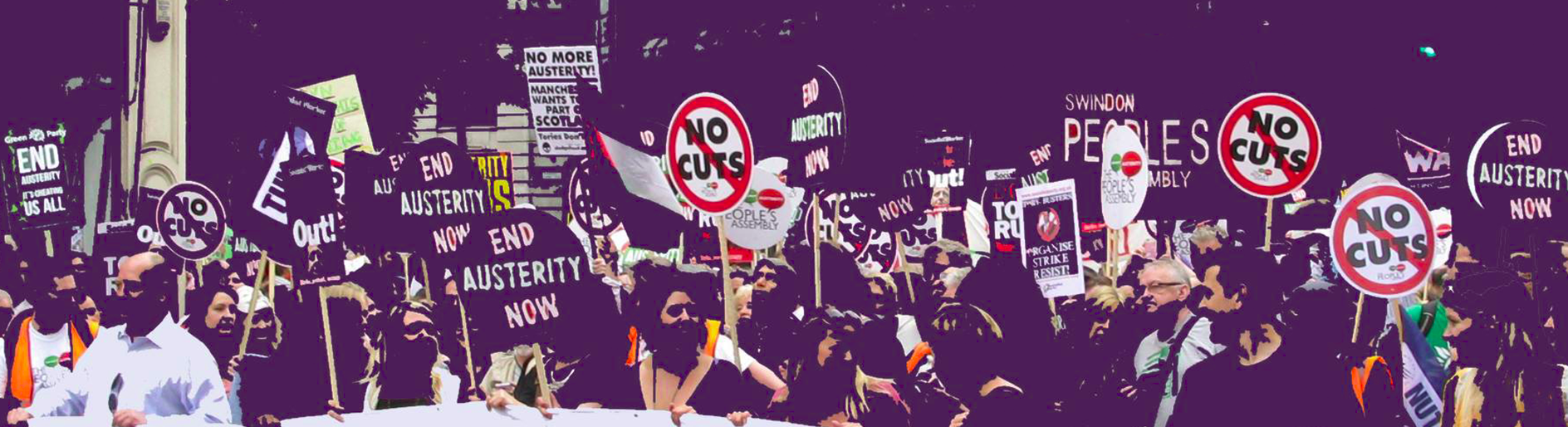

In today's Guardian, Will Straw argues that Labour must "pick what it thinks is the right size of the public sector." A wealth tax is one way to protect against cuts.

Alongside a group of “leading leftwing thinkers” including a number of Left Foot Forward contributors, I have a short piece in today’s Guardian outlining where I think “the Labour party should go from here”. I argue:
“The Labour party has to pick what it thinks is the right size of the public sector. Since 1997, public spending has gone up from 36% of national income to 48%. (Before the recession, it was at 42%.) But tax revenues have always been at around 38%, and during the recession fell to around 35%. The reason we’ve got a structural deficit is because Gordon Brown won the argument for investment in public services, but never took on the argument for increasing taxes to pay for it.”
The point is perhaps best made by this graph from the Institute for Fiscal Studies. Where the black and green lines end up is key to what the future of Britain will look like. The Lib-Cons with their series of tax cutting proposals want a smaller state, less redistribution, and a pared down welfare state. If Labour gets its act together, it can limit this scaling back.

This week’s Economist sets out the key strategic challenge facing the Labour party:
“For nothing will make or break the next leader of the opposition like his response to the government’s austerity programme. Oppose it all, and Labour will look incredible. Back it in grown-up fashion, and the coalition will have an easy ride. The tempting third way—supporting “good” cuts but not “bad” ones—will work only if Labour agrees on which bits of spending should go. Underlying this tactical dilemma is the more strategic question of what the left is for when there is no money to spend. Labour’s narrative was once devastatingly clear: the revenues from a buoyant economy should correct the historic underspend on public services. What is it now?”
The Social Market Foundation are on the right track today with a new report titled, “Axing and Taxing” covered in today’s FT. They recommend reducing the deficit with £39.0 billion of spending cuts and £25.3 billion of tax increases. This protects more public spending than under Labour’s plans to reduce the deficit with a 2:1 ratio of spending to tax. Indeed, if one removes from the SMF baseline the Lib-Con measures such as the £6.2 billion cuts to pay for scrapping the £6 billion employer NICs rise, their proposals would mean £32.8 billion in cuts and £31.3 billion of tax increases – close to the 1:1 ratio used by Ken Clarke and Norman Lamont in the early 1990s.
No doubt the SMF’s proposals to means-test child benefit and raise VAT will concern many on the left. But if not these we have to pick something else instead or say how taxes would go up further. In which spirit, instead of the VAT rise, which would be deeply regressive, I would instead pick a wealth tax. As the Political Climate blog points out, “recent data from the ONS show that the top 10% of households own more wealth than the rest put together”. Right-wing blogger Tim Worstall kindly points out the risks of capital flight. One way around this is to target the tax at land, which is hard to move. In an article for Prospect earlier this year, Philippe Legrain called it the “only efficient and fair way to bring Britain’s finances back into line”. After all, 0.3 per cent of Britain’s population owns 69 per cent of its land.
UPDATE 14.06
Alex Barker at FT Westminster picks out an intriguing graph from the SMF report to argue that a modest rise in VAT would actually be progressive if measure on an expenditure basis. It is certainly true that many in the bottom income decile are not the poorest in society since they are students, those on sabbatical, or self-employed people suffering from a bad year who are able to smooth their expenditure by borrowing or using savings. But there are arguably more people at the bottom of the income scale who bolster their expenditure by borrowing beyond their means. Expenditure rankings also say nothing about miserly Mr Scrooges at the top of the income scale. The SMF graph which caught Alex Barker’s eye is actually from an IFS report. They are careful to say only that the expenditure analysis gives a “different picture” rather than a better one.
And while we’re on the subject, this graph from the IFS shows that whichever way you cut it, removing exemptions to VAT – another SMF idea – would be regressive.

Left Foot Forward doesn't have the backing of big business or billionaires. We rely on the kind and generous support of ordinary people like you.
You can support hard-hitting journalism that holds the right to account, provides a forum for debate among progressives, and covers the stories the rest of the media ignore. Donate today.
48 Responses to “To defend the cuts, Labour must be clear about the size of government”
Fat Bloke on Tour
John77
Couple of interesting points and a couple of illuminating insights but overall it is still tripe.
Regarding Lease Lend the trigger point was the 1940 presidential election. Once that was out the way FDR started the tanks etc rolling. Loots of them made it to NA in time for 1941.
However nothing on Maggie / Falklands / Treasury interference / nurses pay …
NR went under because it had expanded hugely on the mortgage front without the same level of expansion on the deposit side and consequently had to generate funds from wholesale markets at ever frequent intervals.
Blaming RP on the BBC is just right wing excuses for a major market failure. Once the wholesale capital makets dried up it was a goner.
The Treasury was useless at banking supervision, but quite good at building lifeboats. What about the secondary banking crisis in the 70’s, third world debt in the 80’s and BCCI in the 90’s, well 90’s ish?
Debt is not the issue at the moment, the level of demand is.
The history of the 1930’s is that we can’t thrift our way back to prosperity. Most of the proponents of the Treasury view recanted in time, strange how we now seem to have a new generation of adherents although they now go by the name of dog boilers.
Did Thatch borrrow only for investement?
How much did she borrow?
Finally values and ratios, any chance you could understand and talk about the national debt as a percentage of GDP.
John77
I said instalments
Nursing pay was raised by 22% in 1980, by another 12% in 1982 (so by 37% in just over two years) and Thatcher set up an independent pay review body for nurses in 1983 because the 12% was a compromise between what the nurses asked for and what the government reckoned it could afford. At that point they were still underpaid (because nursing wages had lost real value i.e. risen by much less than inflation under Wilson and Callaghan) but the Review body was intended to bring their pay into line with comparable public sector workers and take the subject out of the political arena.
John77
Inflation in the 1980s averaged 6.7% – less than half the 15.5% pa average under the Wilson/Callaghan Labour government
Thatcher inherited a budget deficit of 6% of GDP which had been turned into a small surplus by the time she resigned
255 British servicemen were killed in the Falklands War – 474 have been killed in Afghanistan so far
Defence spending was less than 20% of Central government spending in the early 1930s but grew progressively faster from 20% in 1934/5 to 25% in 1935/6, 32% in 1936/7, 45% in 1937/8 and 56% in 1938/9. It rose by a factor of six in five years (the %ages are of a total increased by the rising defence spending). It then trebled in 1939/40 after the war started. I don’t know where you got the story of Treasury interference to reduce defence spending but it doesn’t seem to have been very effective.
According to HM Treasury National debt rose by £13.2bn in World War II and they estimate that it rose by £428 bn under New Labour.
I *can* talk about the National Debt as a %age of GDP but the definition of GDP makes it much too easy to manipulate so I prefer not to do so.
Fat Bloke on Tour
John77
As ever your usual dogs breakfast of the interesting and the totally mental.
National debt as a % of GDP = Cut the crap, stop trying to obfuscate using cash figures. For comparison purposes over time the GDP figure is the only one that makes sense.
Late 1930’s re-armament = Treasury cut back the RN’s destroyer programme. I think some of the build slots were taken up by the RCN, but the Treasury penny pinched all the way to Sept 39.
There is also evidence of Treasury interference in the cruiser build programme during the war and the post Ark Royal 2 design studies for the next generation of aircraft carriers always had to look over their shoulders to see what the Treasury view was.
Severe case of the price of everything but the value of nothing.
In that case bigger ships meant bigger dockyard facilities and they didn’t want to pay for either.
However all that is just mood music to the main act of the moment, the use of the credit crunch inspired deficit to drive through serious reductions in the TB/GB welfare state to generate tax cuts for the upper middle class establishment.
They are all dog boilers now.
John77
*You* are talking crap.
Gordon Brown increased reported GDP by increasing public sector salaries faster than inflation. Are you economically illiterate or a GB fan? There is no Blairite third way to this question.