


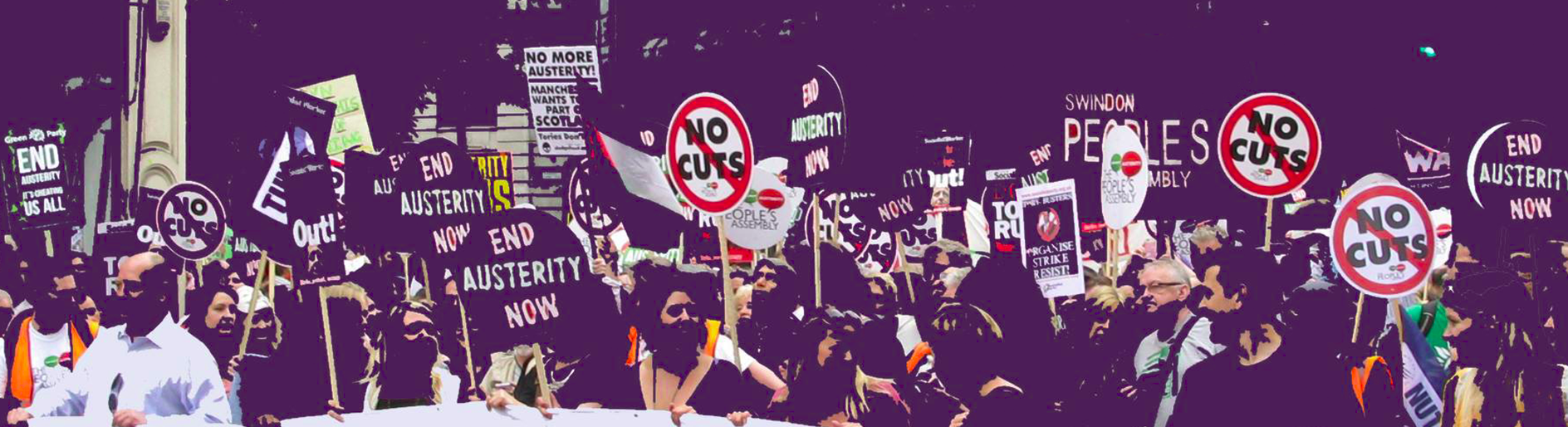

In today's Guardian, Will Straw argues that Labour must "pick what it thinks is the right size of the public sector." A wealth tax is one way to protect against cuts.

Alongside a group of “leading leftwing thinkers” including a number of Left Foot Forward contributors, I have a short piece in today’s Guardian outlining where I think “the Labour party should go from here”. I argue:
“The Labour party has to pick what it thinks is the right size of the public sector. Since 1997, public spending has gone up from 36% of national income to 48%. (Before the recession, it was at 42%.) But tax revenues have always been at around 38%, and during the recession fell to around 35%. The reason we’ve got a structural deficit is because Gordon Brown won the argument for investment in public services, but never took on the argument for increasing taxes to pay for it.”
The point is perhaps best made by this graph from the Institute for Fiscal Studies. Where the black and green lines end up is key to what the future of Britain will look like. The Lib-Cons with their series of tax cutting proposals want a smaller state, less redistribution, and a pared down welfare state. If Labour gets its act together, it can limit this scaling back.

This week’s Economist sets out the key strategic challenge facing the Labour party:
“For nothing will make or break the next leader of the opposition like his response to the government’s austerity programme. Oppose it all, and Labour will look incredible. Back it in grown-up fashion, and the coalition will have an easy ride. The tempting third way—supporting “good” cuts but not “bad” ones—will work only if Labour agrees on which bits of spending should go. Underlying this tactical dilemma is the more strategic question of what the left is for when there is no money to spend. Labour’s narrative was once devastatingly clear: the revenues from a buoyant economy should correct the historic underspend on public services. What is it now?”
The Social Market Foundation are on the right track today with a new report titled, “Axing and Taxing” covered in today’s FT. They recommend reducing the deficit with £39.0 billion of spending cuts and £25.3 billion of tax increases. This protects more public spending than under Labour’s plans to reduce the deficit with a 2:1 ratio of spending to tax. Indeed, if one removes from the SMF baseline the Lib-Con measures such as the £6.2 billion cuts to pay for scrapping the £6 billion employer NICs rise, their proposals would mean £32.8 billion in cuts and £31.3 billion of tax increases – close to the 1:1 ratio used by Ken Clarke and Norman Lamont in the early 1990s.
No doubt the SMF’s proposals to means-test child benefit and raise VAT will concern many on the left. But if not these we have to pick something else instead or say how taxes would go up further. In which spirit, instead of the VAT rise, which would be deeply regressive, I would instead pick a wealth tax. As the Political Climate blog points out, “recent data from the ONS show that the top 10% of households own more wealth than the rest put together”. Right-wing blogger Tim Worstall kindly points out the risks of capital flight. One way around this is to target the tax at land, which is hard to move. In an article for Prospect earlier this year, Philippe Legrain called it the “only efficient and fair way to bring Britain’s finances back into line”. After all, 0.3 per cent of Britain’s population owns 69 per cent of its land.
UPDATE 14.06
Alex Barker at FT Westminster picks out an intriguing graph from the SMF report to argue that a modest rise in VAT would actually be progressive if measure on an expenditure basis. It is certainly true that many in the bottom income decile are not the poorest in society since they are students, those on sabbatical, or self-employed people suffering from a bad year who are able to smooth their expenditure by borrowing or using savings. But there are arguably more people at the bottom of the income scale who bolster their expenditure by borrowing beyond their means. Expenditure rankings also say nothing about miserly Mr Scrooges at the top of the income scale. The SMF graph which caught Alex Barker’s eye is actually from an IFS report. They are careful to say only that the expenditure analysis gives a “different picture” rather than a better one.
And while we’re on the subject, this graph from the IFS shows that whichever way you cut it, removing exemptions to VAT – another SMF idea – would be regressive.

Left Foot Forward doesn't have the backing of big business or billionaires. We rely on the kind and generous support of ordinary people like you.
You can support hard-hitting journalism that holds the right to account, provides a forum for debate among progressives, and covers the stories the rest of the media ignore. Donate today.
48 Responses to “To defend the cuts, Labour must be clear about the size of government”
John77
“If national debt runs to 60% of GDP then public sector investment of 3% can be supported using debt without ptting up the GDP value of the national debt year on year. If the debt goes to 80% then a 3% investment figure will actually reduce the national debt over time.”
This statement makes no sense. You seem to be quoting the conclusion of someone else who has made assumptions that you do not state and who does not know the difference between a value and a ratio. The assumptions include a significantly faster growth in real GDP than we have seen in 1997-2010.
The public sector will always need investment, any attempt to cut investement will either mean reduced standards or a transfer of functions from the public to the private sector.
Of course the public sector always needs investment – school buildings have to be replaced when they become unsuited to children’s needs, new schools have to be built in areas where there are more children; similar comments apply, mutatis mutandis, to hospitals, government offices, courts, prisons etc.
To suggest that I am opposed to necessary public sector investment is unjustified (are you indulging in typical Brownian smear tactics?). If they are necessary then the government must raise taxes to pay for them. What else is the purpose of taxation?
“Your pay as you go attitude will only result in higher taxes or reduced provision.” Well, Duh – but only in the short-term: in the longer term the extra interest on the extra debt will increase taxes until the future government cuts back on provisions. Unless you can con people into lending money to the government at a negative real rate of interest spending more than its income will in the longer term result in higher taxes or reduced provision compared to a balanced budget [whether annually in Victorian fashion or over the economic cycle in the Keynesian fashion]
“4) Avoidance / Evasion, static — pull the other one.” Where did I say that? I repeat “The boundary (between avoidance and evasion) is between that which is legal and that which is illegal.” Are you a friend of Damian? That may sound OTT but you sound like it when you write that sort of thing. Avoidance has soared under Brown because he has created a morass of new regulations that HMRC do not understand and vast numbers of tax breaks for the rich (including, apparently, one where investors in UK-produced films can claim tax relief on three times their net investment).
We all want to reduce evasion: are you able to understand that if tax rules were simplified then less time would be spent on finding (by tax advisers) and checking (by tax inspectors) on legal avoidance schemes and more time could be spent by tax inspectors on tackling evasion?
John77
@ Fat Bloke on Tour
Credit Crunch simply means when people find it difficult to borrow.
John77
The Credit Crunch arose when enough people got worried about the ability of the borrower to repay. Of course this arose in the private sector – if you have notionally limitless funds then you do not need to worry about bad debts (which is why the banking sector in eastern Europe was almost universally a horror story in 1990). I musn’t mention the Landesbank that was the worst European victim of unwise lending to Americans lest I be accused of anti-feminism.
“the private sector does not always get its investment decisions right.” Again, Duh. Nobody always gets his/her/its investment decisions right because those decisions rely upon someone’s best estimate of future out-turns. When a private sector business gets its investment decisions wrong the sufferers are the owners of the business and some of those who lent to it. When the public sector gets it wrong the losers are the taxpayers, not those who made the decisions.
The banking crisis is not the same as the credit crunch, as young Will with his PPE degree can explain more lucidly than I. The US banking crisis was, in part but only in part, due to the securitisation of mortgages that were generated by mortgage brokers who took on no risk when issuing them, which created moral hazard. A major reason why those brokers have not been sued by the banks is because the cost of litigation would exceed the returns (pity, I think that future behaviour might be improved if those who were responsible for persuading people to take on debts that they could not repay were seen to be punished, but that is beside the point).
The UK banking crisis was created by the son of a New Labour Life Peer who generated a run on a solvent bank with significant positive net worth, with support from HM Treasury under Brown and Darling who retrospectively changed the capital requirements for UK banks, demanding that they increase their capital in a month by more than the average annual net investment in LSE quoted companies by investors. For more than a century, while the BoE was in charge of banking supervision, there was no run on a UK bank. Since Brown transferred banking supervision to the FSA there have been three.When Lloyds took over HBOS they estimated “negative goodwill” as £15billion – i.e. the bank which New Labour spin doctors suggest was a basket case needing government support was not only not bust it was worth £15 billion more than Lloyds paid for it. Even after the the further rise in corporate and individual bankruptcies and the most conservative audit they can get the surplus of HBOS net assets over the price paid is some £12 billion.
“3) WW2 debt, we paid very little cash. 50 destroyers?
Lend Lease in 41, when did it begin? The answer is not Dec 7th.”
Wikipedia says that we paid gold until we had virtually run out but actually the government seized and sold UK-owned assets in the US as well as using up most of our gold reserves. The 50 destroyers were swapped for assets that the USA tried to acquire for its own defence when Joe Kennedy told Roosevelt that Germany was going to win – Churchill refused to hand them over unless he got something in return and in the end got 50 destroyers – a big discount to the value to the USA of the assets exchanged. Lend Lease officially started earlier in 1941 but the value of supplies prior to Pearl Harbour was trivial: as the total amount of loans (later repaid) under Lend Lease in four years of war was less than £7 billion (the amount hidden by Alastair Darling from Gordon Brown to reduce his desired pre-election spending spree according to the weekend press) your nit-picking about my reference to Pearl Harbour (a memorable event) instead of Roosevelt’s signing the Lend-Lease act (so unmemorable that even I had to look it up) shows that you care more about scoring irrelevant debating points to offset your howler (you have not yet revealed why you claim I have committed one).
John77
“1) NS oil = 40 year old fields, the output is now 50% approx of the peak, no wonder the tax take is under pressure.
West of Shetland is an old wifes tale, how many dry wells do you need to take this onboard.”
BP’s original oil well in Kuwait from c.1931 was still steadily producing (not pumping – it didn’t need a pump) oil until Saddam invaded and then wrecked the oilfields. So firstly, 40 years is not exceptional for primary production from an oilfield. Secondly most North Sea oilfields are younger – often a lot younger. Thirdly I pointed out that the reason the tax take was under pressure was due to Brown’s tax changes that reduced the net return to the oil companies on investment in secondary and tertiary recovery projects below their return-on-investment thresholds. Fourthly as I explained (did you actually read it) the fall in the tax take is due to the fall in production which is due to the fall in investment as a result of Brown’s tax grab that boosted tax receipts in the very short term at the expense of the UK’s longer-term GDP and tax revenues.
The phrase is “old wives’ tale”; BP had three producing fields West of Shetlands last time I looked. Why do you introduce this piece of nonsense?
I do not have to hand figures for 1939 or 1945 government debt but numerous people have pointed out that the increase in debt since 1997 exceeds any previous level of total debt.
John77
@ Fat Bloke on Tour
Part 2 – You are obviously reacting badly to the football or too many lagers.
What the *** do you mean by “Sunny Jim / 76 + 78 = Sorted out the junta big style.”? I cannot comment on something where I cannot guess what you are trying to say.
“Just exactly did she do for the war effort in WW2?
Answer: The square root of very little is the polite response.”
What did you do? OK I did nothing because I wasn’t born until after the war. When I was young I knew a goodly number of people who had fought in one or other World War but not any more as they have died of old age. I shall not bother to check the average annual SURPLUS in the 1980s as you admit that Mrs Thatcher’s governments educed the national debt
“Gap between rich and poor = You are having a laugh?
What figures are you using?”
Those supplied by HMRC and ONS under Brown’s control. It is NOT funny: it is appalling. The only justification for Old Labour was that they reduced the gap between the rich and the poor.
I was complaining about this three or four years ago; the share of national wealth owned by the lower 50% had fallen by two-thirds under New Labour.